Exploring Fakarava

After spending 5 weeks in the Marquesas, it was becoming evident that we could not linger too long in the Tuomotos – we only had 90 days in French Polynesia and had big jumps to make between the Marquesas, the Tuomotos and the Society Islands.    We debated whether to try to see more than one of the atolls but realized that we just didn’t have the time – every time you enter an atoll you run the risk of getting essentially stuck there – if the weather turns it may make the pass unpassable and you will be sitting there until the weather improves.  We knew of many boats that found themselves stuck in one atoll or another for a week or more, preventing them from moving onto their next destination. This seemed especially taxing when in an atoll that did not have a settlement – no access to fuel or supplies and no ability to move on would be far too stressful!  Taking that into account, we opted for Fakarava – we knew it had a small village to explore, there is a pass at both the south and north ends, the northern one being quite wide and deep and passable in most conditions and it was supposed to be beautiful.  

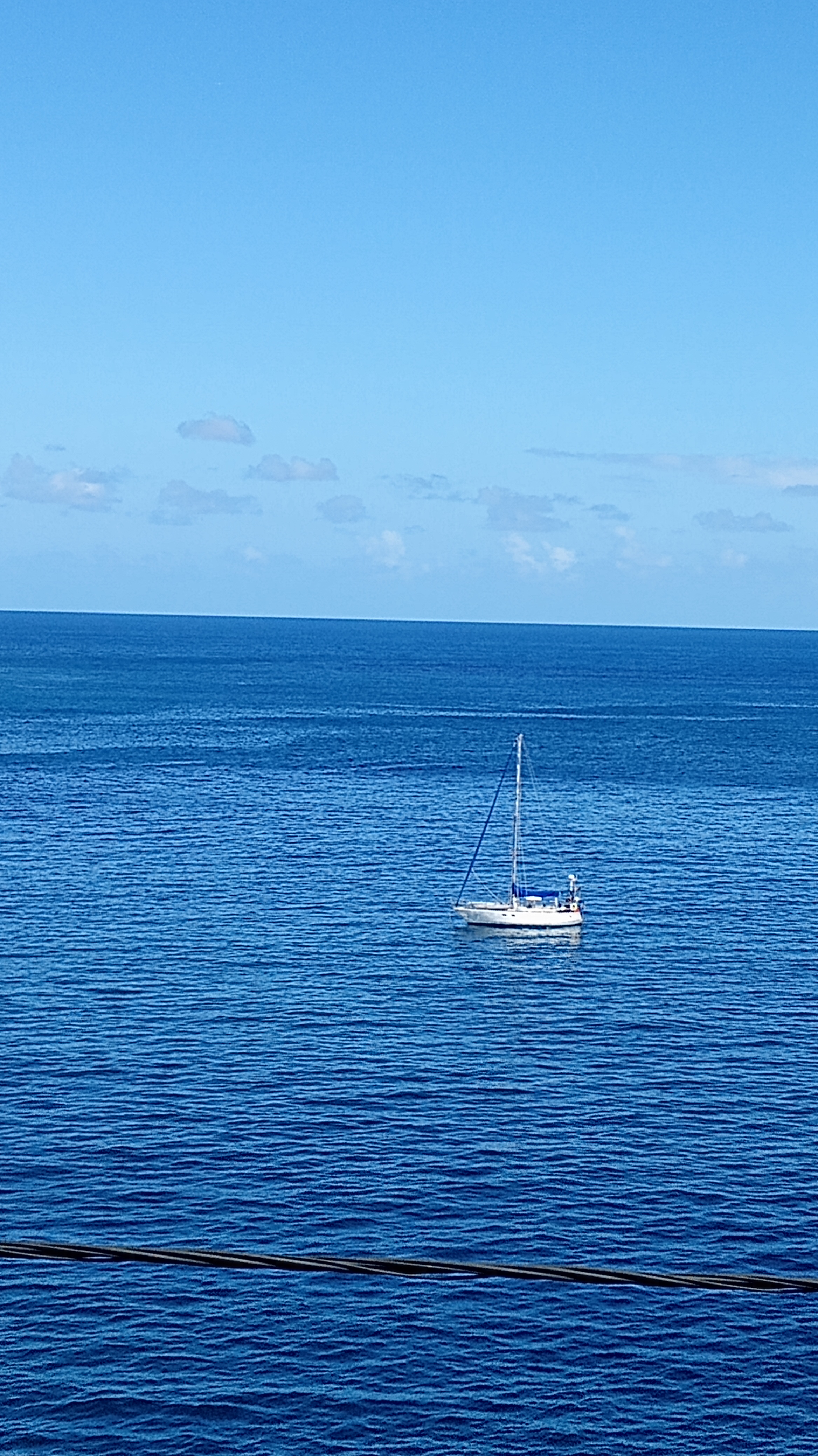
We had a five day passage to Fakarava and landed at the northern end of the atoll, near the village of Rotoava.   We were so happy to see Viva anchored nearby – we had met Pierre and Marie in the boatyard and had been chasing behind them all through French Polynesia.   We reached out to them immediately and made plans to go to their boat for drinks and pizza that night.    We had a fabulous night on board Viva, visiting with Pierre and Marie as well as Kevin and Stacey from SV Flying Free.   The pizza was a treat and the company was fabulous!!

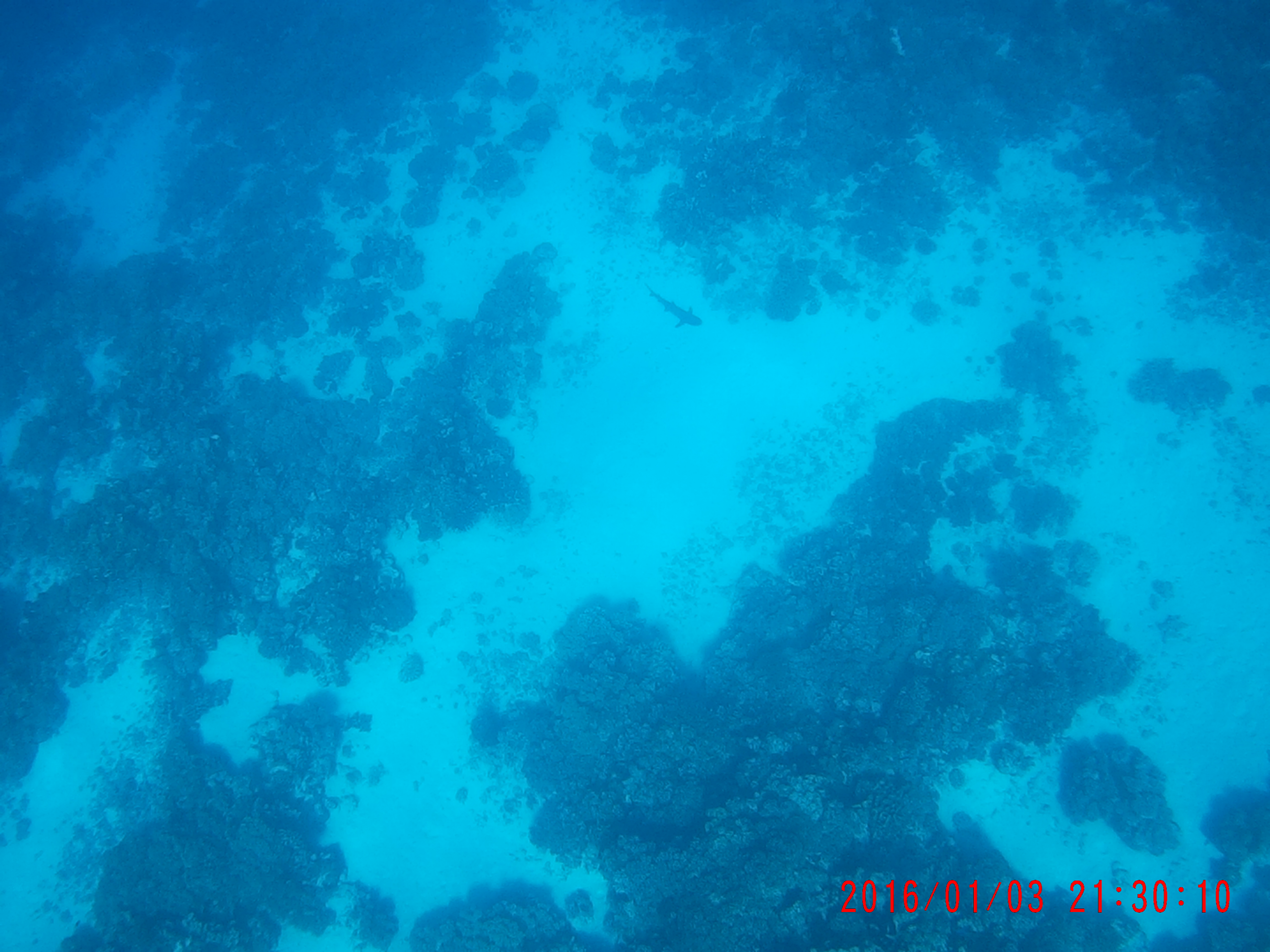
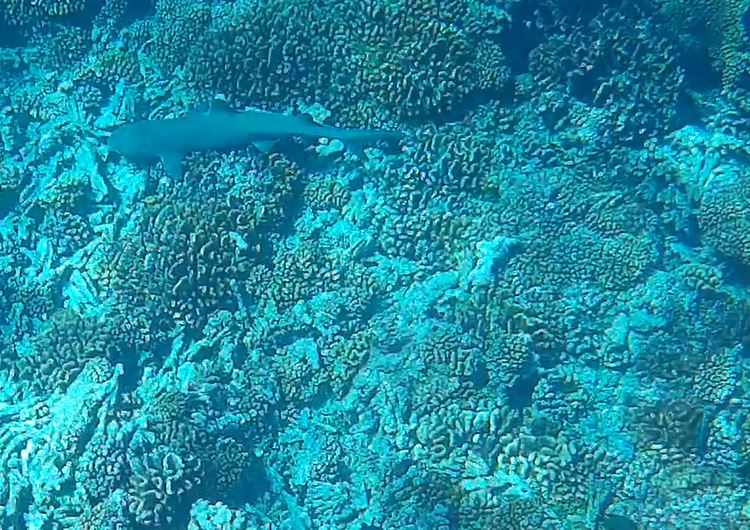
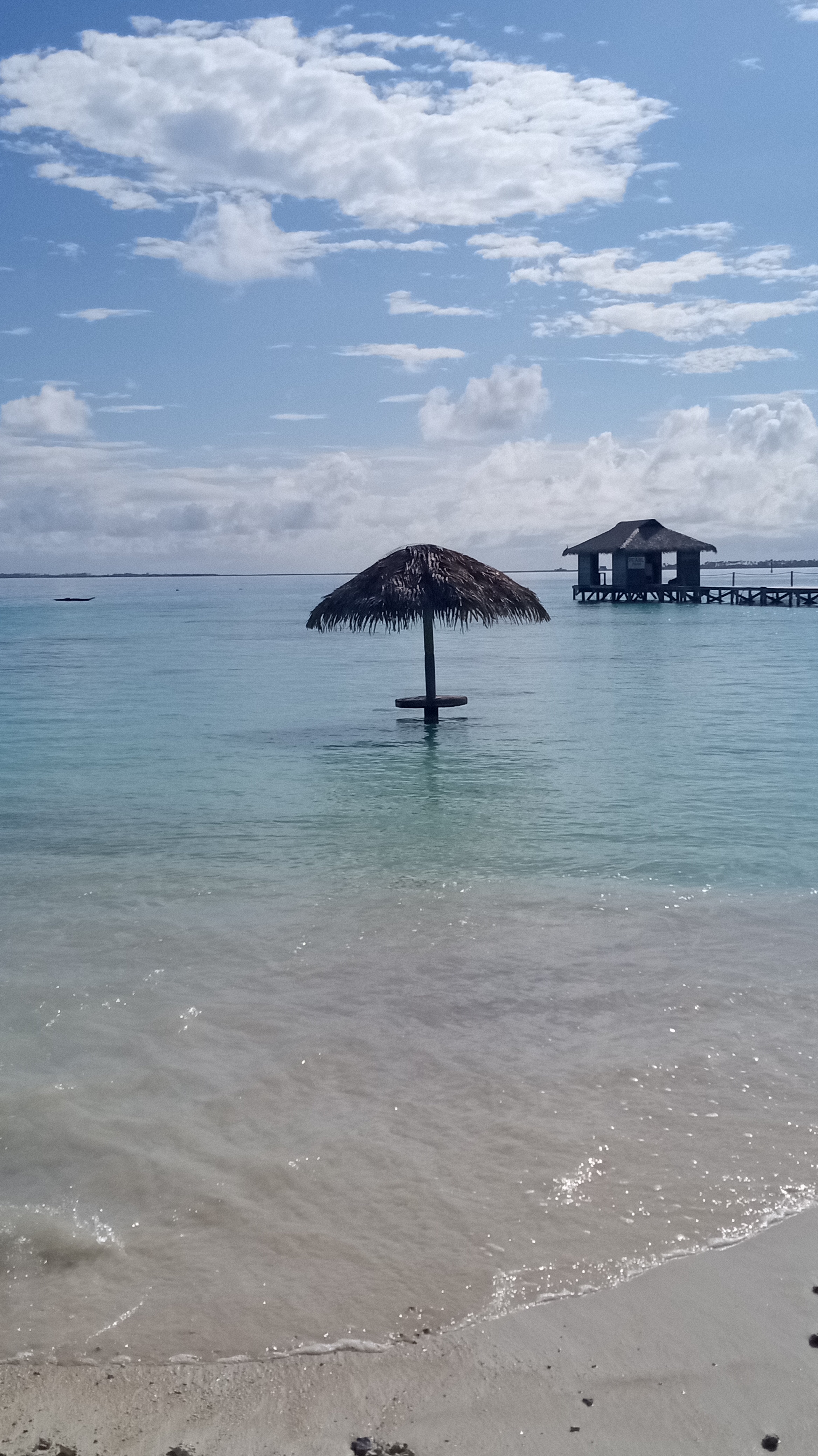
The next day we headed into shore to explore.   Rotoava has a great little enclosed “harbour” for the dinghy dock which was such a treat after some of the sketchy dinghy docks we had encountered in the Marquesas!!   We set out to wander down the atoll, through the tiny village – there were a few restaurants, a gas station with a fairly well stocked grocery store, the vegetable market (which was really only a vegetable market for about 2 hours after the supply ship came in!), another little grocery store, pizza shop and a few little clothing stores and of course pearl shops.   As we wandered down the road, we had to keep stopping just to stare out at the water – it was so incredibly clear and calm!!   We found nurse sharks swimming in close to shore at one stop and little fishies swimming in amongst the coral at a couple of others.   We wandered down until we came to a small resort, a gorgeous complex that included a little restaurant that had tables in the shallow water and milkshakes on the menu – what a treat those were!!!!    We tried to head back in for dinner that night only to find that the only restaurant that was open required reservations – so back to the boat it was!
The next day we spent a bit more time exploring and then headed to one of the restaurants for dinner – while we were waiting for them to open, the Flying Free crew arrived so we ended up having a lovely dinner visiting with them.  

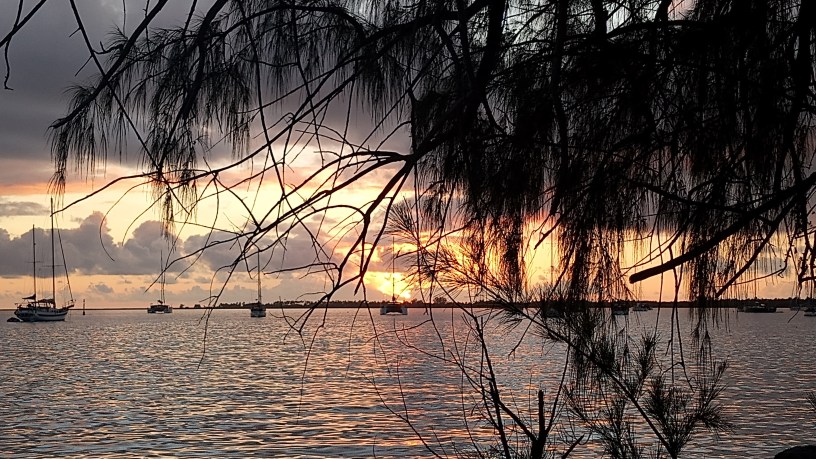
We had a bit of a surprise the next night when, out of nowhere, the wind shifted hard to the south – within hours the fetch had built and we were hobby horsing on our anchor in 25 knots of wind – it was a pretty uncomfortable night until the winds switched around a bit to the east, reducing the size of the waves.   We had not necessarily intended to head to the south of the atoll as we for some reason had figured it to be a 60 mile run – that makes for a pretty long travel day for us and we really only intended to spend 4 or 5 days in Fakarava.   As it turned out, it is about a 30 mile run – taking that, and the fact that the winds were again to switch to the south, with 30 knot gusts expected, we decided to go check it out!!!   We motored out mid-morning, following the well-marked path through the bommies (they were huge!) – about half way down the wind started to build and the sea state was definitely starting to be “not fun”!   We had thought we would head directly to the South Pass anchorage but when we arrived at Harifa, nestled in the South East corner, we decided to drop anchor there.    Being so much closer to the south shore, the waves were minimal though the wind did blow pretty good all the rest of that day and the next.  
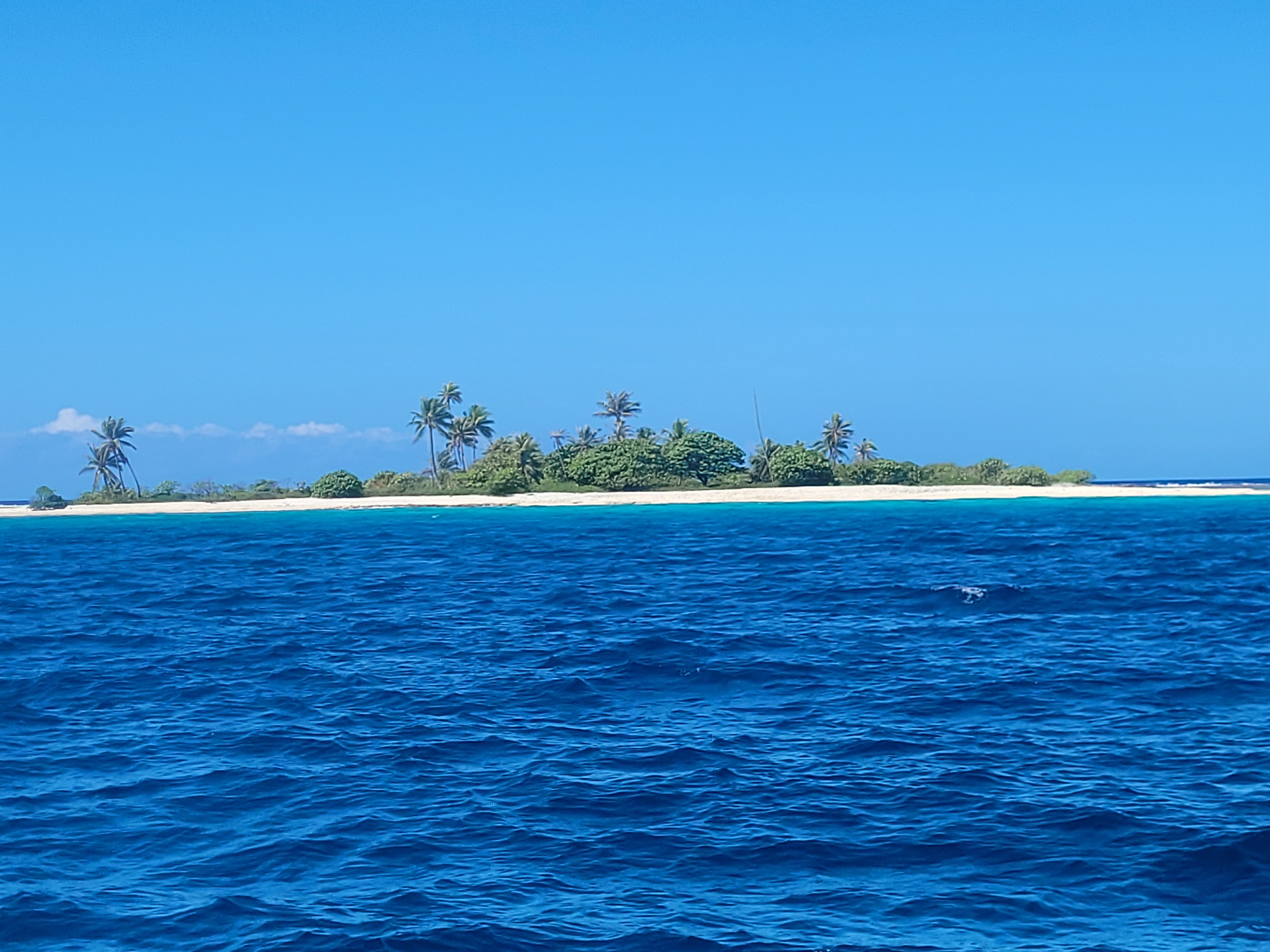
We finally headed over to the south pass the next day – the anchorage is a bit of a nightmare with giant coral bommies everywhere!!   We milled around trying to find a clear patch of sand to drop the anchor, that was not too close to other boats.   We finally settled on a spot and Owen deployed the anchor, floating our chain with fenders every 50 feet or so, as we had been doing in other anchorages in the atoll.   We let the boat back down and realized all to quickly that we were closer to the boat behind us than we wanted to be.   We decided to reset and started to bring up the anchor, only to discover that we had somehow already wrapped ourselves around a bommie!!   We tried to drive around to clear it but I think we guessed the wrong direction and wrapped it even worse!!   Owen finally had to get into the water with a mask and snorkel to see where the chain was wrapped – as we would unwrap from one bommie, the slack chain was wrapping on another – we tried for nearly an hour to unwrap us with Owen in the water and finally ended up with him at the helm and me on the bow shouting directions for where to turn while keeping up enough speed that wouldn’t let the chain go too slack – nearly two hours later we were off – finally!!   We moved a bit further east and set in a good patch of sand – but when we backed down we were too close to the reef and so we again pulled up anchor and tried again – finally, nearly 3 hours after starting the process, we were anchored (though it felt like we were so far east we may as well have stayed at Harifa!!).
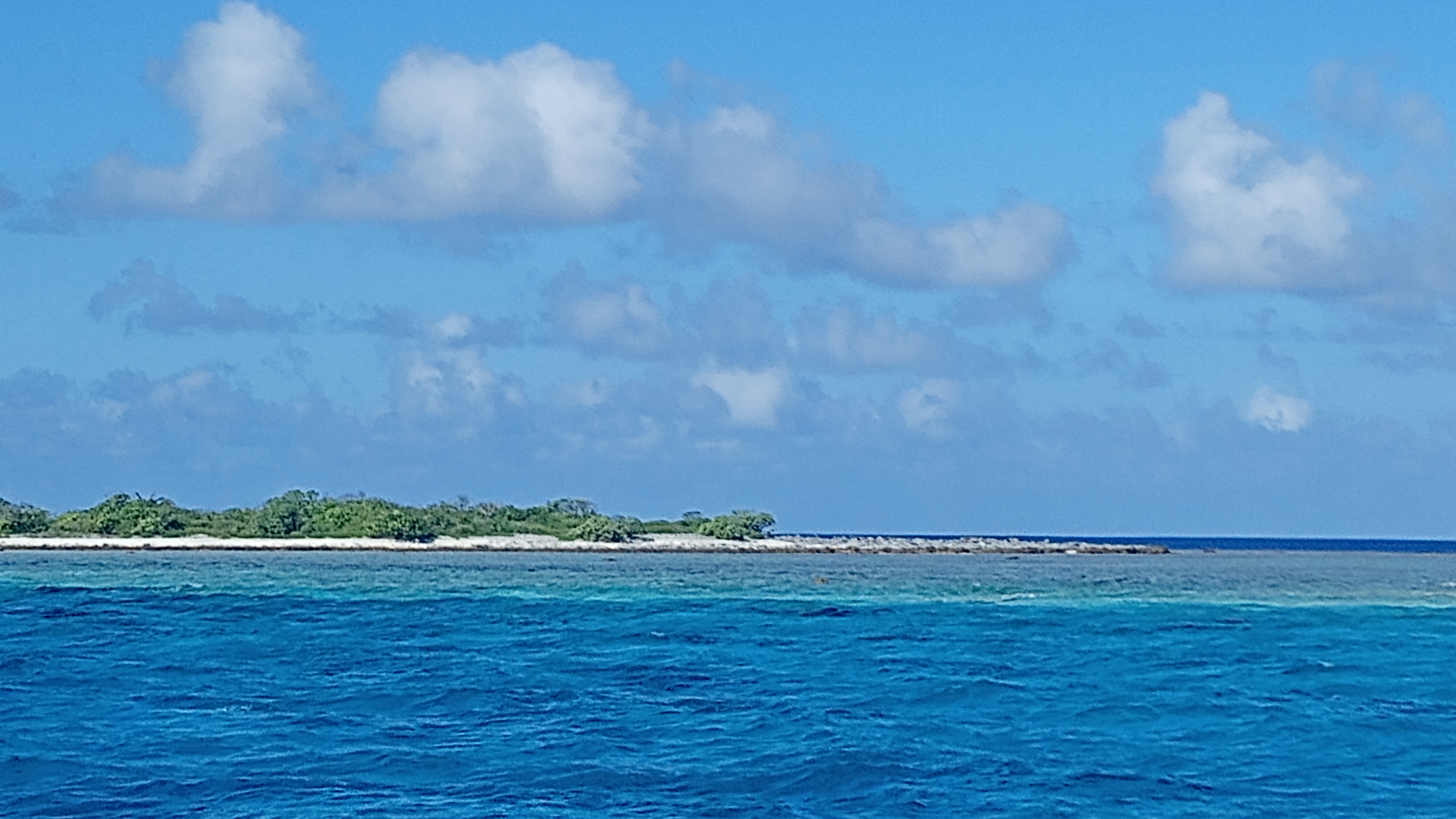
After all of that, we decided we needed a dinghy toodle and as Kris and Steve from Exit had also arrived that day, we asked them to come along.   We headed into the dive shop – one of the only businesses on the south end and had beers at their small bar.   Kris and Steve had already made arrangements to go diving the next day.    The south pass of Fakarava is famous for its “wall of sharks” drift dive and they were excited to experience that.   Owen was really wanting to do a drift snorkel through the pass and wondered if he could tag along with their dive boat – Kris sent a message to the divemaster inquiring and he was told to come along.

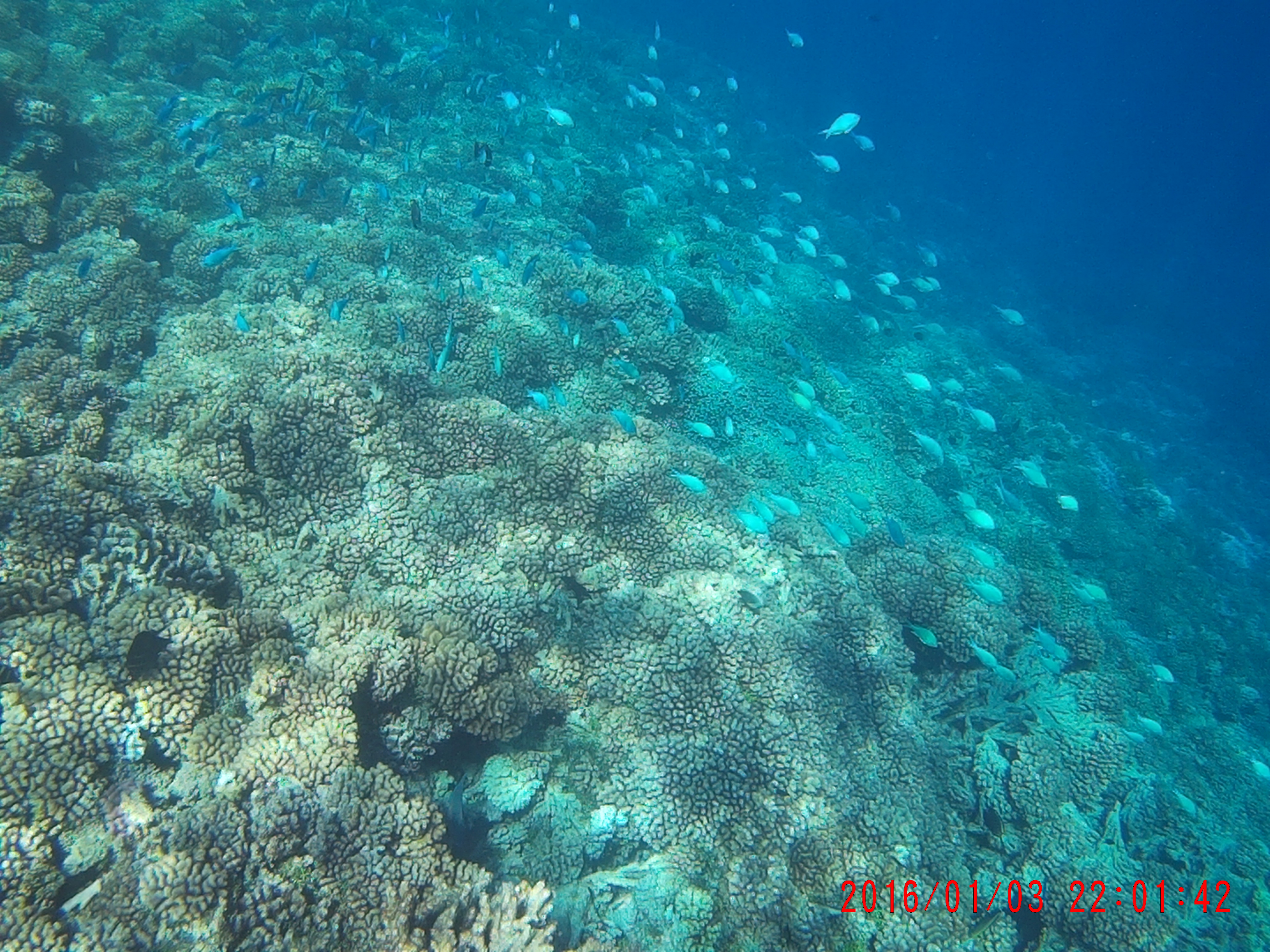
The next morning, I dropped Owen off with Kris and Steve and they headed in early for their dive/ snorkel.   As it turned out, Owen was not permitted to go with the dive group – the snorkel was set for after the dive finished.  He hung out, doing some snorkeling around the dive shop and then all three of them joined a small group for a wonderful snorkel, seeing all sorts of fish and sharks.   I, being the chicken that I can sometimes be and having very limited experience snorkeling (like only 3 times previously), decided that the idea of a drift snorkel through a pass populated by sharks was not my idea of fun.

The weather was set to change to a more northerly direction and the supply ship was due into Rotoava so we decided to leave the next morning and head back to the north end.   We were up at the crack of dawn, planning to make it to Rotoava around the time the stores reopened for the afternoon, hopefully freshly stocked with veggies.   We started to pull up the anchor and, of course, found ourselves wrapped on a bommie!   Once again, Owen was in the water directing me as I drove in circles trying to free us – all the while, Steve was in the water giving Kris directions to get them unwrapped from their bommie!!!   Another hour of trying had us finally free and headed north.   We didn’t quite make it back in the time we had hoped but we were able to score a few freshies at the store.    We ended up grabbing pizzas for dinner that night and dining aboard Exit for another great night of visiting.

The north winds never did really arrive but they were once again set to blow from the South so it was that we once again made our way to Harifa – us and most of the boats from the North end!!!    By mid-afternoon the next day, the anchorage was packed.   The winds did in fact blow quite hard from the south for several days – we spent a couple of days just hanging out on board and then, when the winds finally started to ease a little, we were able to get out and explore a bit more.   We went into the beach one night for sundowners with Kris, Steve and Pierre and managed to get a snorkel in the next day.     We snorkeled around some small bommies in the corner of the anchorage and were pleasantly surprised to see quite a few fish of all different types and sizes.

Though we had only intended to be in Fakarava for a few days, we were nearing the two week mark there – honestly we could have stayed indefinitely – it is so beautiful there!   Sadly, we knew we had to get moving along – a window weather was opening and we needed to head west to the Society Islands.   We did one more run up the atoll to Rotoava to restock diesel and grab a few more groceries (but not before getting wrapped on one more bommie – quite literally the only bommie in that part of the anchorage!) and then finally headed out for Tahiti.

We were so sad to be leaving Fakarava behind and truly wish that we had been able to explore some more of the Tuomotos but time was not on our side!

The Majestic Marquesan Islands

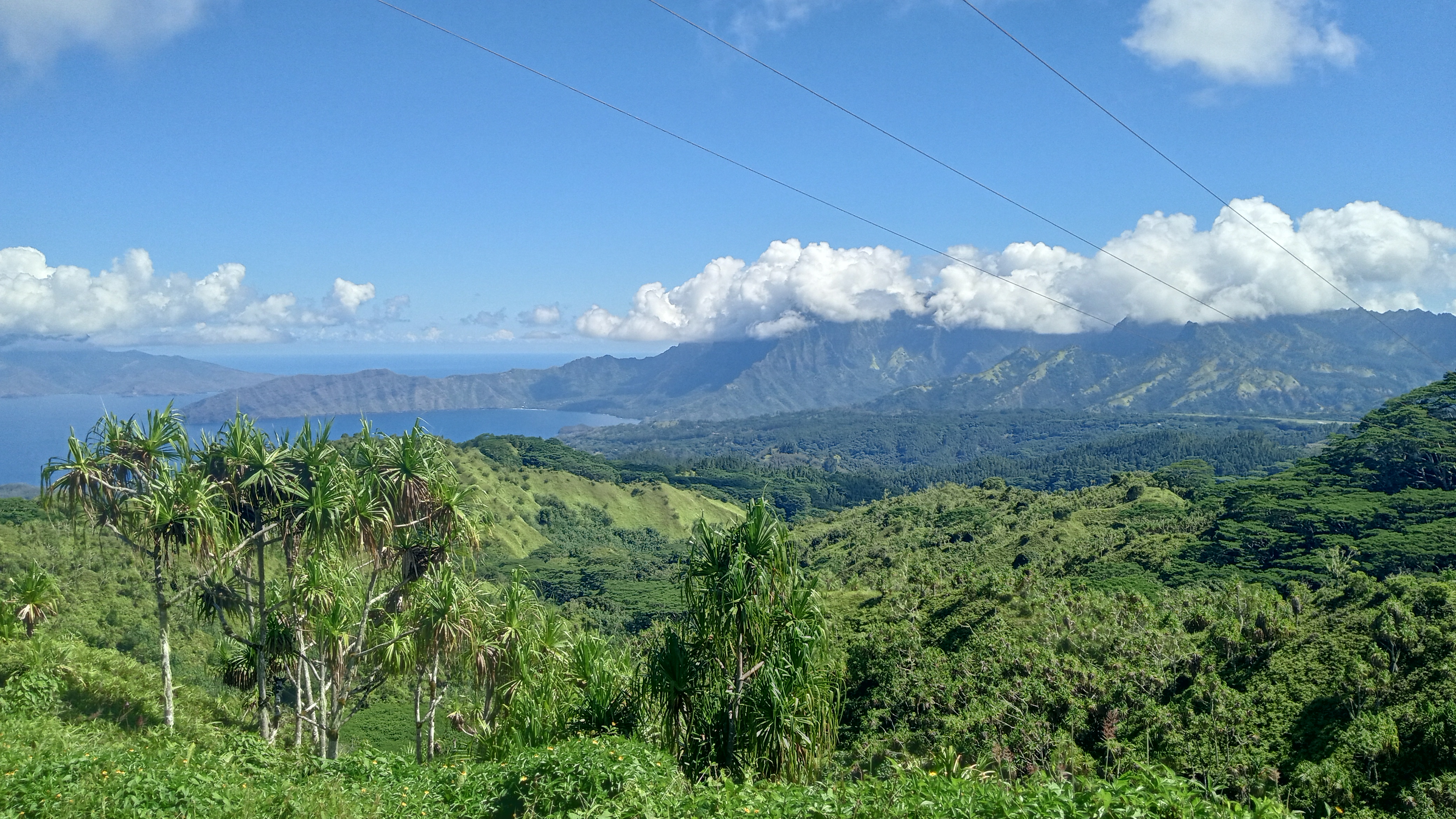
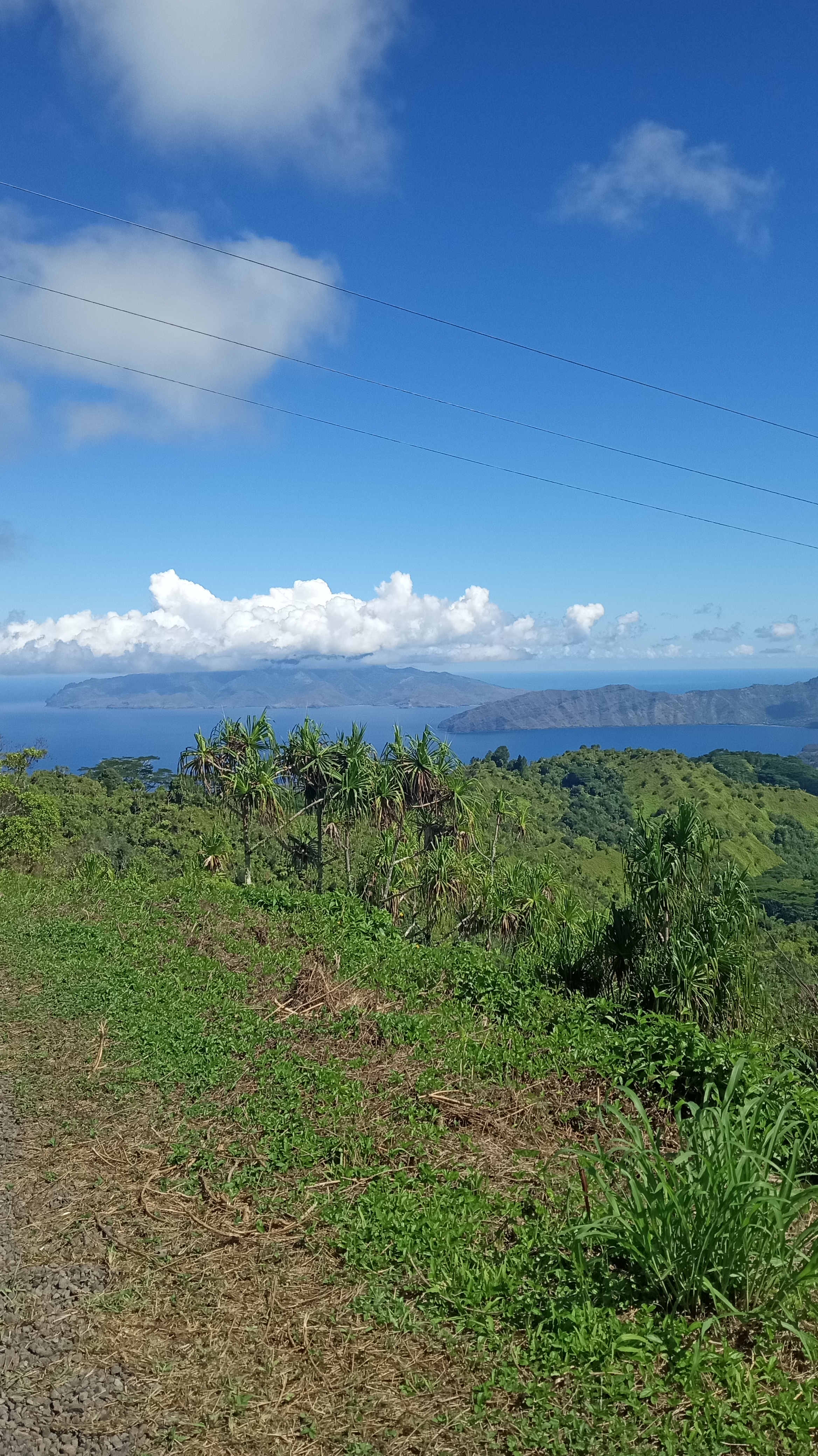
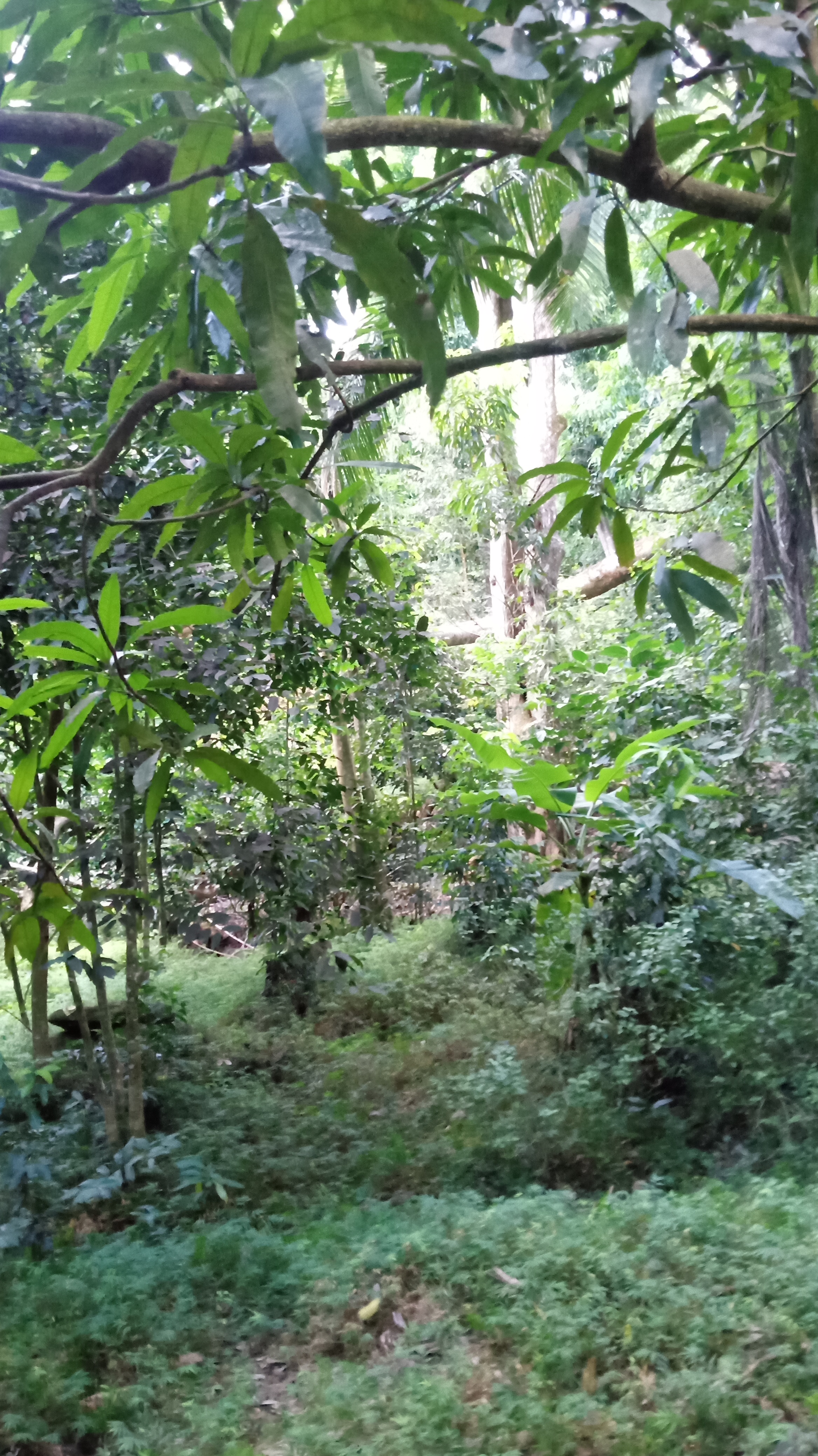
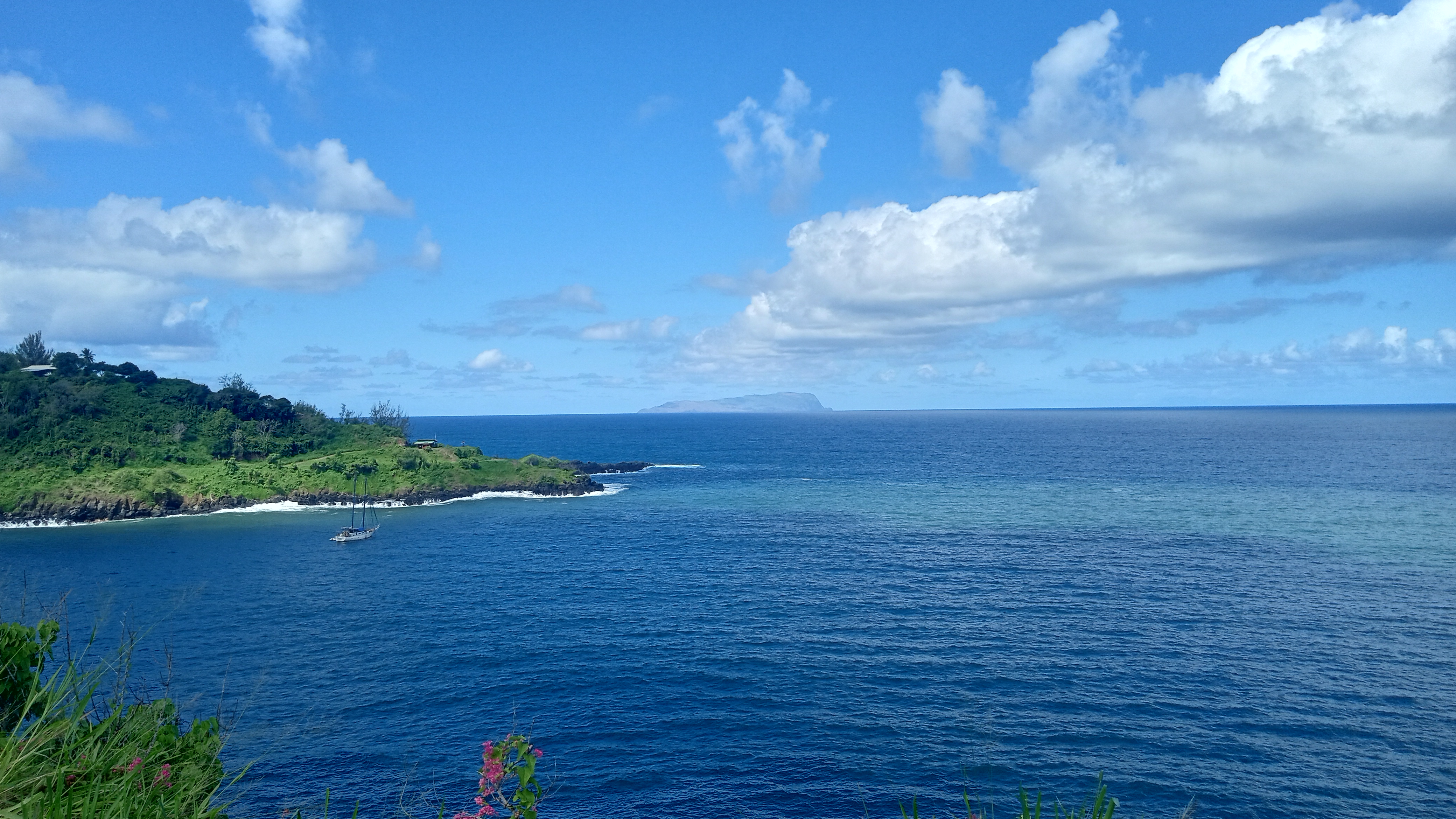
I have to say our time in the Marquesas came with some mixed feelings.   The islands are simply stunningly, prehistorically, lushly beautiful.   The anchorages – what to say about the anchorages – they suck!!   Having heard that the anchorages were less than ideal, our initial intent had been to move quickly through the Marquesas and onto the Tuamotos where we hoped to spend a fair bit of time before moving onto the Society Islands and then checking out of French Polynesia before our 90 day visa expired.   The reality was that, due to charging issues and weather, we spent a full 5 weeks in the Marquesas.   Normally I would do a bit of a day by day, but as we spent a lot of days doing nothing other than hiding below as rain squalls went through, or holding on for dear life in rolly anchorages, I figured I would instead summarize what we loved, and what we did not so much love, in the Marquesas.

Our Anchorages:

During our time in the Marquesas we visited three Islands – Hiva Oa, where we checked into French Polynesia – Tahuata, an island immediately to the south of Hiva Oa – and Fatu Hiva, perhaps the most famous of the Marquesan Islands.

We spent much more time at Hiva Oa then we would have liked – popping in and out of Atuona Harbour three different times.   Our first time in Atuona, when we checked into the country, we were anchored on the outside and it was terrible.   The roll of the boat was violent – rail to rail with some hobby horsing added in – and it rained for 2 of the 4 days that we were there, making in necessary to keep hatches closed and causing somewhat of a sauna to build inside.   The town of Atuona is a long 2 mile walk with a big hill in the middle so we were never really tempted to just pop in there – we went when we needed groceries and not otherwise.   Luckily, there was a store at the gas station at the harbour that had a surprising selection of items and we were usually able to grab a fresh baguette and whatever other small items we might need. 

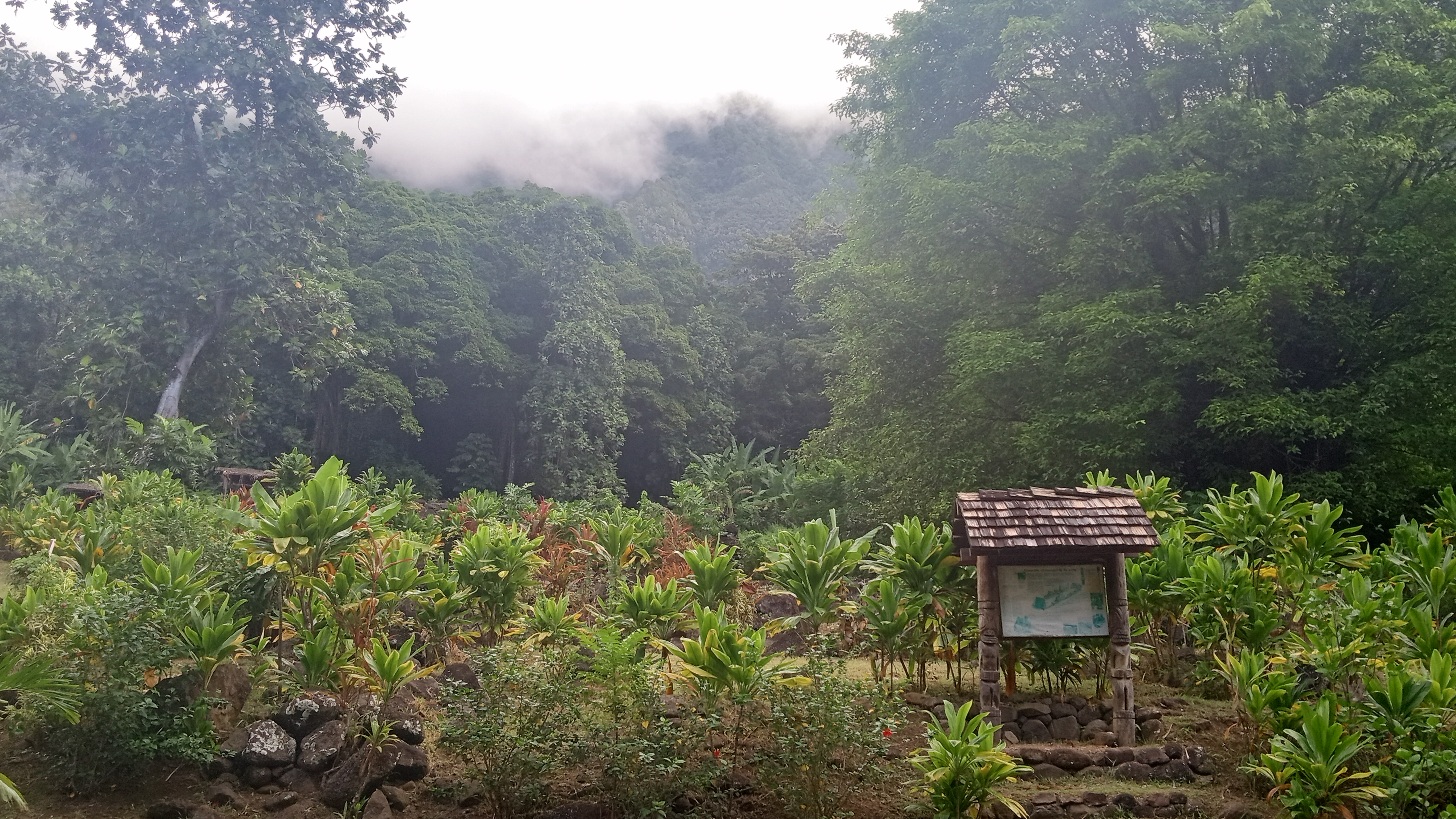
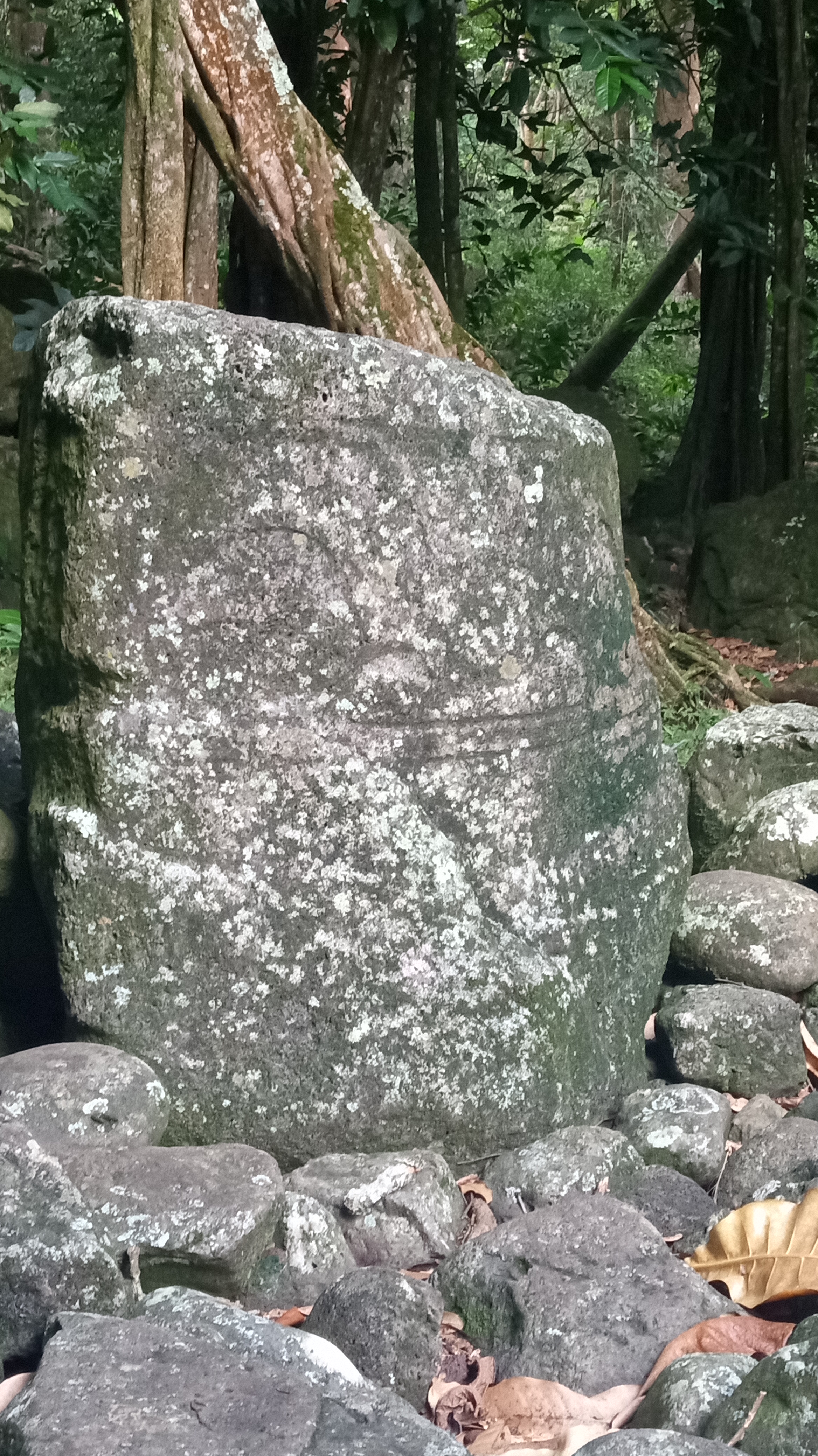
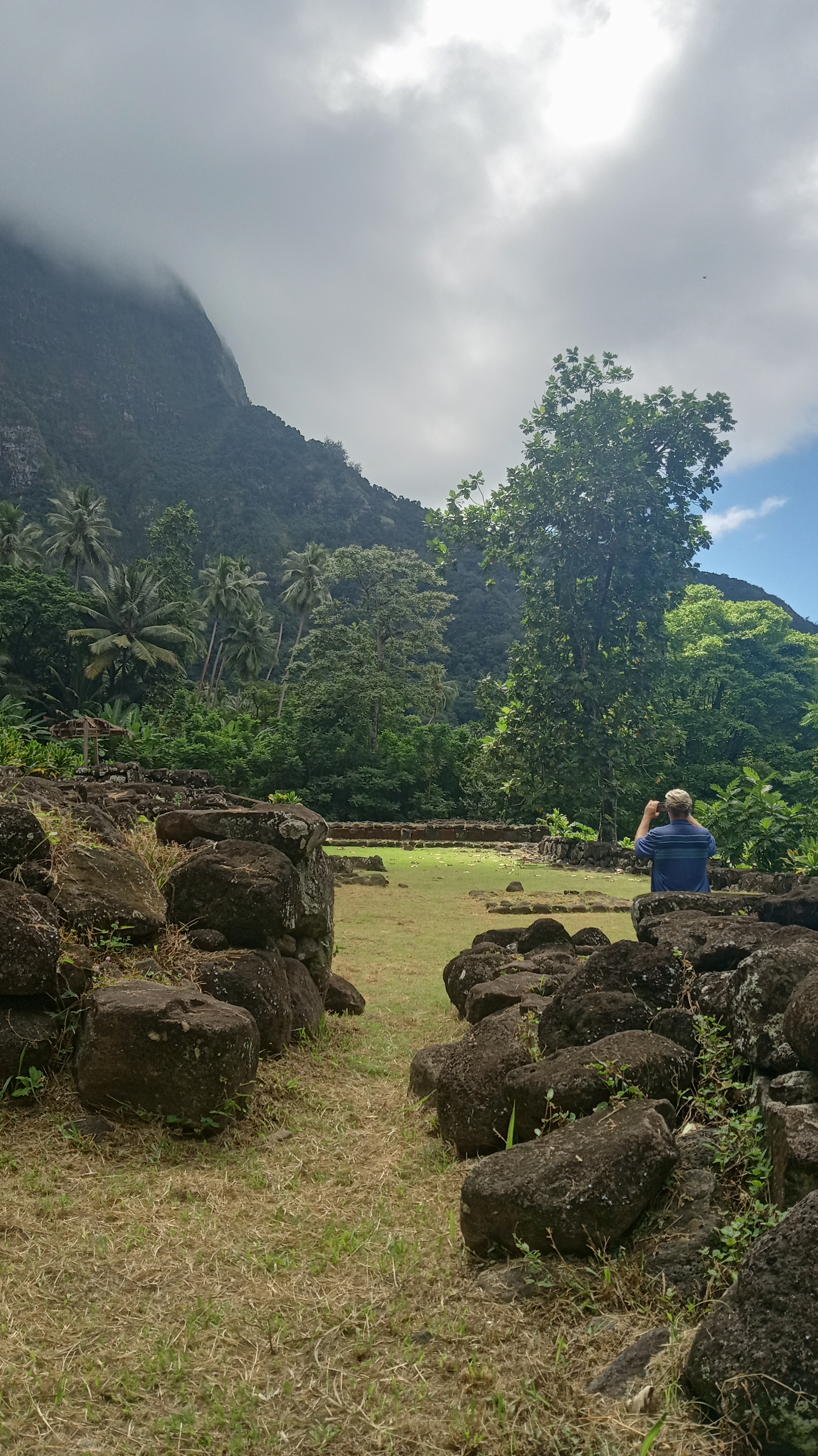
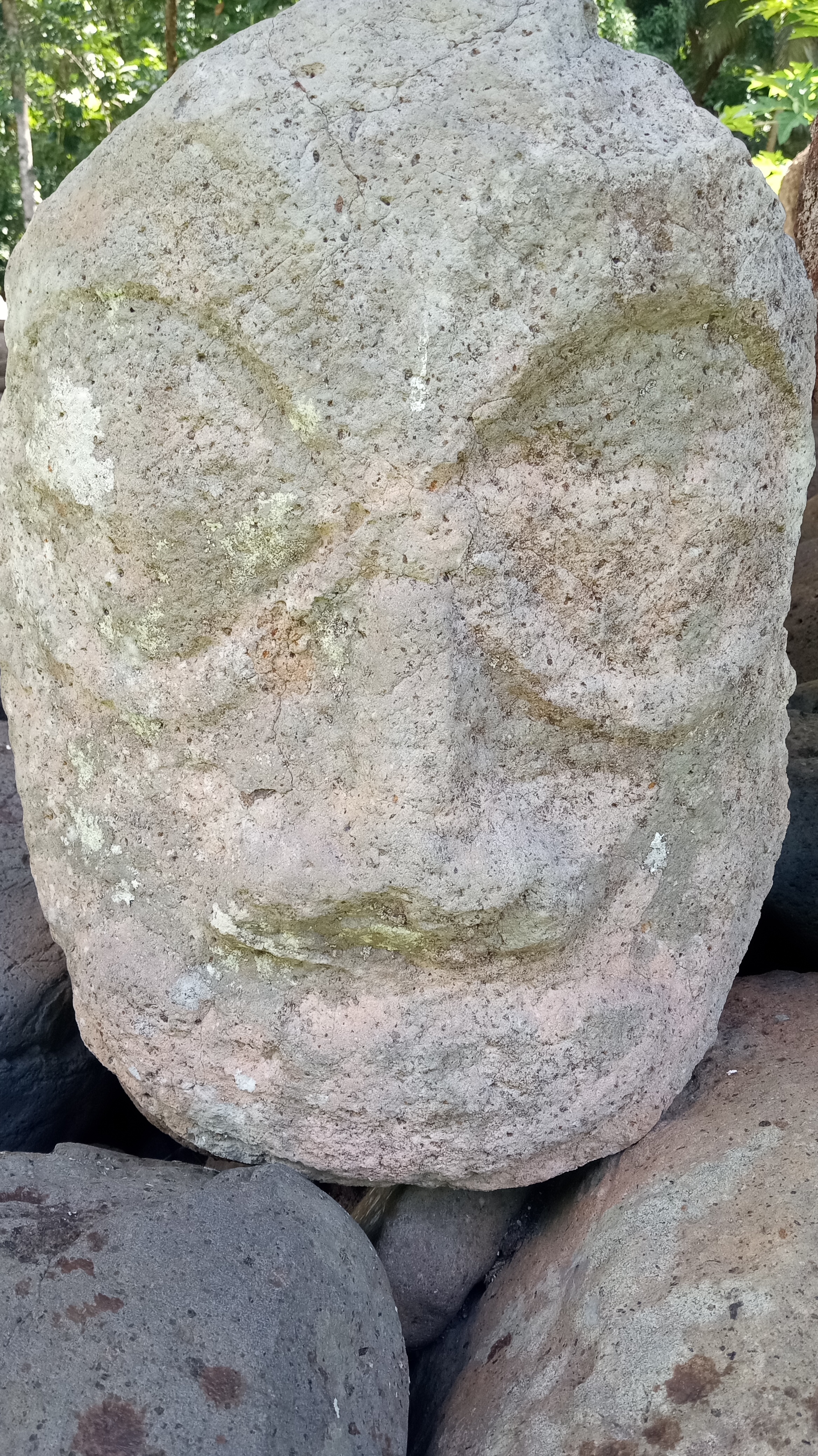
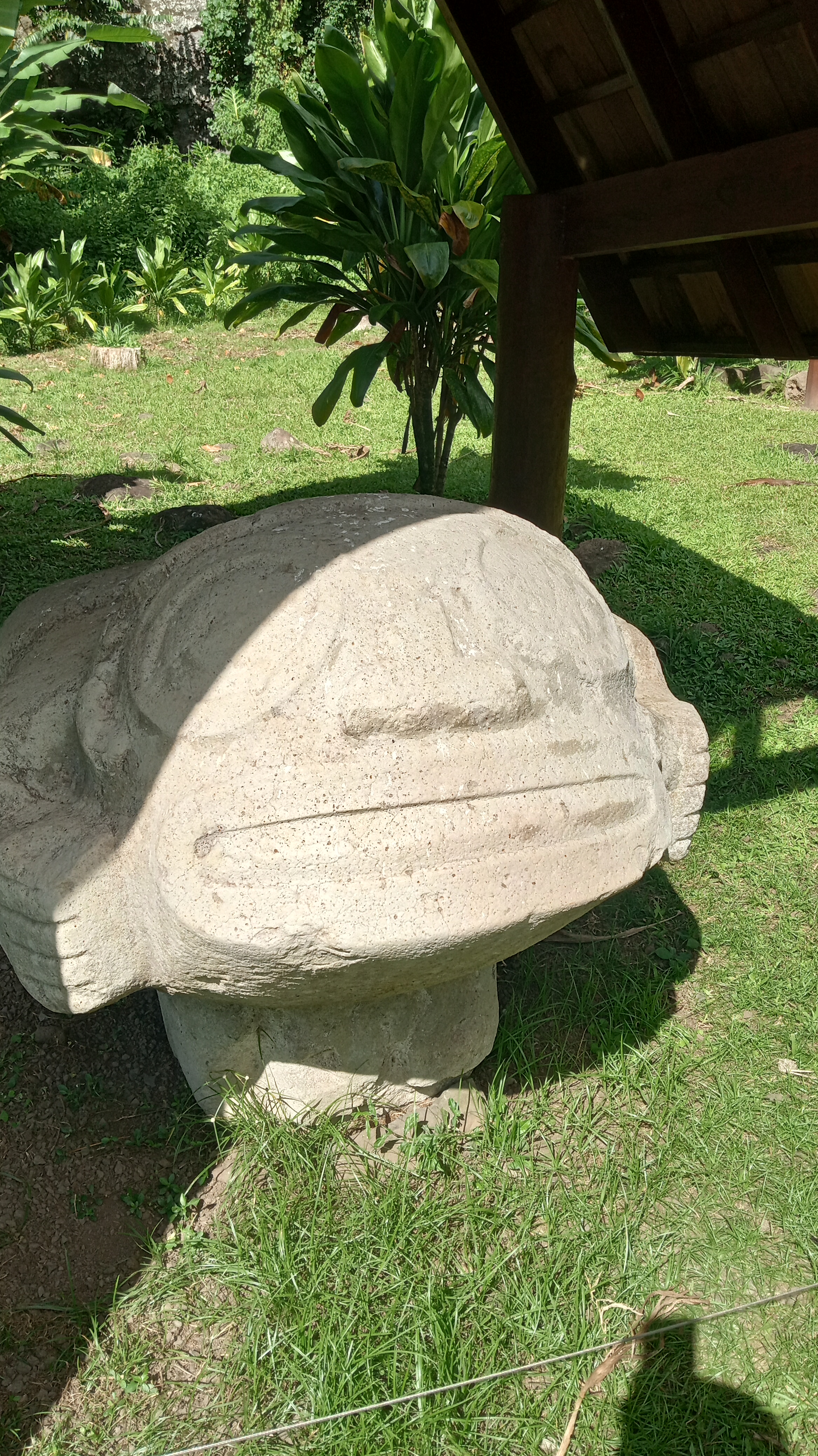
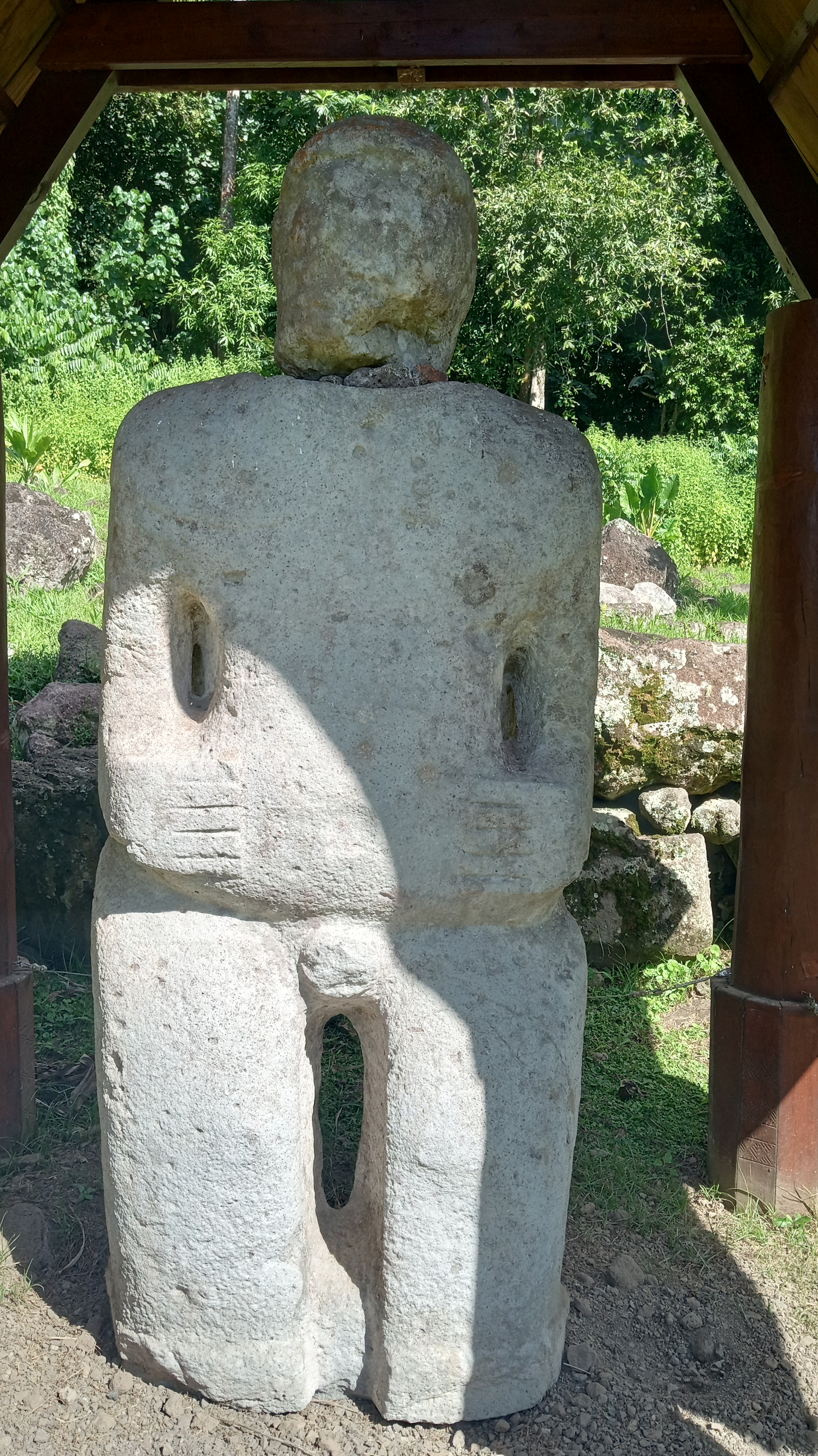
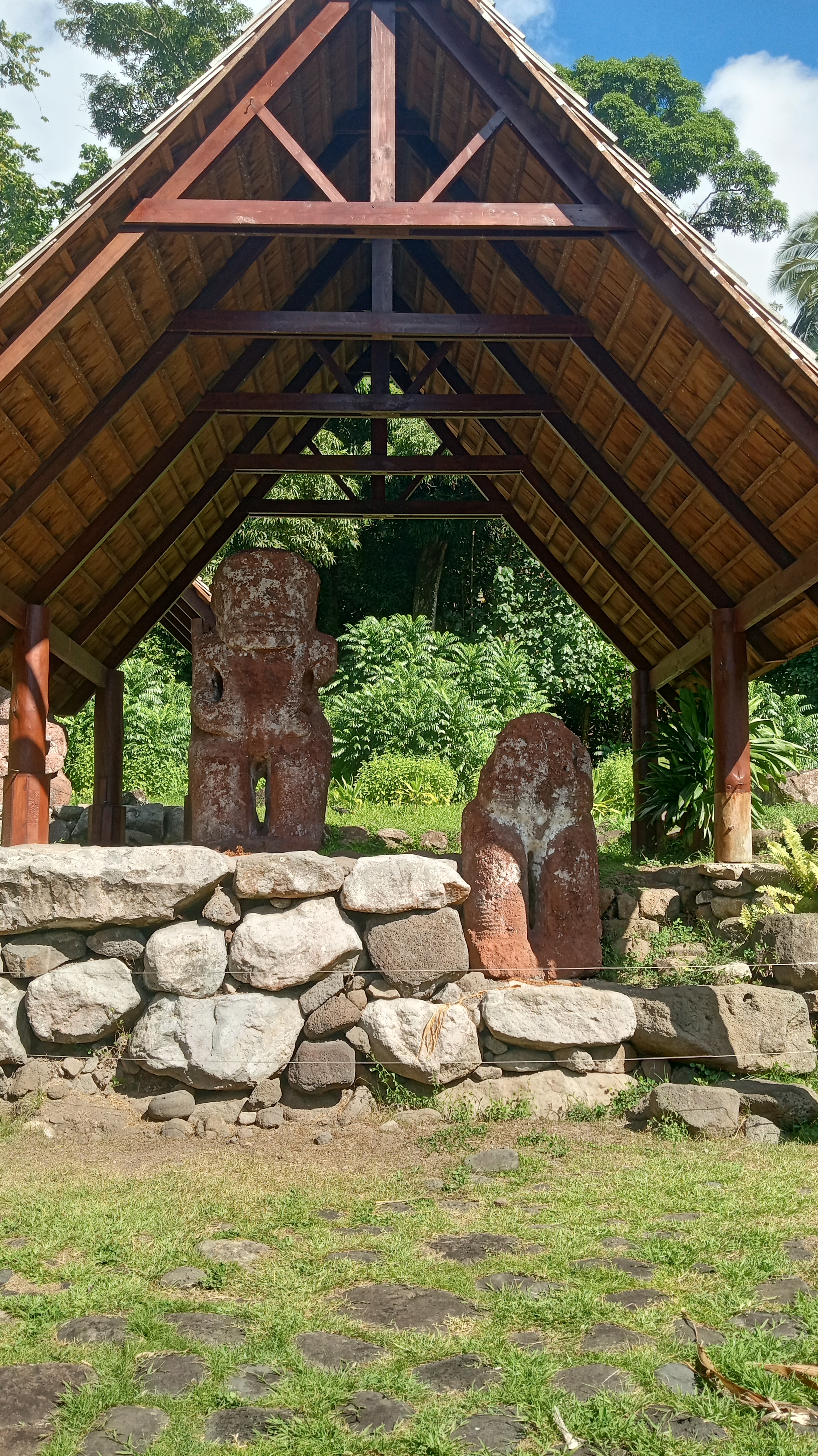
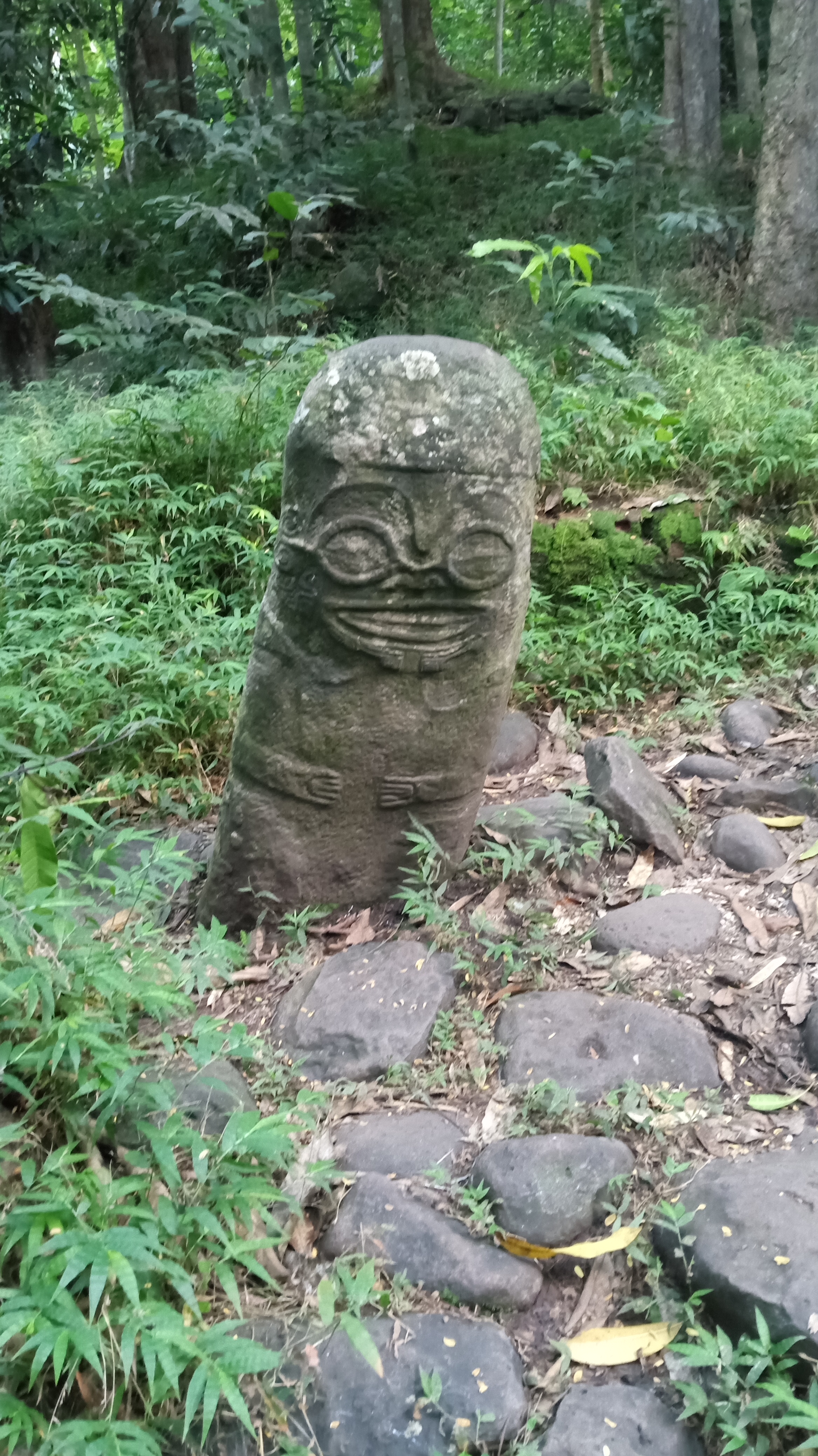
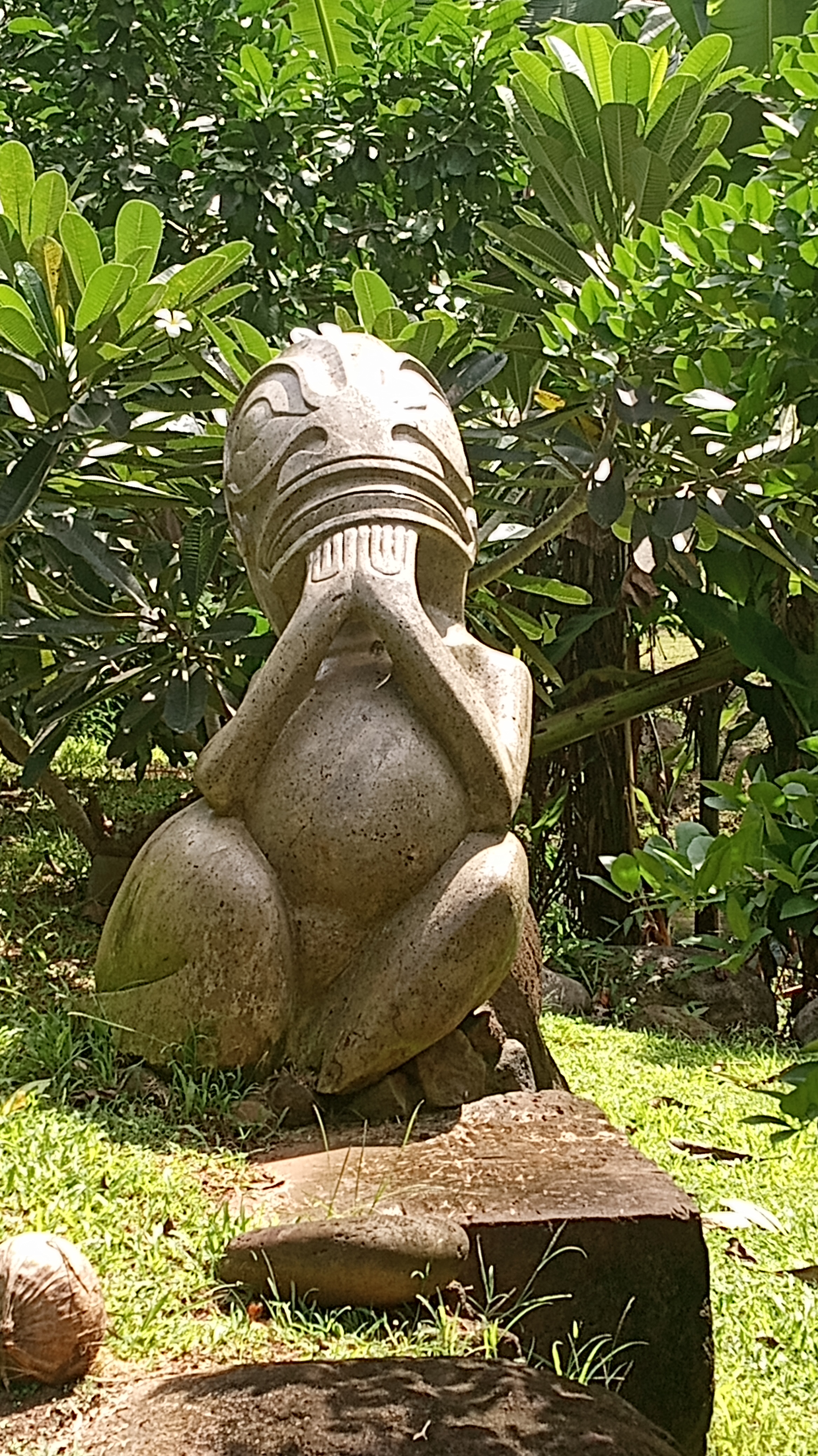
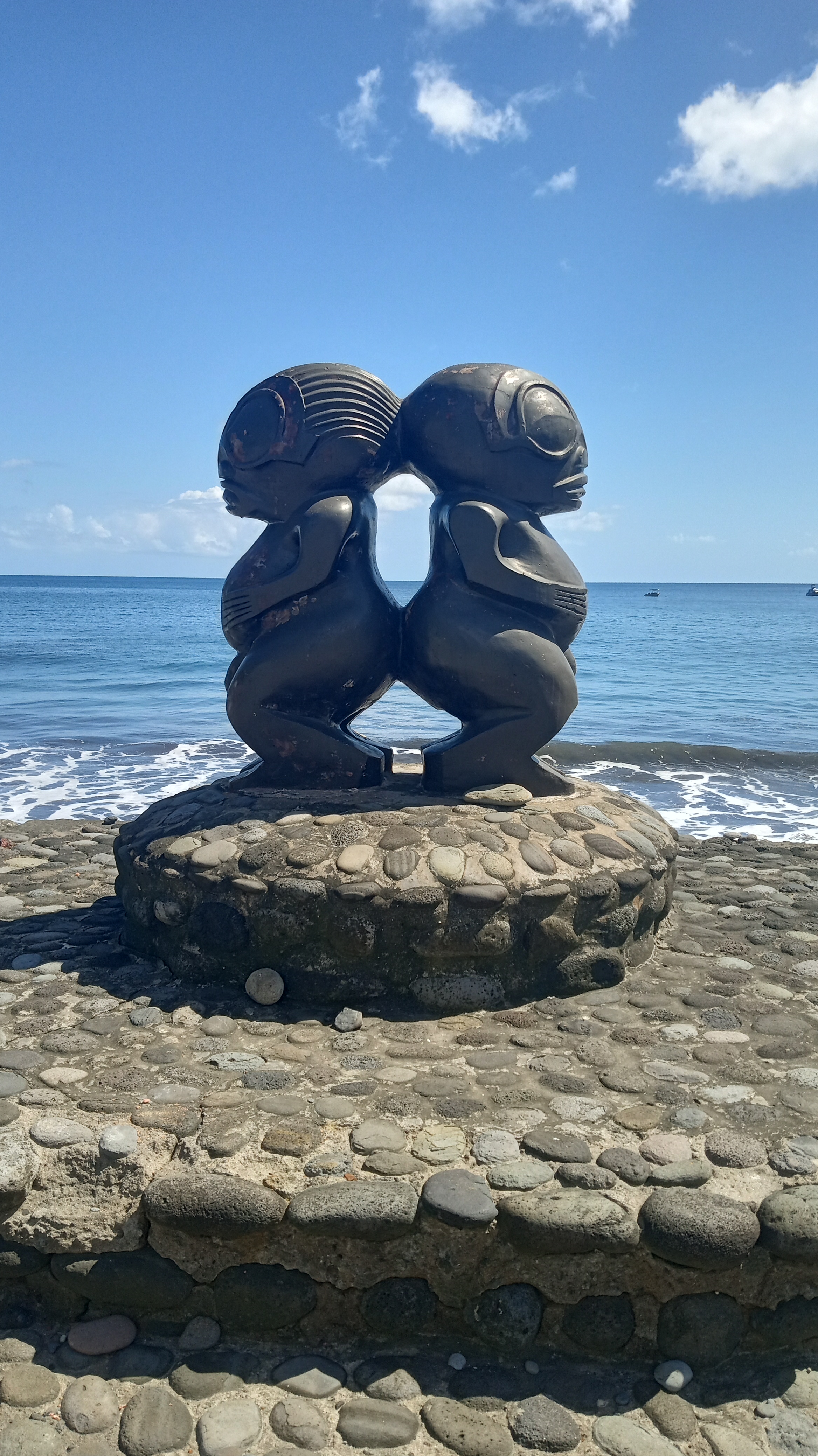
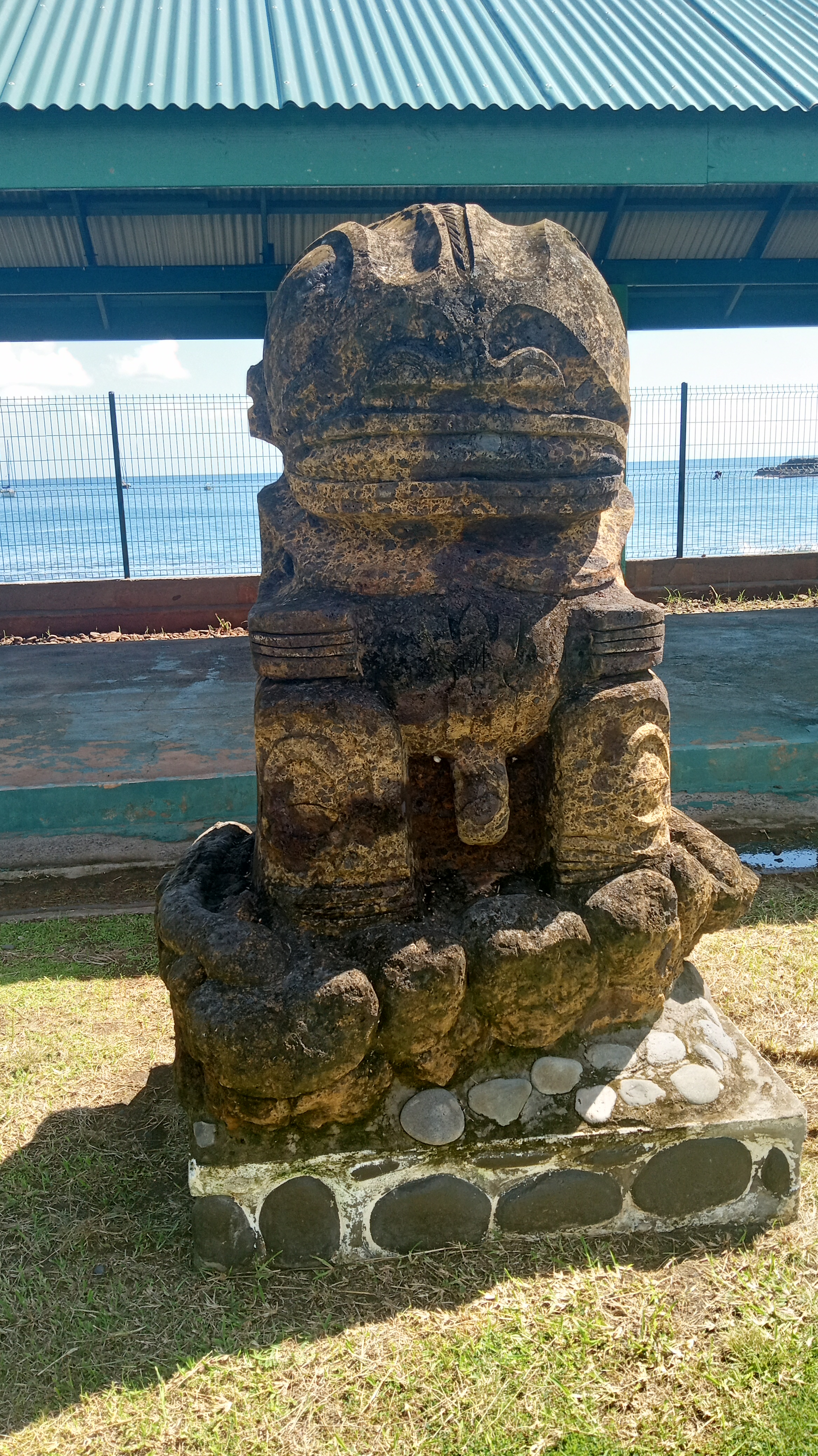
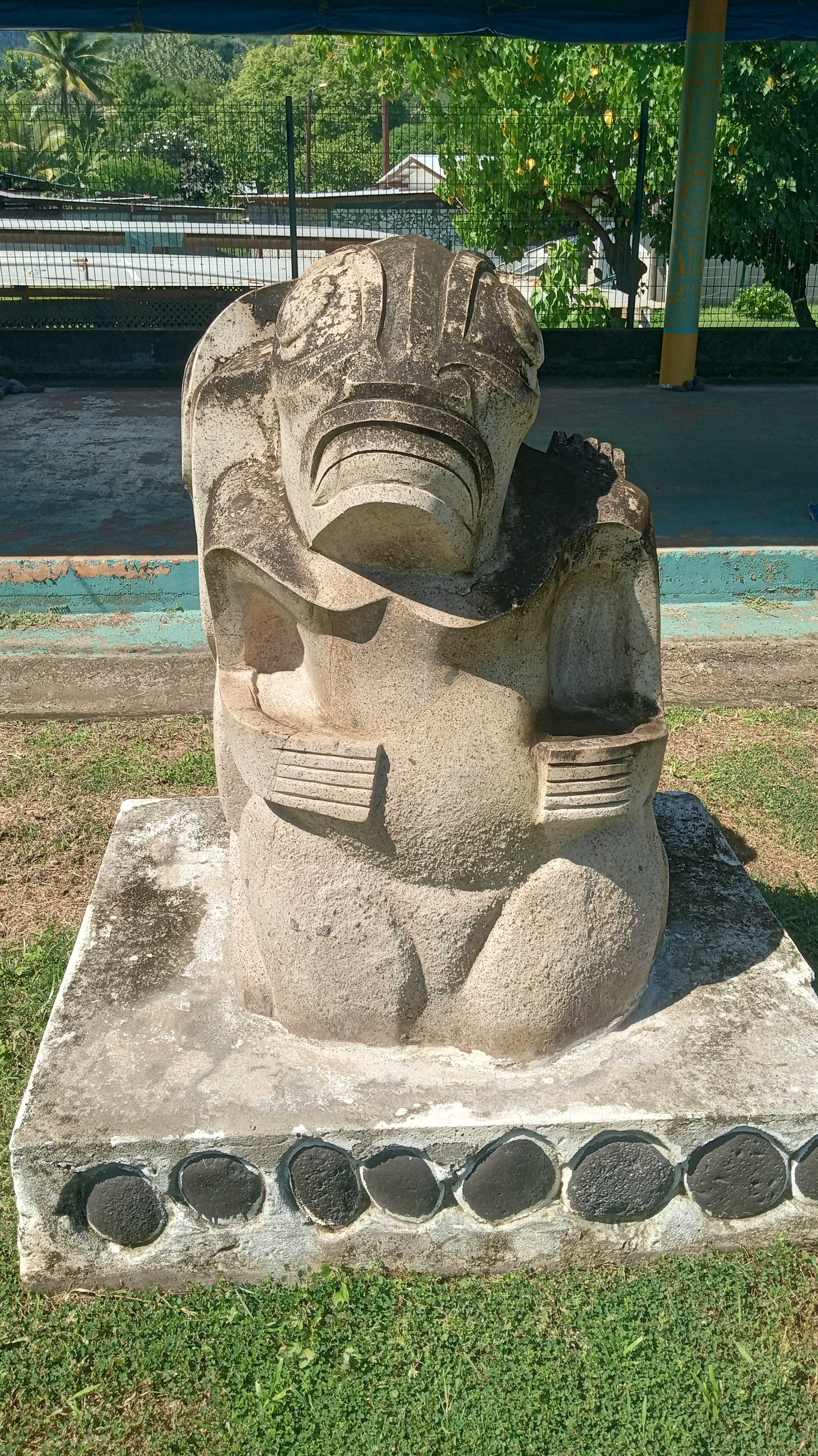
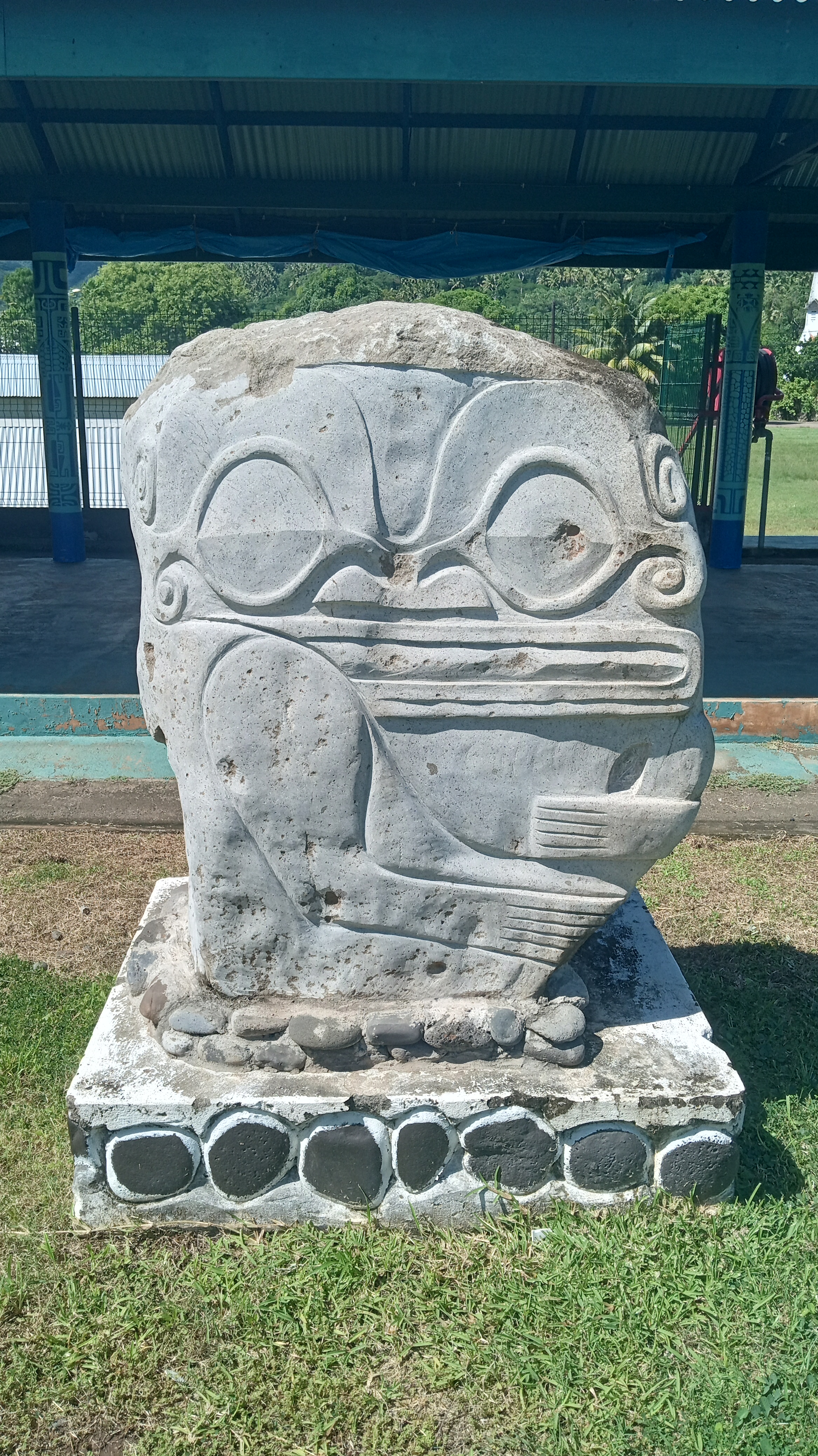
Our second trip to Atuona we were able to sneak a bit further into the harbour, though it was still quite rolly it at least made for a shorter, drier trip in the dinghy.  On this trip, we tried to book a tour of the island, arranging it for the day before we intended to head out again.  Unfortunately, the guide was sick the day we wanted to go and we weren’t able to reschedule with him because we were heading out on a good weather window.  Instead, we decided to rent a car and tour the Island ourselves.   We did make it to the sites that we would have seen on a tour and were able to google for information on some of them.   Owen loved the windy drive (me not so much!) and it was stunning to see the lush diversity of greenery on the island – from palm trees to banyan trees and everything in between.    We managed to make it from one end of the island to the other before returning to the boat having seen an ancient village site (where human sacrifices were performed) and a number of tikis.  

Our third visit was to pick up the batteries that we had finally decided to order after much testing, trying to ensure that it was in fact the batteries causing our charging issues, rather than some other component in the charging system.   After much back and forth, and a missed opportunity for a supply ship, we had finally ordered the batteries and they were to arrive in Atuona on the supply ship, to be received on our behalf by the chandlery.   We were anticipating that the supply ship would arrive on a Friday so the Thursday before we headed back to Atuona –fighting a strong wind through the channel – it made for a challenging and slow trip back and we were surprised to find the supply ship already at the dock when we got in.   Our next challenge was to anchor in the very crowded bay without being in the path of the supply ship’s departure.    We knew we needed to be anchored inside as we would be loading batteries in and out of the boat and couldn’t fathom doing that in the relentless roll outside the breakwater but the bay was quite crowded and there was a good surge running even inside the bay.   We finally anchored knowing it might be necessary to pull up anchor while the ship left.   We spent the afternoon being entertained by the comings and goings from the ship and finally, at about 8pm, the ship’s barge came over to ask us and two other boats to back further into the bay.   Rather than picking up anchor, we all drove back on our anchors, trying to hold station just far enough inside that we would not be in the way.    The ship finally departed, with its bow coming shockingly close as it crabbed away from the dock and pivoted to exit the harbour, and we were able to settle back to our original positions.   The next day was a challenge for our backs!!   We made two trips to the marine store that had received our batteries for us, using our handy dock cart to haul them the thankfully short distance to the dinghy dock.   We then loaded all four batteries into the dinghy and headed out to the boat.   We got the batteries from the dinghy to the deck and the deck to below decks where we swapped out the old batteries for new and then repeated the process in reverse to take the old batteries for disposal!!!   We were already exhausted by this time and then we had to get fuel.   Three trips later we had filled our tanks and had full jerry cans as back up.   We were able to try out the food truck that sets up at the Harbour on weekends on both our second and third trips to Atuona and enjoyed great meals both times.   We had no idea how big the meals would be the first time we were in, but we were certainly smart enough to bring a container with us the second time, taking enough food for an entire meal back to the boat!    It was a reality of the Island though that there was not much opportunity for dinners out and the places that we might be able to go were a two mile walk away so I just did a lot of cooking – there and everywhere else in the Marquesas really.   My mom used to have a magnet on her fridge that said her favorite thing to make for dinner is reservations and I am quickly realizing that I am so my Mother’s daughter in that regard!!   I don’t hate cooking, but when I don’t have any other option, it does become a huge chore – especially when trying to keep the boat stocked with anything fresh is such a challenge.  Our overall experience with Atuona was sadly less than positive.   I think that Hiva Oa would be a wonderful Island to do a land visit to – it is so stunningly beautiful – but anchoring there was just so uncomfortable, and without a car you are pretty much confined to a small harbour area. 

We certainly had some better experiences on Tahuata.   Again, we visited this Island three or four different times, using it as an escape from Hiva Oa.   The anchorages on Tahuata are on the west side of the island, making them slightly less susceptible to a big swell, but 2 of the three anchorages that we stayed at were still pretty rolly.   Hapatomi Bay was the bay that we had first escaped to, with calm water and very little roll.   During the day it was a wonderful spot to swim and just hang out in the cockpit enjoying the view.   At dusk however, the little no-see-ums would descend on the boat in hoards.   We would need to turn off all of the lights for hours around sunset, hoping to limit the number of them in the boat – this made cooking dinner a challenge as the sun goes down about 5:30!   We came into this bay a couple of times on our trip – the first time for a few days – the second for over a week.   We had actually intended to leave Hiva Oa and head directly to the Tuamotos after our last visit to Atuona.  Unfortunately, a weather system was moving into the atolls that would have made it nearly impossible to safely get into the passes through the coral reefs.   Erring on the side of caution, we decided to delay until the system had passed by – we didn’t count on it heading directly north and right at our position in the Marquesas, meaning that we were actually 13 extra days at Tahuata before we could head south. 

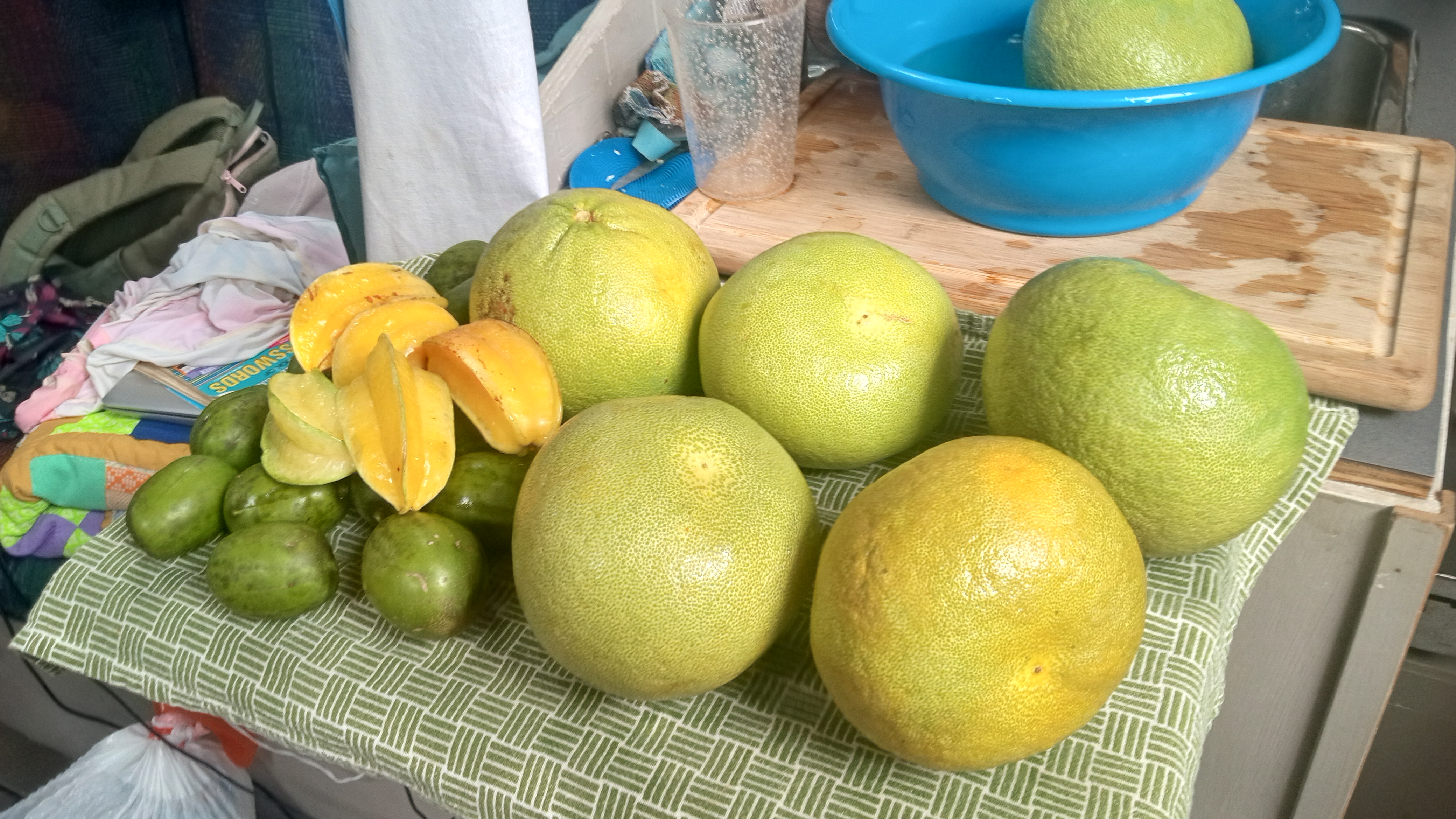
The other anchorages that we stayed at on this Island were Vaitahu Bay and Baia Hanamoena.   Vaitahu bay had a small village that included a grocery store and a couple of food “shacks”.   The disadvantage to this bay is that it was in the mouth of a valley, and the wind would rip through the valley, accelerating its way through the anchorage – a 15 knot wind anywhere else would be blowing 25 in the anchorage.   There was also a fair swell into the anchorage and the dinghy dock was completely exposed – it took some timing to jump off onto the dock as the boat rose up into the swell – and even more to get back into the dinghy!!   We actually had to use a stern anchor on this dinghy dock, just to keep the dinghy from crashing into the dock with each swell.   The town was lovely though and the store fairly well stocked.   We did have lunch at one of the shacks on our first visit and while it was not anything to rave, I didn’t have to cook it so that makes it fantastic!!  On our second visit to the bay, we were lucky enough to find a local selling both beautiful carving necklaces (I got an adorable sea turtle necklace) and a bag full of delicious mangos.   We also met up with a cruiser who introduced us to a local who had a beautiful garden and was able to sell us a huge bag of pamplemousse, starfruit and another fruit that I still haven’t entirely identified.   It was the first time we had been able to buy fruit and I was so excited!!    It was also a great opportunity to realize how extensive the little town actually was, rising up the hill with the properties hiding amongst the lush foliage. 

Baia Hanamoena was so beautiful – one of the only bays in the Marquesas with sandy beaches.   The bay was home to Manta Rays who would come out to feed in the evening when the jelly fish were present in the bay – it was amazing to watch these creatures just casually drifting around the bay.   There was again a pretty big swell into this bay so getting on that georgous sand beach was a bit of a challenge – we actually anchored off the beach and then swam in, rather than having the dinghy dumped onto the beach by the swell, where we would have to battle our way back out.   We did only spend a few days in this bay – even though it was so beautiful, it was really the most rolly of the anchorages on this island and there were rocks on the bottom making for nerve-wracking griding noises all night.   

We made our visit to Fatu Hiva after our first couple of weeks in the Marquesas, sailing out of Atuona harbour at about 3:30 one morning and travelling through the night and arriving mid-day at Baie Hanavave – otherwise known as the Bay of Virgins or the Bay of Penises.  If you google Fatu Hiva (or the Marquesas for that matter), this is the image that you are likely to see.   The bay is amazing with tall, spiring rock formations, mist settling on the hills and lush greenery taking your breath away.   It is also a terribly deep bay with few good anchor spots.   Our first night, we anchored right at the front of the bay in fairly shallow water and at the mouth of the river.    When it monsooned that night, we dragged in the boulders that were being coated in mud that was being washed into the bay.   We reset in much deeper water the next day, after 3 or 4 attempts at setting and settled in for a couple of rainy days.   When the weather finally broke, we went ashore to walk around the small village and were invited to go to a local’s house for a dinner that she cooks for cruisers.   We joined a Danish family for dinner – sadly a French boat had committed to coming as well and not one of the five people actually showed up – we felt so badly for the woman who had cooked a feast for a table of 12, only to have nearly half of her guests be no shows.    We enjoyed our visit with the other cruising family but sadly didn’t really have much interaction with the family hosting us – it felt like a lost opportunity for a cultural experience.   

The next day we went the short distance down to Bahie D’Omoa.    This is a very exposed, rolly anchorage – you could not anchor too close to shore as the surge was crashing into the shore.   We got ourselves settled and took the dinghy into the thankfully protected dinghy dock.   I think this was our favorite town in the Marquesas – the locals were all so friendly and seemed truly happy to welcome you to their beautiful village.   To that point, we had found that the locals were polite but not overly friendly so it was a breath of fresh air to see so many beautiful, welcoming smiles.   There were a number of tikis spread throughout the town and a good eagle eye view of the anchorage.  We were able to stock up on a few items – even eggs – and then got the boat tucked away for the trip back north.   This time we left mid-afternoon, arriving back at Tahuata early the next day.

Charging Problems:

Unfortunately, our time in the Marquesas was plagued by relentless charging issues.  Owen had spent hours cleaning connections, checking for voltage drop, rerouting wires – still we were getting a very low rate of charge and the batteries didn’t seem to be holding the charge.   We did finally break down and order batteries (at a not insignificant cost!)  –  it does not appear to have fixed our problem.   We are realizing that part of the issues we are having stem from the incredibly short winter days, keeping our solar input low.  In addition, while I love my little 12 volt freezer, and it would be very difficult to manage without it, it is drawing way more power than advertised.   Add to that the power draw of starlink and everything else running on the boat and we probably actually need more battery storage.   We are finding though that the alternator is not putting out a good charge so that will be the next thing to get tested.

Shopping challenges:

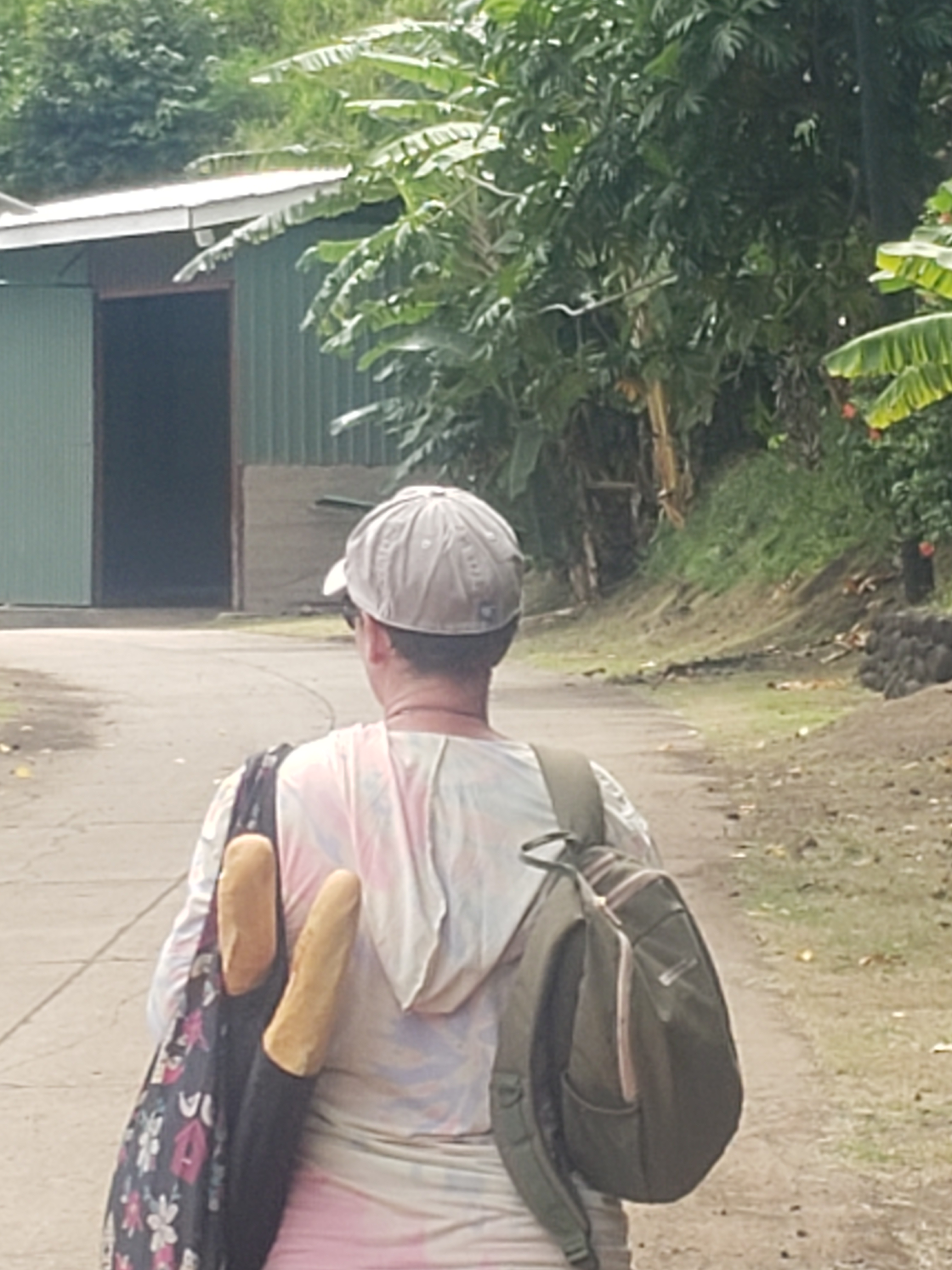
Grocery shopping is another of the challenges in the Marquesas.   Fresh food is nearly non-existent.  If you make it into a store on supply ship day, you may find a slightly better selection – potatoes, carrots, apples – but even then, there is not much to choose from.  I actually found a clamshell package of spring mix lettuce one day and was beyond excited – it was probably over $10 for that little package of lettuce but we sure did enjoy our salads!!   The meat selection is limited to frozen items – I once managed to find a bag of frozen chicken breasts but otherwise chicken, beef and pork seemed most commonly sold in packages of diced chunks of meat – it was a bit off-putting.  I did splurge on a roast one day and we enjoyed a delicious traditional roast dinner, right down to the Yorkshires.  Most of the stores we were at had a good selection of canned goods, flour, spices, etc.  – even the gas station.   You could buy baguettes nearly anywhere – but eggs were gold – I managed to get them at the gas station once by asking for them (she had them hidden in the back) and found them on the shelf at Fatu Hiva.     Luckily, on our last grocery run at Atuona, the ship had just been in and there was actually a box full of egg cartons.   It is so funny that in a place where there are chickens running everywhere, it is nearly impossible to get eggs!    Cream cheese, cheddar cheese and sour cream do not seem to exist here – you can usually find brie and emental but it is quite pricy.  I can occasionally find a package of yogourt – at a premium and only if the supply ship has just been in.    I found a loaf of actual fresh sandwich bread once – I don’t know what I paid for it and probably don’t want to!!   I do know that you could buy a loaf of frozen bread for about $12 if you were lucky enough to find it in a freezer.   I have resorted to baking bread and buns about every second day just to ensure that we can have sandwiches and toast – that has been an interesting challenge as I am just not a natural baker – I am starting to get pretty good at it though!

We were pleasantly surprised by the cost of diesel here – less than $2 per litre, which I believe may be less expensive than at home right now.   We are assuming it must be subsidized – we expected to be paying a premium as it needs to be shipped to the Islands. 

Other cruisers:

Unlike Mexico, where a good majority of the cruisers were either from the US or Canada, we are very much the minority here.   We have not seen another Canadian boat since we left Clarion Island and have seen very few American boats.    Most of the boats that had crossed from Mexico around the same time as us had already begun to move south and west by the time we arrived.   The anchorages are largely populated by French, German, Dutch and Swiss boats.   It has been a rather shocking thing to realize that many of these cruisers do not think twice about hanging out on the back of their boat buck-naked – I have seen more hairy French and German asses than I ever wanted to!!  We have met a few cruisers who were able to chat with us in English but not as many as we hoped – it has honestly felt pretty lonely in the Marquesas and we are hoping we may be able to start crossing paths with some of the boats that we know once we manage to get ourselves a bit further west.

After five weeks in the Marquesas, when the weather was finally clear to depart, we realized our time in French Polynesia was starting to wind down, and further realized, that we would need to limit our time in the Tuomotos to one atoll and so we chose Fakarava.

Our first day out was pretty wild, but fast – we made over 120 miles in our first 24 hours and kept that pace for the next 24 hours.   Day three was still over a 100 miles and it was only on day 4 that the wind started to ease and we find ourselves slowing a bit – even so, we were able to make the 534 mile trip in nearly exactly 5 days – arriving in Rotoava on Fakarava mid day.  

Overall, our time in the Marquesas was not ideal – we spent a lot of time in less than perfect anchorages.    The islands however are simply stunning and sitting in the cockpit, trying to decipher how many shades of green there are in a square meter of shoreline could literally occupy hours of your day.   I think if we had been less stuck there – if we had sorted out our charging issues earlier, if we had not been stuck there by weather, we might have found the uncomfortable anchorages less challenging.   We are so happy to be able to say that we spent time in these magical islands, but I can’t claim any desire to return to their anchorages!  We do know we are lucky to have made it to a part of the world that few people have the opportunity to explore – there are flights in and the supply / cruise ship does call in for brief stops but we don’t believe that tourism outside of cruisers is very extensive in the Marquesas – it is just too remote.