Cooling Off in Auckland, New Zealand

After a long southern summer on the docks at Nawi Island Marina, in Savusavu, Fiji, we had reached a point where we were convinced we may never be cool again.   The relentless heat – you wake up sweating, you sweat all day, you go to bed sweating, surrounded by 4 fans and praying for just a moment of relief – was finally getting to us.   We also needed to renew our visas and rather than just submit the paperwork to do so, we thought it would be easier to just leave the country for a brief time, thereby resetting our visas.

After some thought, we finally decided on a quick trip to Auckland.   We would have loved to have spent several weeks in New Zealand, perhaps renting a camper van and exploring some of the country, but our funds were starting to dwindle and we didn’t really want to leave the boat too long during what was still cyclone season.   With that in mind, we booked an 8 day getaway, flying from Savusavu to Nadi – where we overnighted, on to Auckland and then back via a night in Nadi. 

Our evening in Nadi on the way down did not give us much time to explore but we still managed to get out for a short walk-about before retiring to the small condo we had booked for the night.   The next morning, we were up early for a quick breakfast and then an afternoon flight to Auckland.  While we didn’t have the time to explore, we could see that Nadi was a bit more bustling than Savusavu, but no less friendly and welcoming.   We would have loved the opportunity to explore a bit more, but our respite from the heat was awaiting in New Zealand and we were excited to get there!

We landed in Auckland late afternoon, and immediately realized that we may have gotten more than we bargained for!   It was cold – like really, really cold – and windy!   As I frantically dug through my bag to find the long-sleeved hoody I had thankfully thrown in at the last minute, Owen looked into our options to get to our hotel.   A cab or an Uber would have been ridiculously expensive but a quick search revealed that the bus/train options were excellent.   And so, we bought ourselves transit passes, downloaded the app, and, after a brief wait at the wrong stop, found the bus to take us to a train, which deposited us at a station right at the waterfront, a mere ten-minute walk from our hotel.  The walk to our hotel took us along the waterfront, around the inner harbour marinas, over a lifting bridge – it all felt so – so – like home!   It was like walking along the seawall in Vancouver.   We immediately fell in love!!!
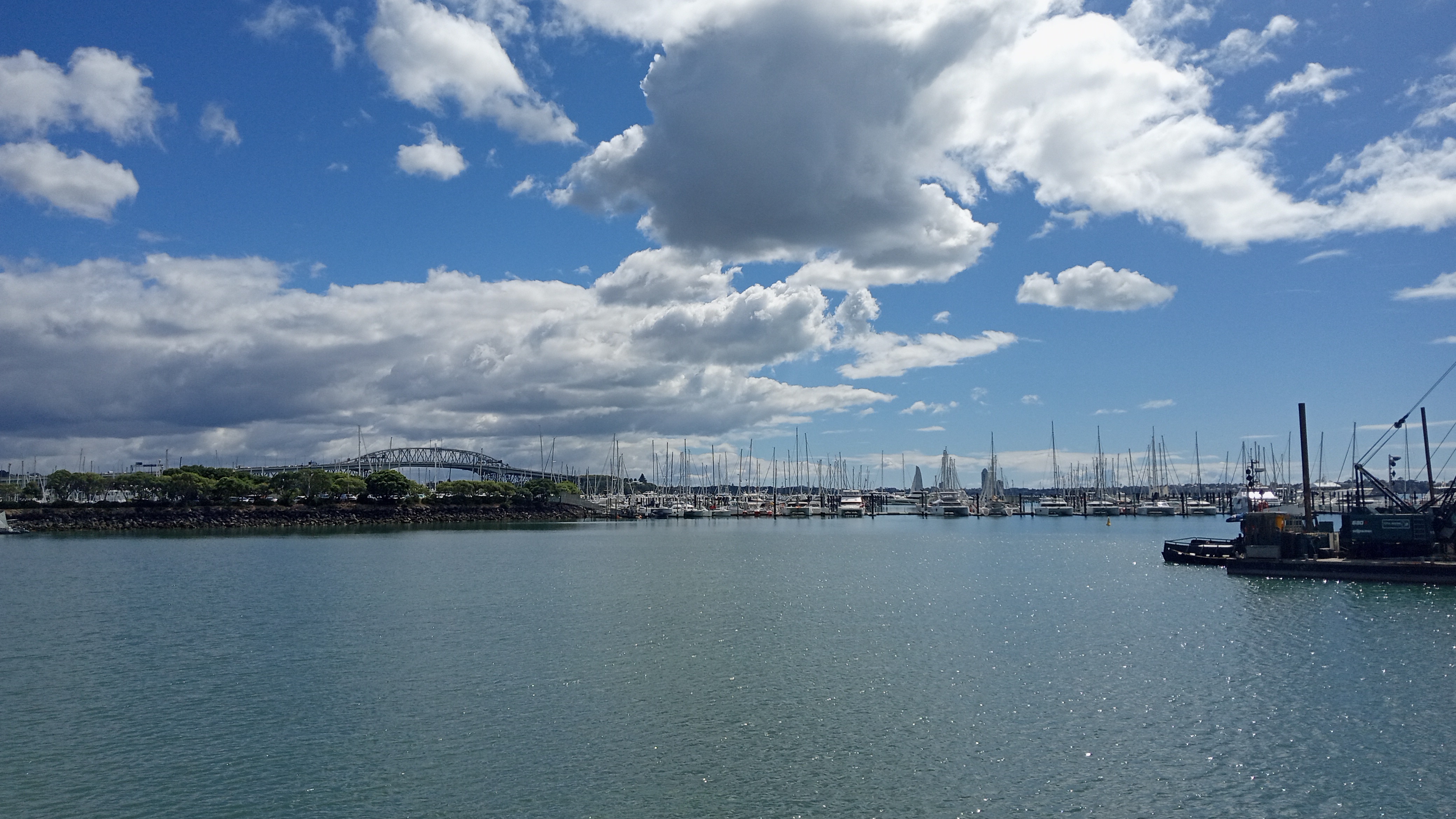
We could already see that we would have no shortage of restaurants to try out while we were in New Zealand.   One of our very few complaints about Savusavu has been the lack of variety in the food – most restaurants have the same menu of stirfrys, hamburgers and fish and chips.    As we walked to our hotel we saw all manner of restaurants and bars, discovering a wonderful Italian place just a half block before our hotel  – we were happy to return there after we checked in. 

Our hotel was located in the Wynyard Quarter – an area filled with lots of restaurants but just outside the edge of the action.   As a result, it was a bit quieter – if we wanted the nightlife or action, it was just a short walk across the bridge.   This was exactly how we liked it.  We did have a slight misstep when we first checked in – we had booked, and been very excited about, a room with a king-sized bed.    When we arrived in our room we found two twin beds pushed together.    I had been dreaming about a big, cool bed to stretch out in – I nearly cried.    We immediately went back down to the lobby – the attendant was extremely apologetic – their system had been down and they had been checking people in using an excel spread-sheet.   He immediately changed our room and upgraded us to a room that had a view of the harbour and of the tower – and of course, it had a big, comfy king sized bed!!  Keep in mind that our bed on the boat is, at its widest, a double bed – that king sized bed was EVERYTHING in that moment!

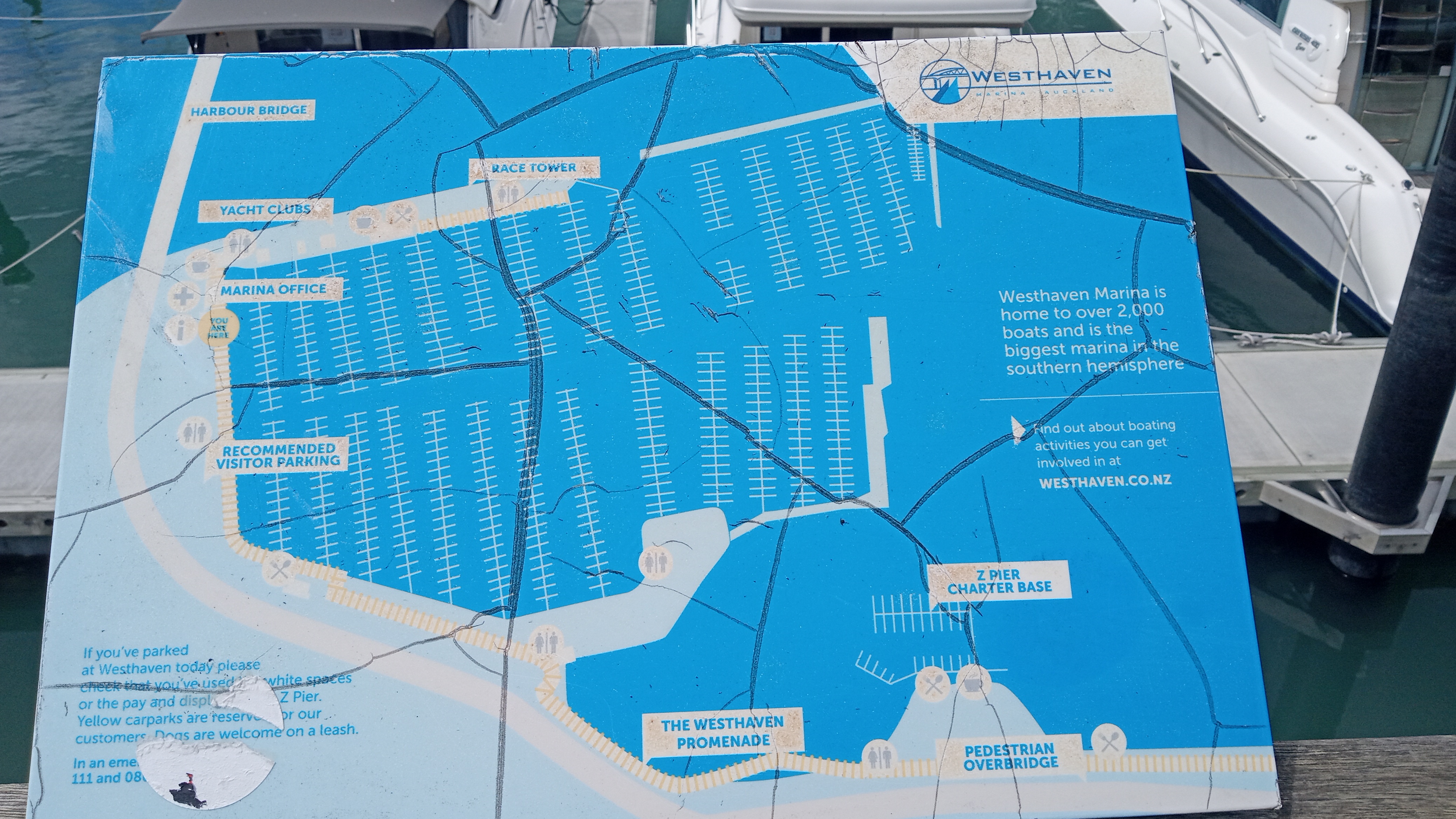
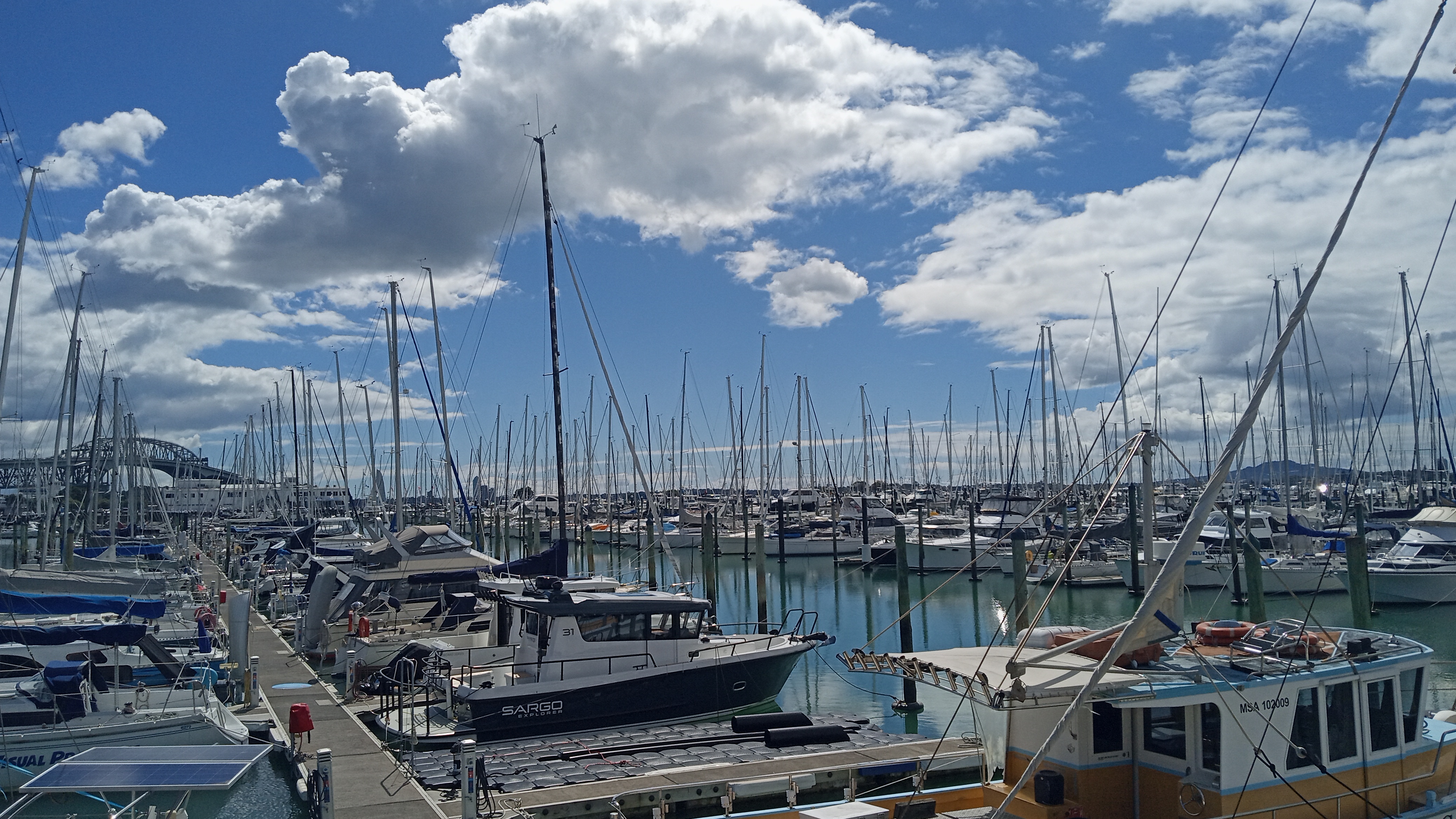
Our first day in Auckland, we set out do some boat part shopping.   We started at Sailor’s Supply – a short walk from our hotel and scoped out what was available there (so much!).   We then walked along the seawall, finally coming to the Westhaven Marina.   Westhaven is apparently the largest marina in the southern hemisphere and it is not hard to believe that – it is a small city of masts!!!   Auckland is definitely a sailing town!  We finally made our way around the marina and found Fosters – one of the oldest chandleries in New Zealand, and Burnsco – seemingly one of the biggest!!   We spent several hours and many dollars, stocking up on items we had not been able to find since leaving Canada!   We had to keep our luggage limits in mind – it was hard to not buy even more!!  We finally headed back, again walking along the seawall and back to our hotel, but not without a brief stop at a marine bookstore.   Our feet were so tired by the end of the day, we could barely drag ourselves out for dinner!
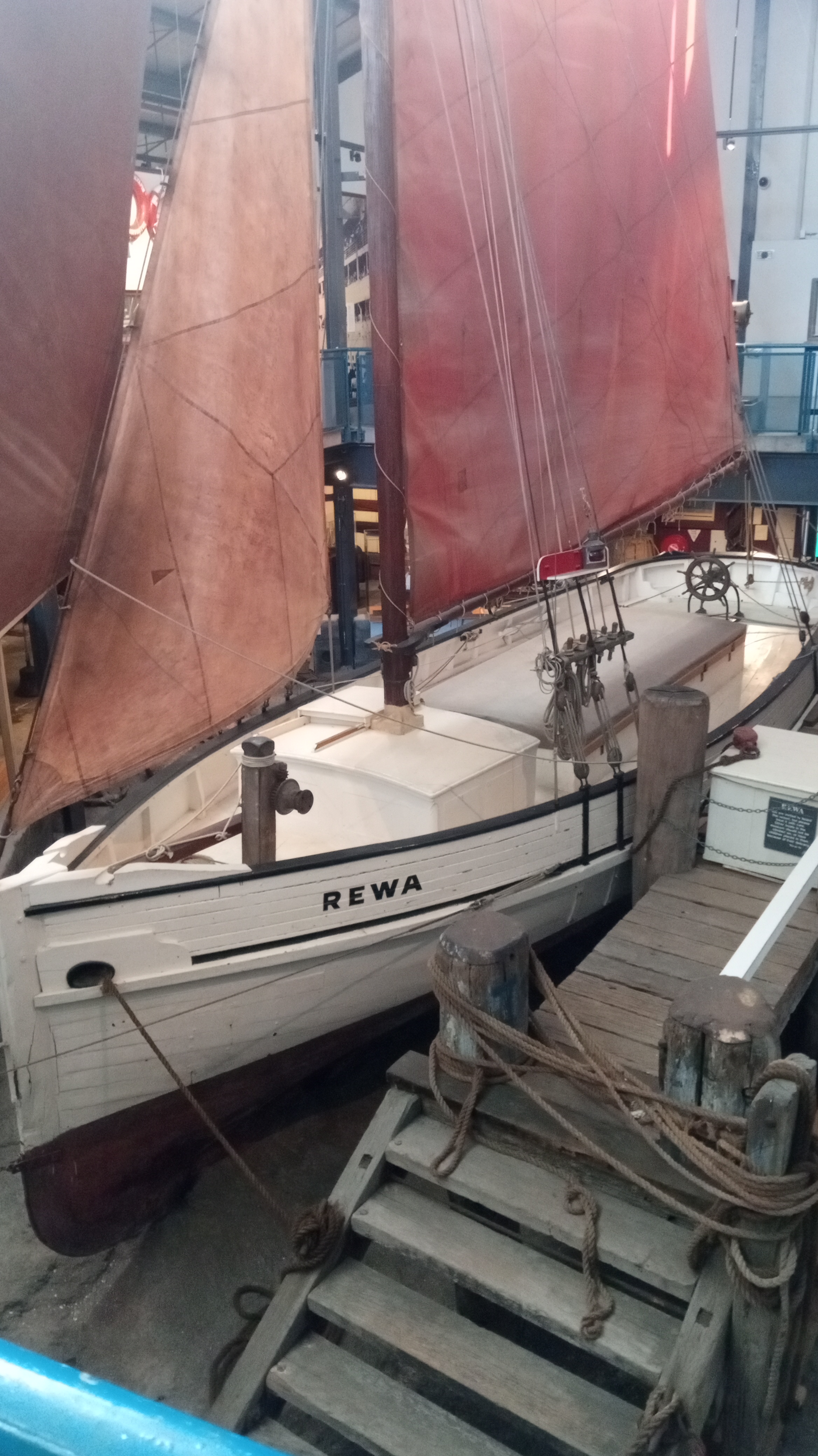
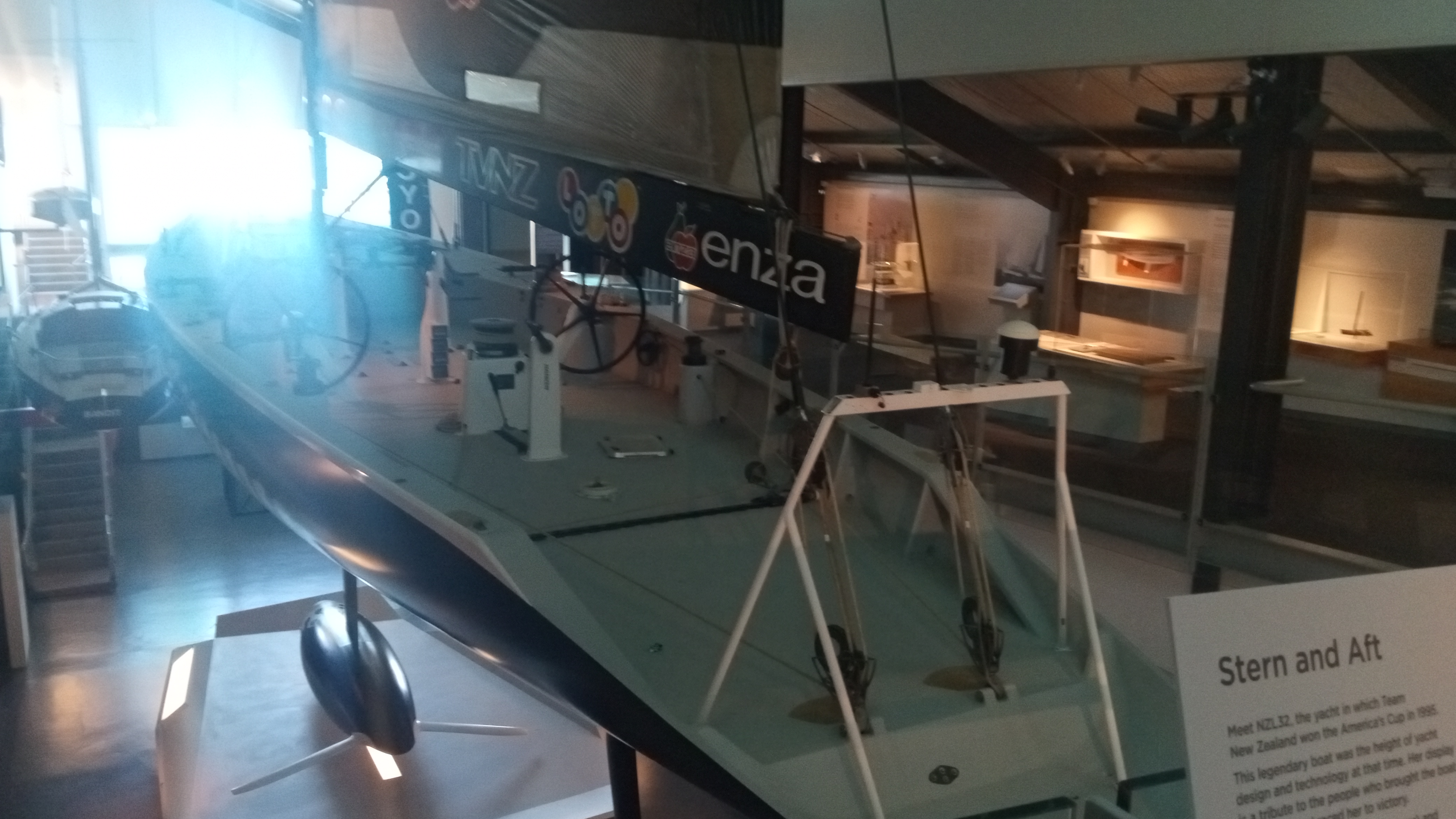
Our next day we decided to do ALL the touristy things – at least that is what it felt like!!   We started at the War Museum, spending the morning there and then headed over to the Maritime Museum.  Both sites were excellent – we probably should not have tried to do both in one day – it did feel like we might have shortchanged ourselves a bit.   After spending the entire day walking, we didn’t quite feel we had covered enough ground, so we took ourselves off to the train station and caught a train out to the Rugby stadium – we watched a New Zealand v. Australia match and given we were seated square in the middle of groups cheering for each team, we hoped things didn’t get too rowdy!!!  It was a fun night and by the time we made it back to our hotel room we had put 18,000 steps on our poor feet.
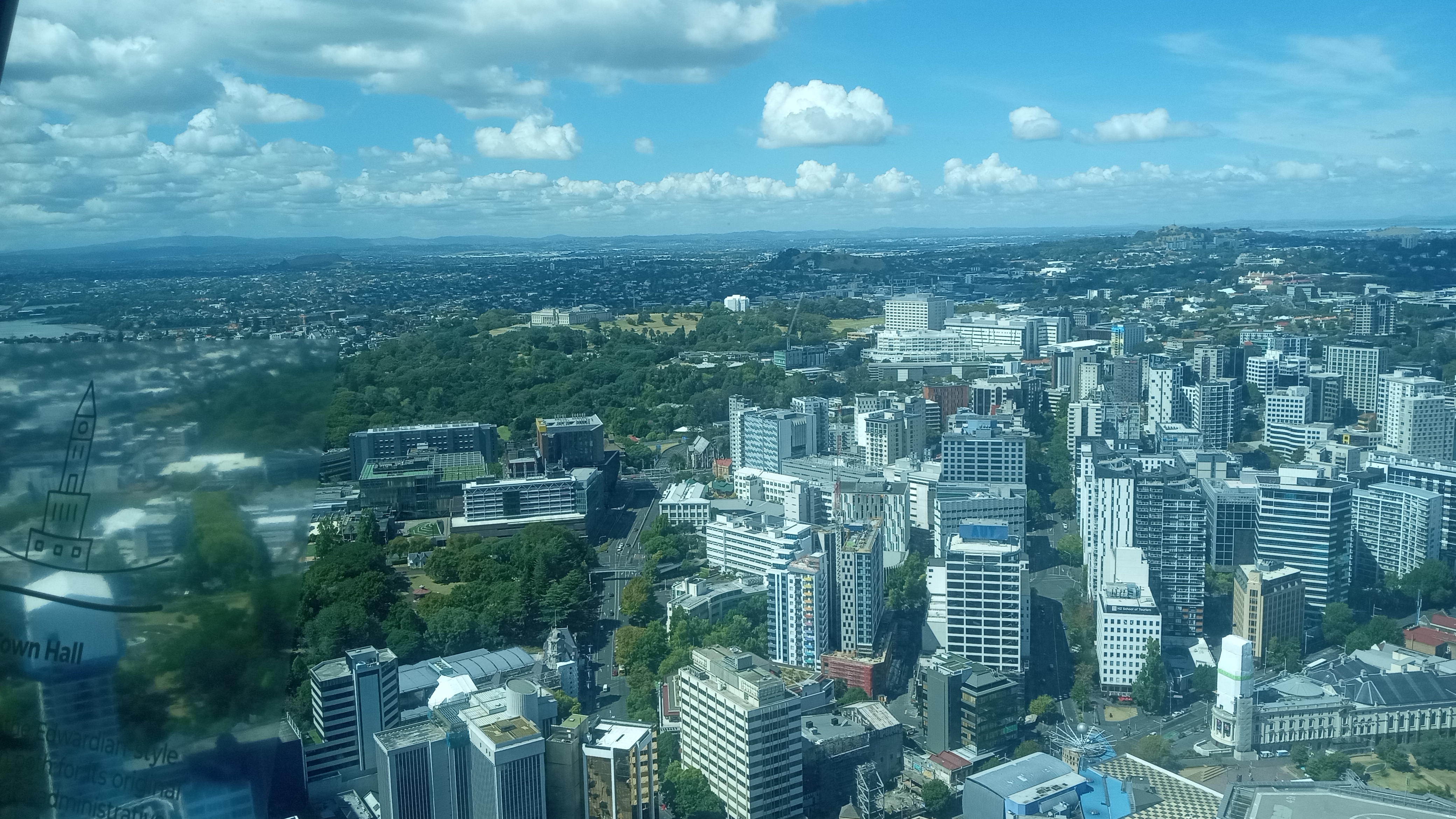
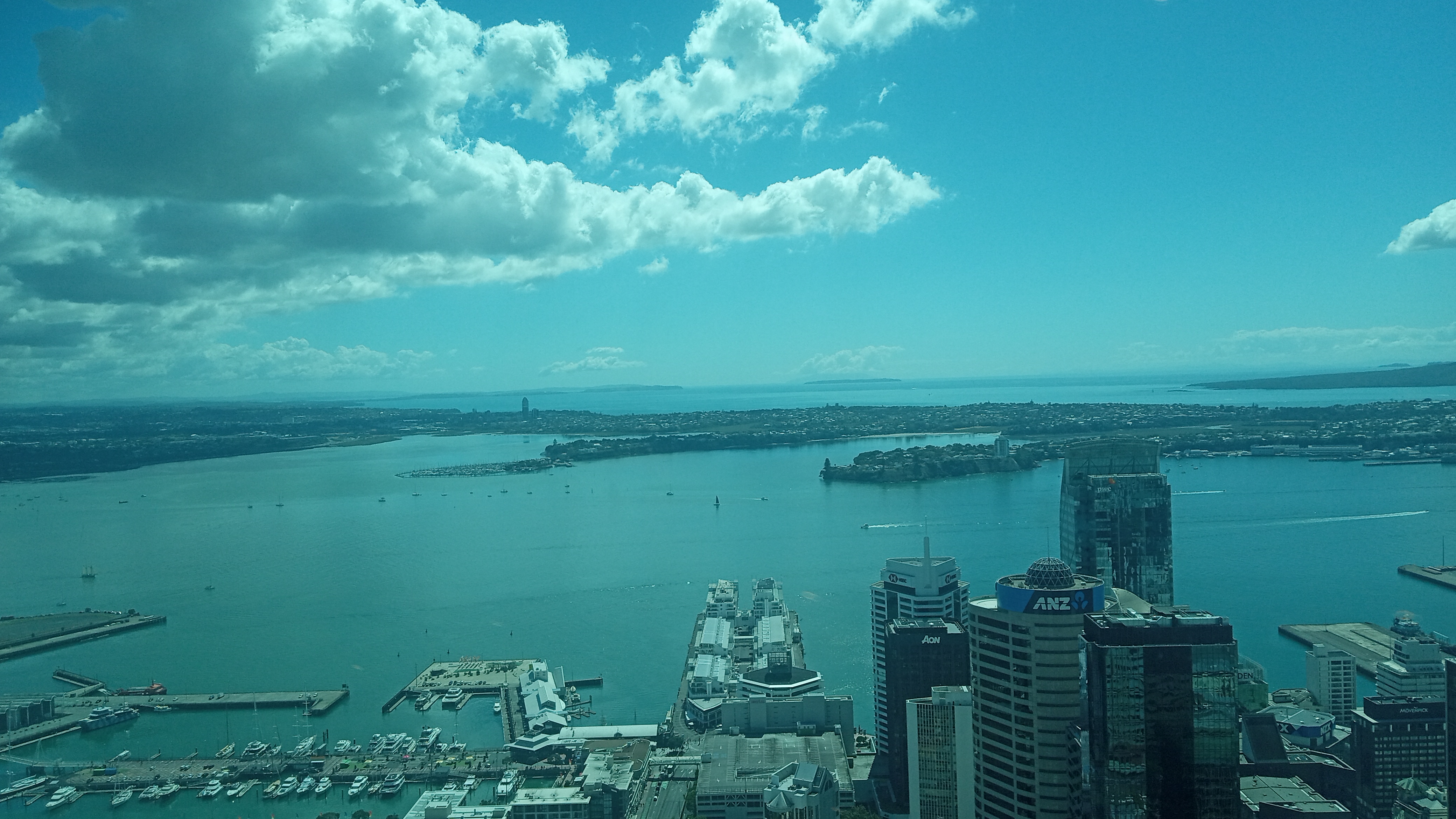
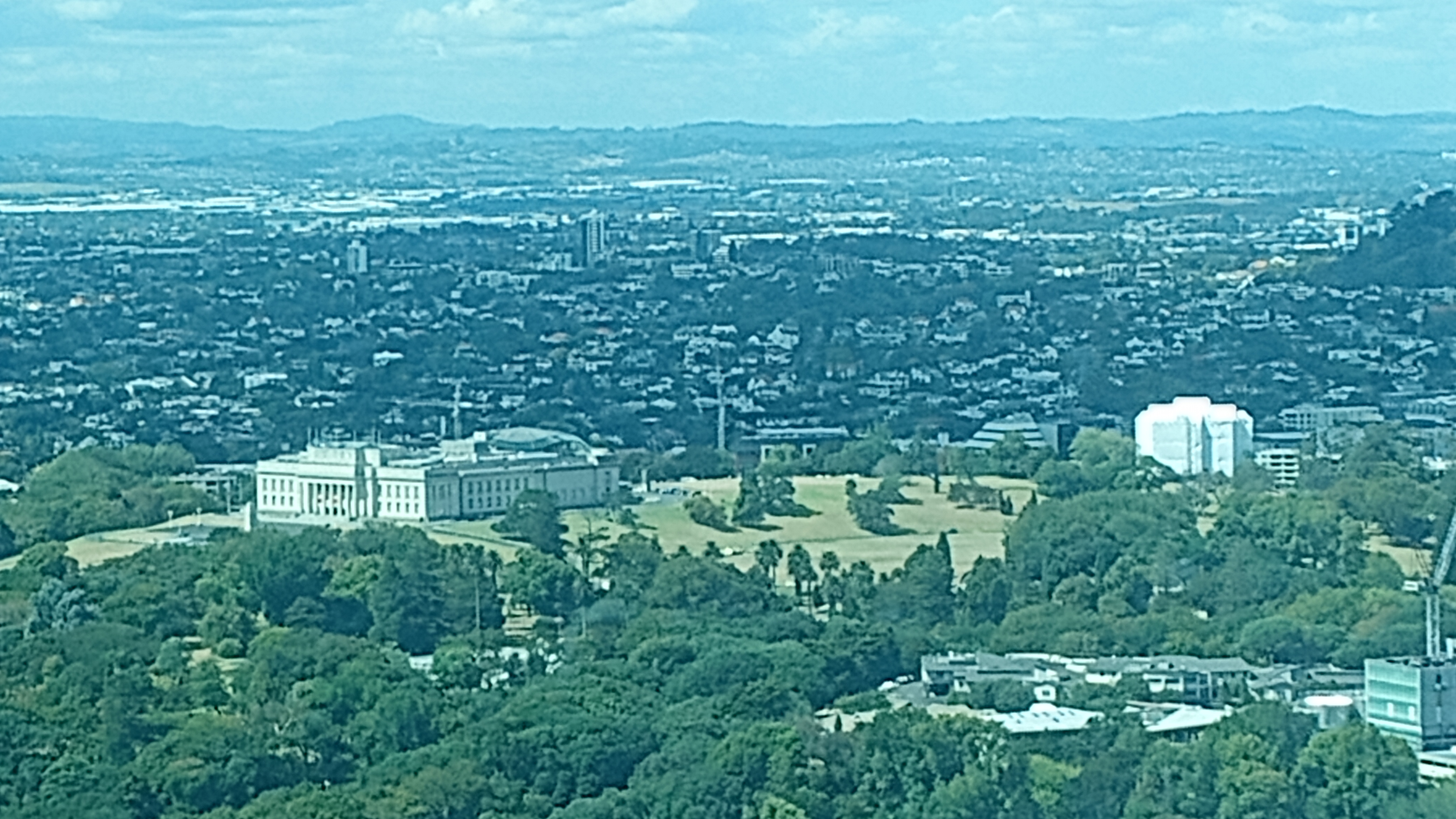
We had intended to have a much more chill day the next day but decided to go to the Auckland Sky Tower – it seemed closer on the map – and we didn’t realize the big hills involved, so of course we walked there – oof!   The walk was worth it though – the views from the Tower were spectacular – walking over the glass sections in the floor was not my favorite however!!  After the Tower, we did a little bit of shopping, hunting for some electronics we hadn’t been able to replace and then had an early dinner and early night it.   We were starting to realize that 4 months of sitting at the dock does not prepare you for 4 days of non-stop walking!!  

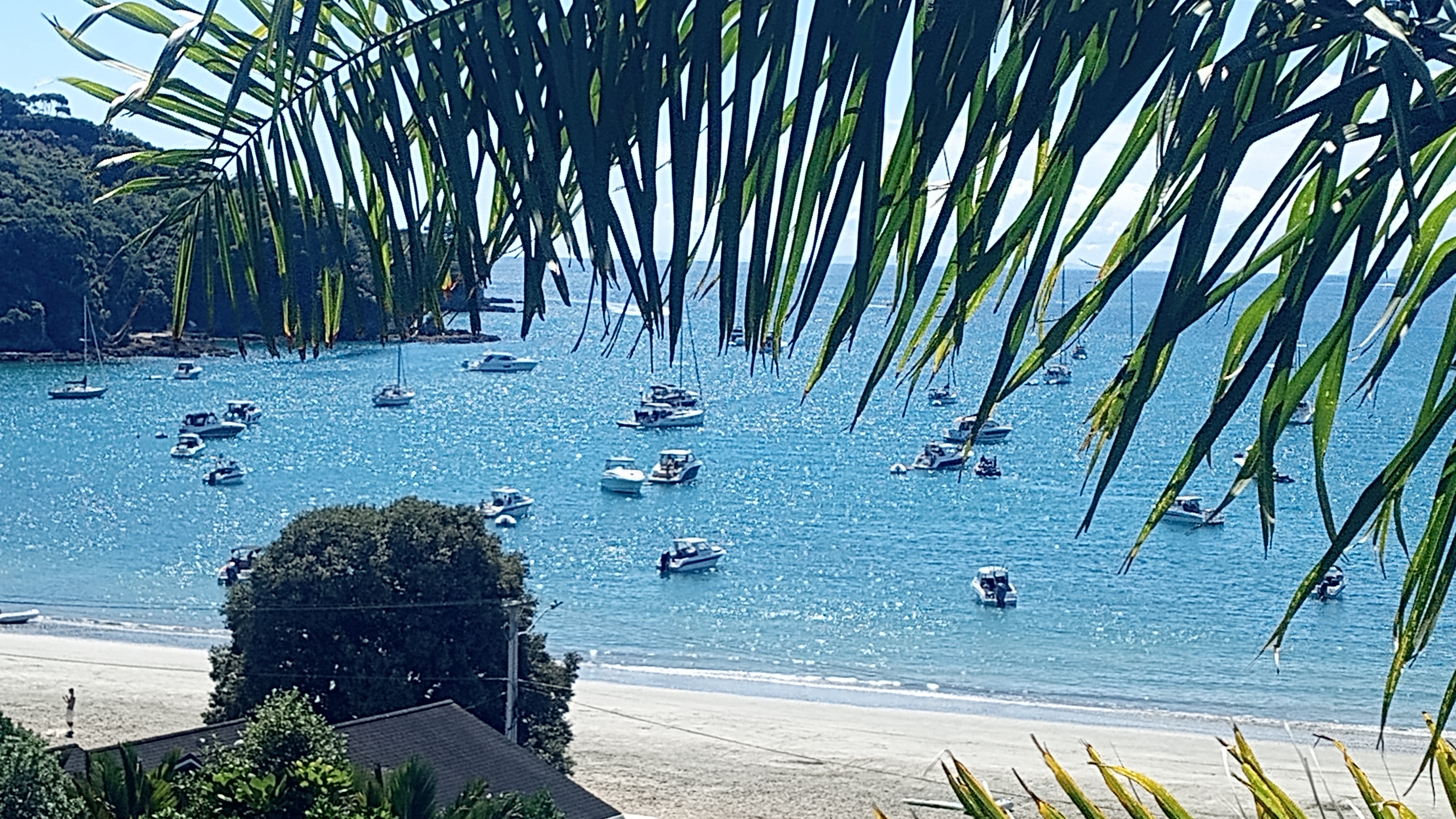
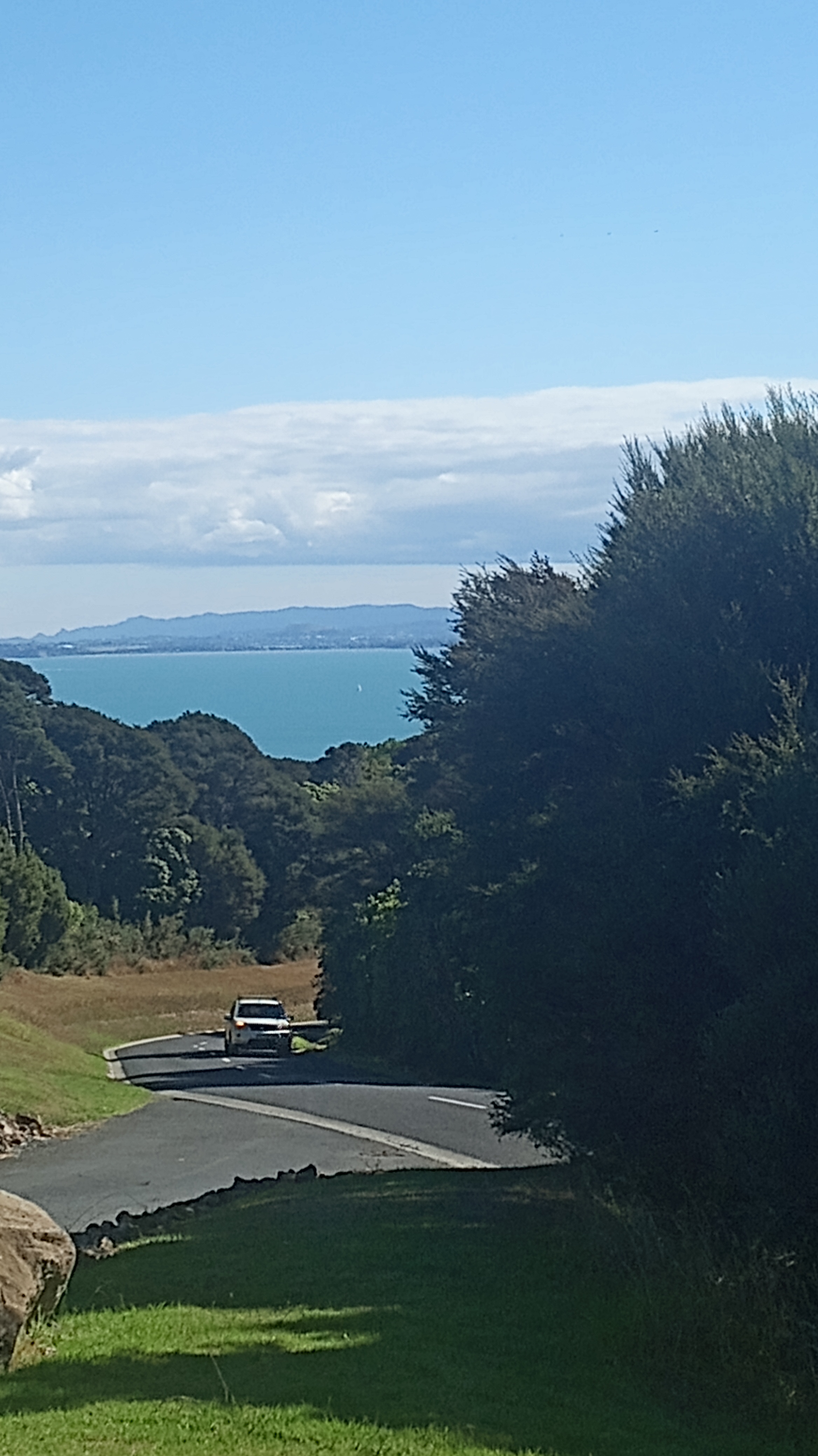
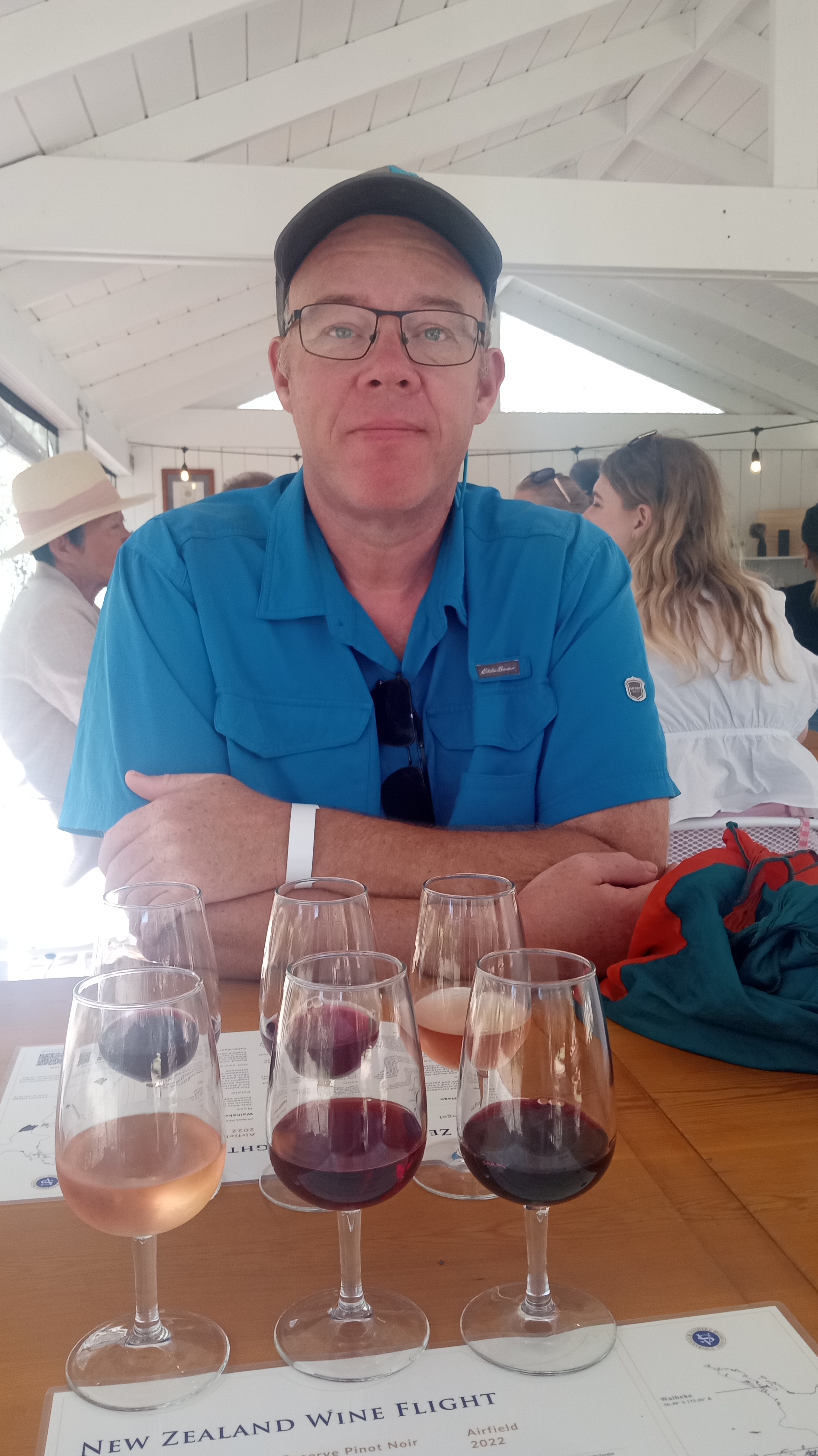
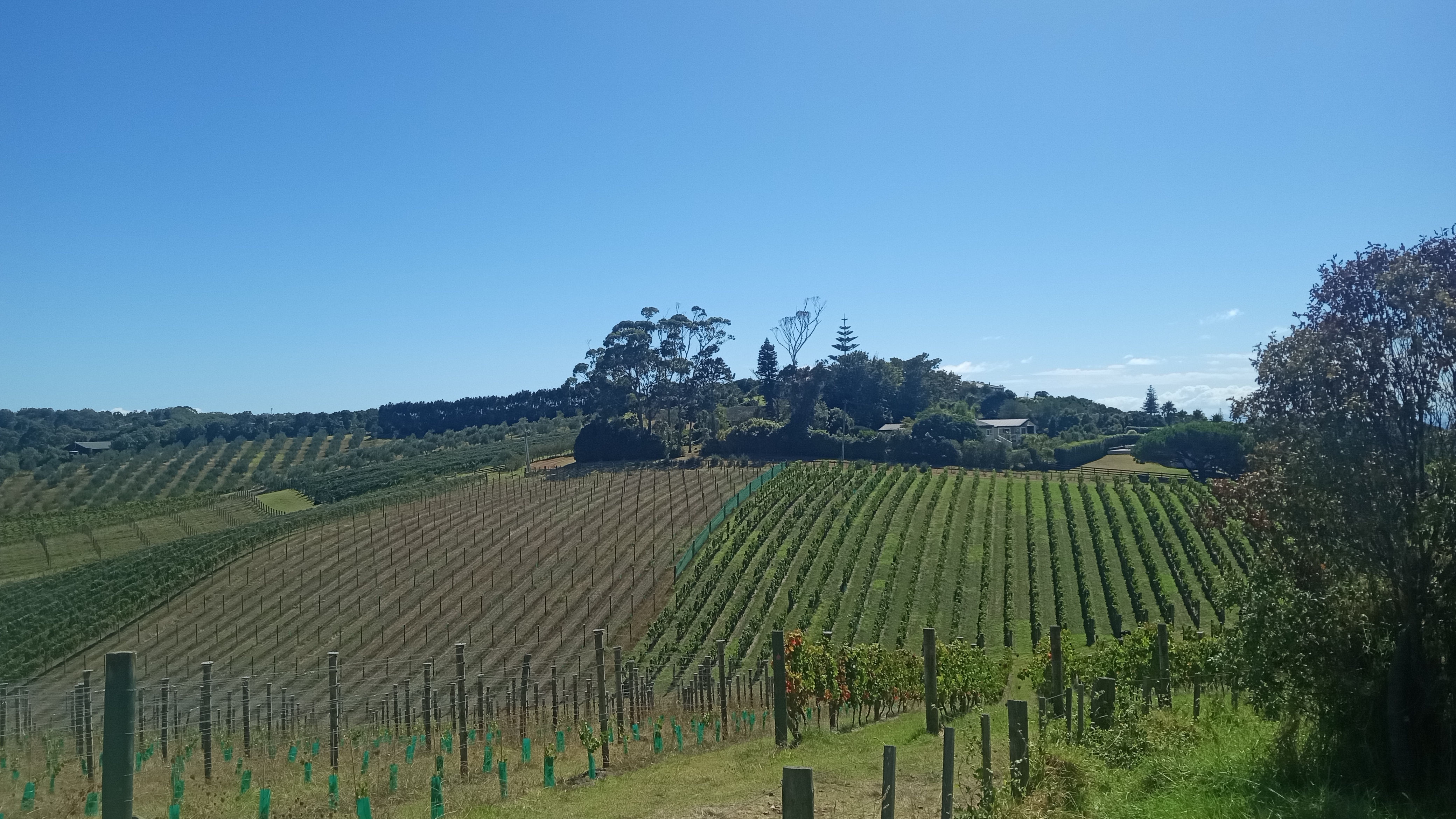
Saturday, we were again up bright and early to catch the ferry to Waiheke Island.   Waiheke is an Island in the Hauraki Gulf – just a 45 minute ferry trip from Auckland.   It started out as a bit of a hippy village but is now home to dozens of wineries, high end restaurants and some of the most expensive real estate in New Zealand.   We did a “hop on, hop off” bus tour – first taking the bus around the entire Island to get the lay of the land.  On our second loop we started off with a stop at an olive oil factory.   We enjoyed a tasting and came away with a bottle of olive oil and some delicious herb dip.   After that we stopped in the village for lunch.   The bus stopped directly across from a gelato shop that the driver had told us was excellent.   Given that the village is on a fairly steep hill, and the restaurant we wanted to go to for lunch was down the hill, with another bus stop even further down the hill, we did the only sensible thing and started lunch with dessert.    After devouring our gelato, we wandered through town and had a delicious lunch – possibly the best burgers we have had since leaving Canada – topped with nearly a salad-worth of fresh, glorious spring mix lettuce! –  before jumping back on the bus.   We got off at a winery for a tasting and then continued on to a stop at a gorgeous white sand beach – after wading out into the water, we confirmed that it was nowhere near as warm as the waters we had been swimming in the tropical destinations we had been visiting!!   We finally made a stop at one more winery before heading back to the ferry and back to Auckland – another wonderful day!! 
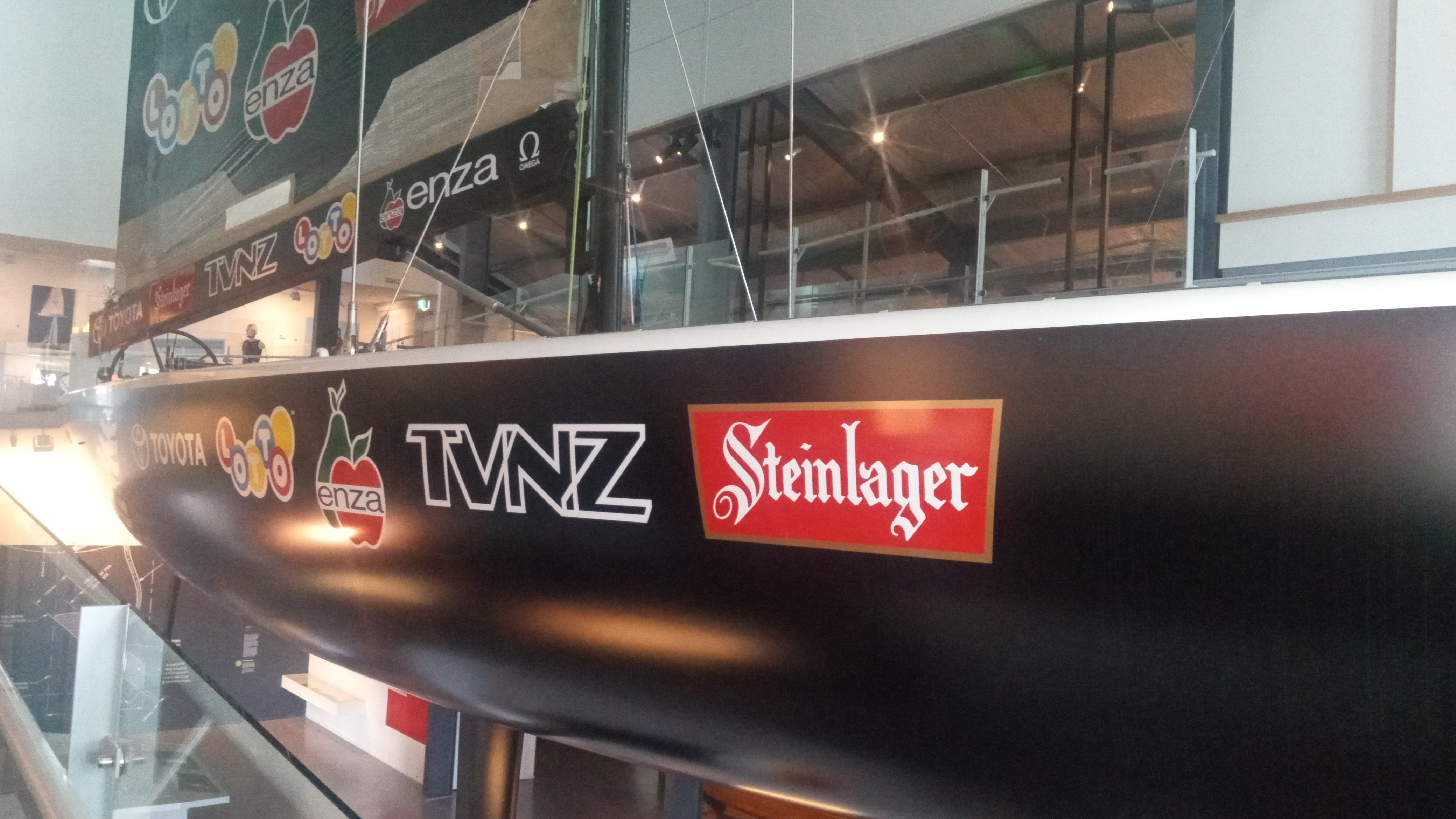
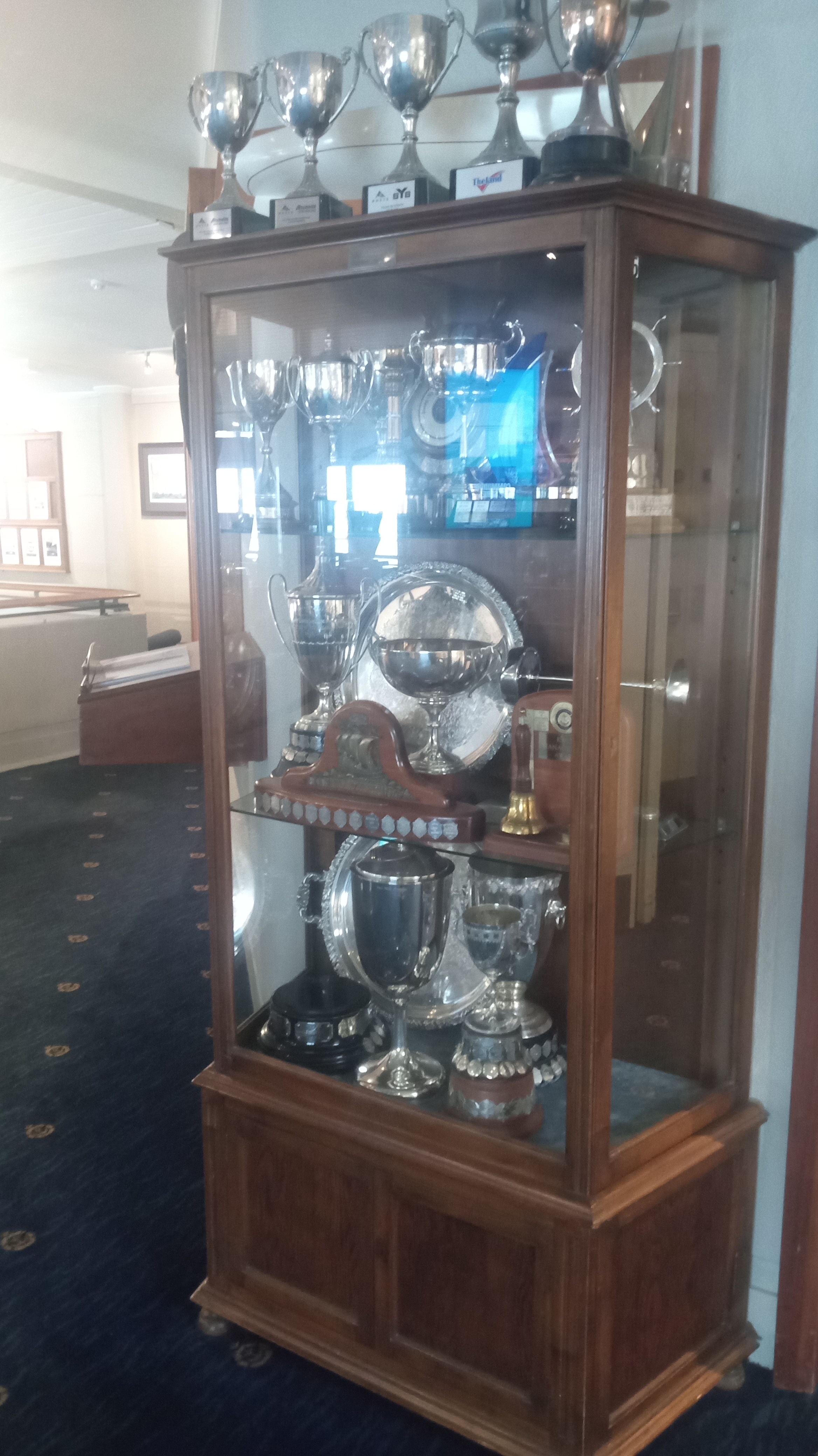
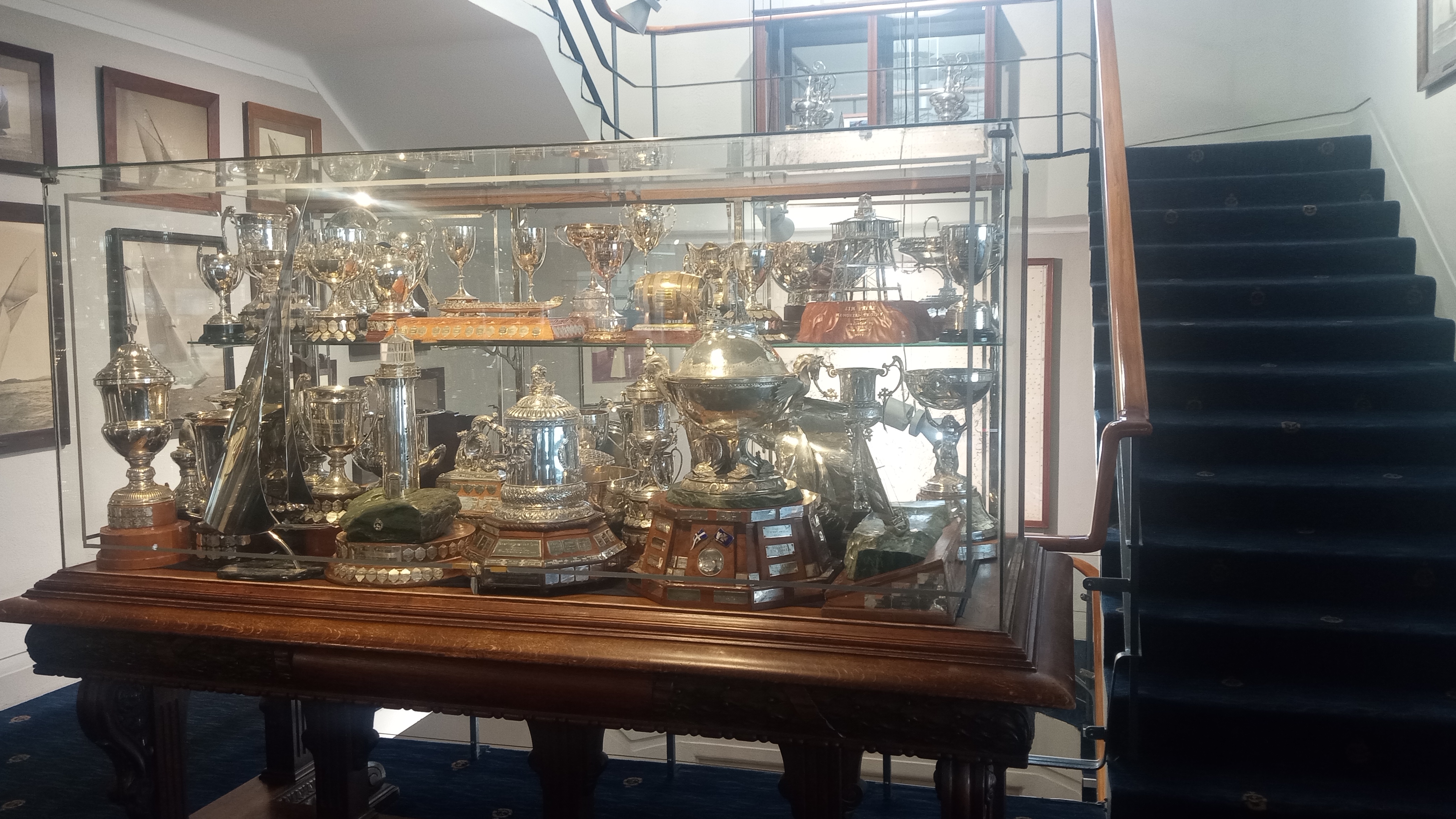
Apparently, we didn’t yet feel we had covered enough miles as we again set off around the seawall – we had determined that weight allowances or not, we still needed a couple more items from Burnsco.   Owen had also discovered that the America’s Cup Trophy was housed at the Royal New Zealand Yacht Club, also located at Westhaven Marina.   We made the long trip around, found a few missing items at the boat store and then went over to see the trophy.   It is stored behind glass and is really quite an impressive object!!!   It does manage to stand out, even amongst the cases and cases of trophies.

When we had first started to look at what we must do in Auckland, one of my “must do” stops was a deli that served “Montreal style” poutine – I was determined that we must give it a try.   Unfortunately, it required back-tracking around the marina, and up the hills, as it turned out to the street directly beside the Tower. We also wanted to head over the bridge (in the opposite direction) to visit yet another boat store as we were still missing a part that Owen was hoping to locate.    Given that, and the fact that it was pouring rain, we finally opted to take an Uber to the deli.   We thoroughly enjoyed our deli lunch (the poutine was ALMOST Montreal good) and then headed back to the bus stop to get ourselves over to the north shore.   After a couple of transfers and a bit of walk, we finally found ourselves in the area of the boat shop.   We first made a stop at a hardware store to find aluminum tape (for wrapping hoses in the engine room), as it was on the way to the boat store.   We paid for the tape and I handed it to Owen to put it into the bag that contained the rather expensive stuff we had bought at Burnsco that morning.  It was only in that moment that he realized that he had left the bag on the hook under the table at the deli!!!   I panic called the deli to be sure it was there, and to let them know that we would very hopefully be able to get back for it before they closed.   We made a quick stop to the boat store that we had come all that way for – they of course did not have the part – grr.   After that we made the return trip back on the bus, this time with a bit more urgency.   We got off the bus at 10 to 3 – the deli closed at 3!!   Thankfully I was able to hightail it the couple of blocks back, just as they were ushering out the last diners and getting ready to close!!    As we were leaving at lunchtime the next day, and as I needed to figure out how to get everything in the suitcase, we were happy to have been able to recover it!

After a last dinner in Auckland, we went back to the hotel to try to figure out how to fit all the stuff we bought into the bags we had available.   We had actually bought a new gear bag to replace my sailing bag – the old bag had a ton of zippers and nearly every one of them had seized up – I had spent days, soaking them in vinegar and trying to slowly pry them open.   Finally, I had one zipper left to get open and asked Owen to give it a tug while I held on to the bag – unfortunately it was a bit too good of a tug and the zipper slide had come right off.   It was a sign to give up – my new bag is basically a big dry bag, with just clips and no zippers – much smarter – and thankfully big enough to apportion out much of what we had bought!  

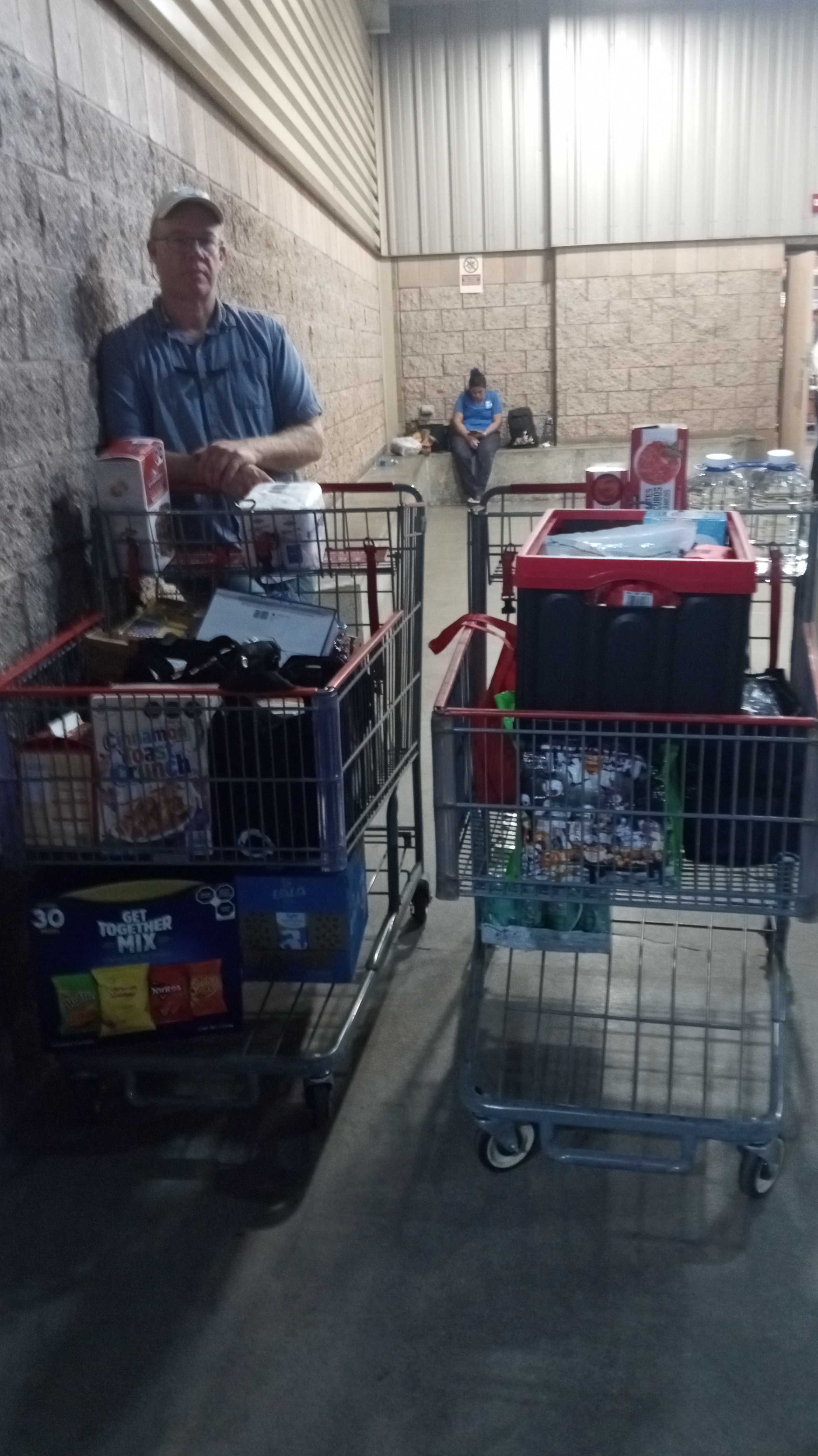
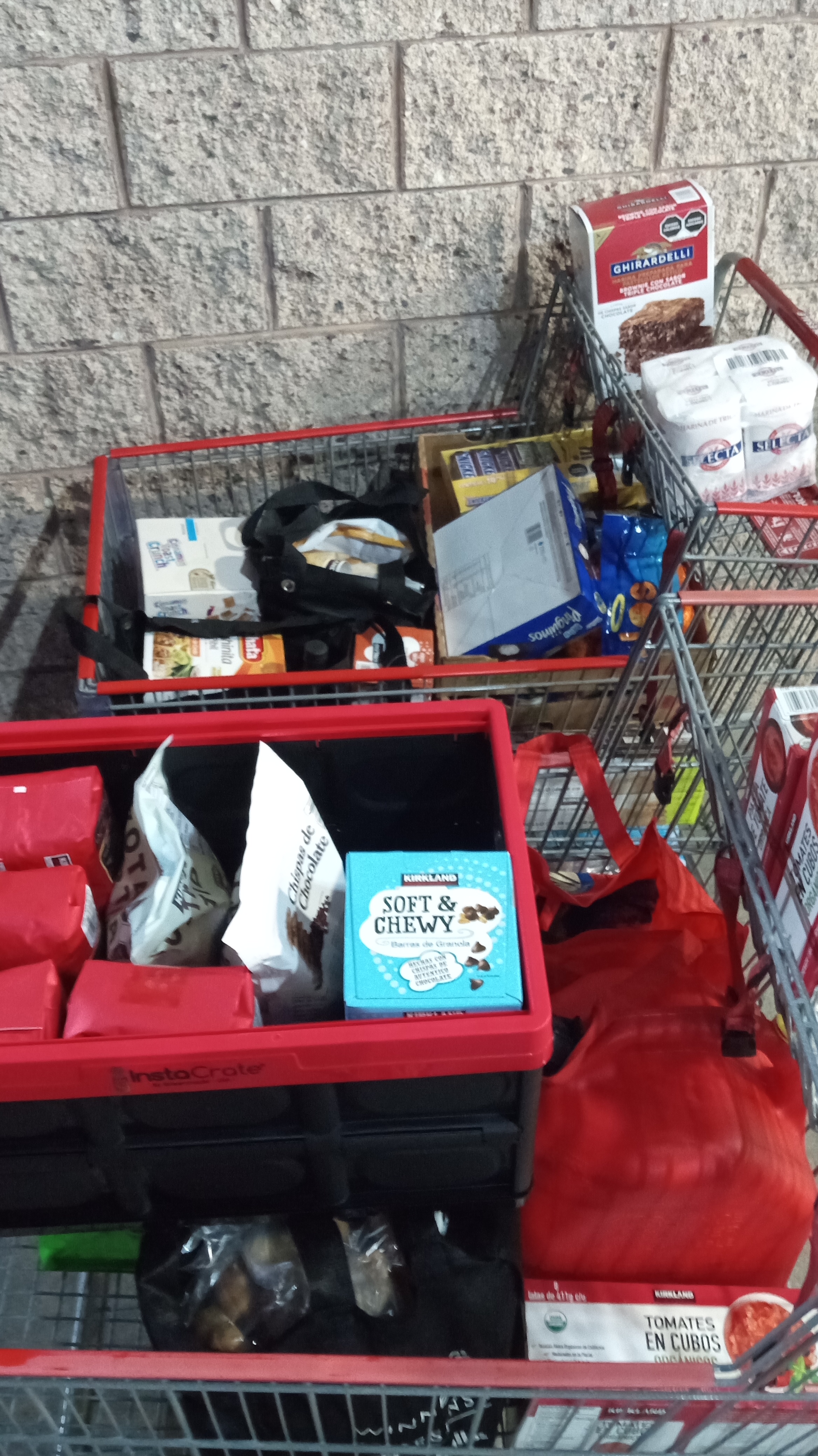
We flew out from Auckland mid-afternoon, landing in Nadi late afternoon.   This time we were staying at a small resort directly across from the airport.   During our first stop in Nadi, we had come across a Cost-U-Less – sort of a miniature version of a Costco – and Owen had found a giant container of iced tea mix.   Iced tea is one of his favorite things and he decided that we must figure out how to fit it into our luggage – along with a big bag of cinnamon toast cereal!!    The challenge we had faced with luggage on this trip was that our weight allowance on the flight from Auckland to Nadi was 25kg per person but our weight allowance on the little commuter flight from Nadi to Savusavu was 15kg – we were at 14.8 and 14.9 when we checked our bags in.   Thankfully they didn’t weight our carryon bags by themselves (instead they make you get on the scale with your carryon!) as I am pretty sure they were over the 7kg allowance for those!!  

We did finally make it back to Savusavu and immediately were hit by a wall of heat!!!   We also felt almost like we were coming home!   All was good with the boat thankfully and by the next day it almost felt like we had not left!!

We had only a short time in Auckland but enjoyed every minute of it. We came back with sore feet, full bellies and a desire to see more of New Zealand!
Fiji Time

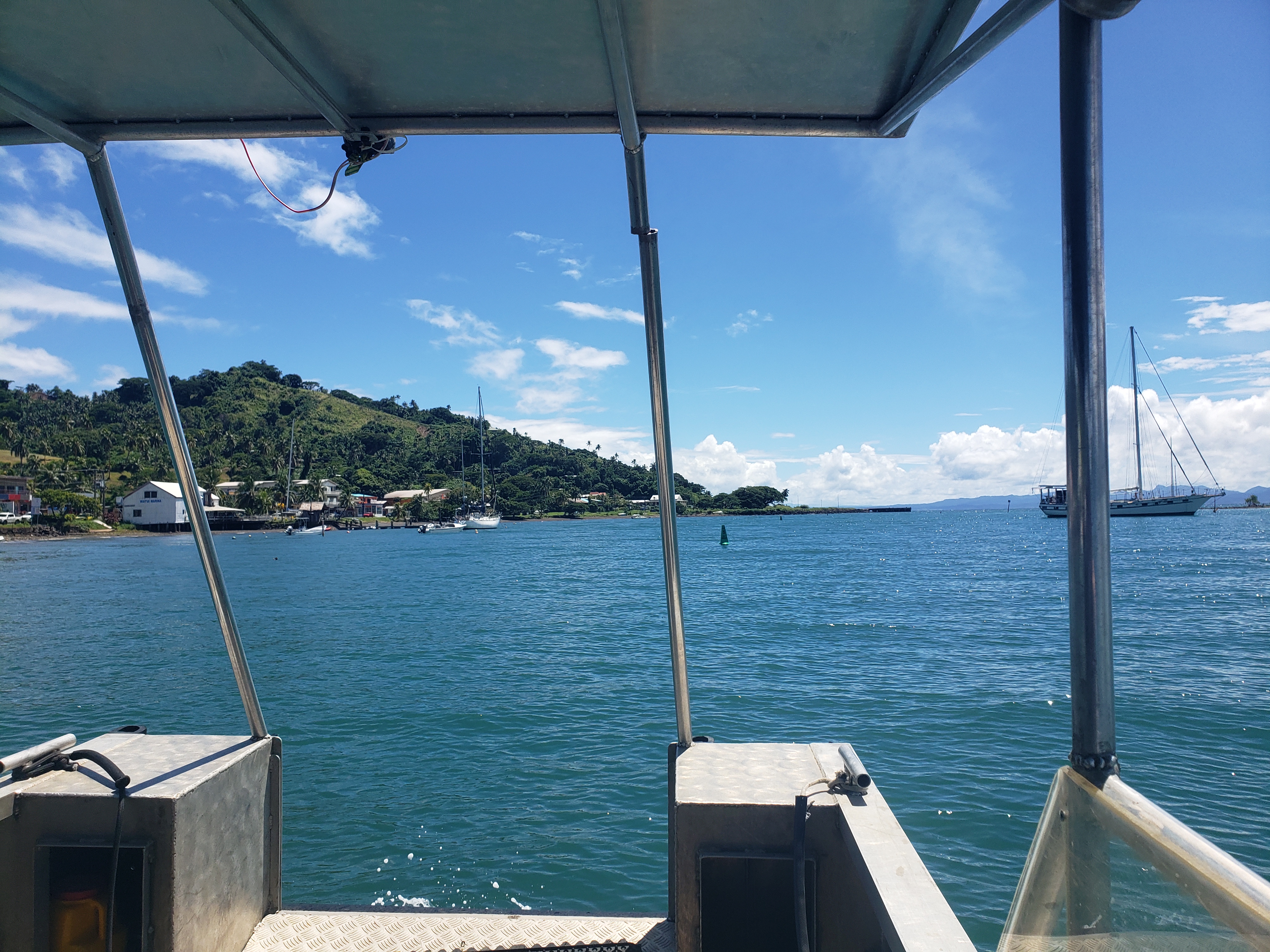
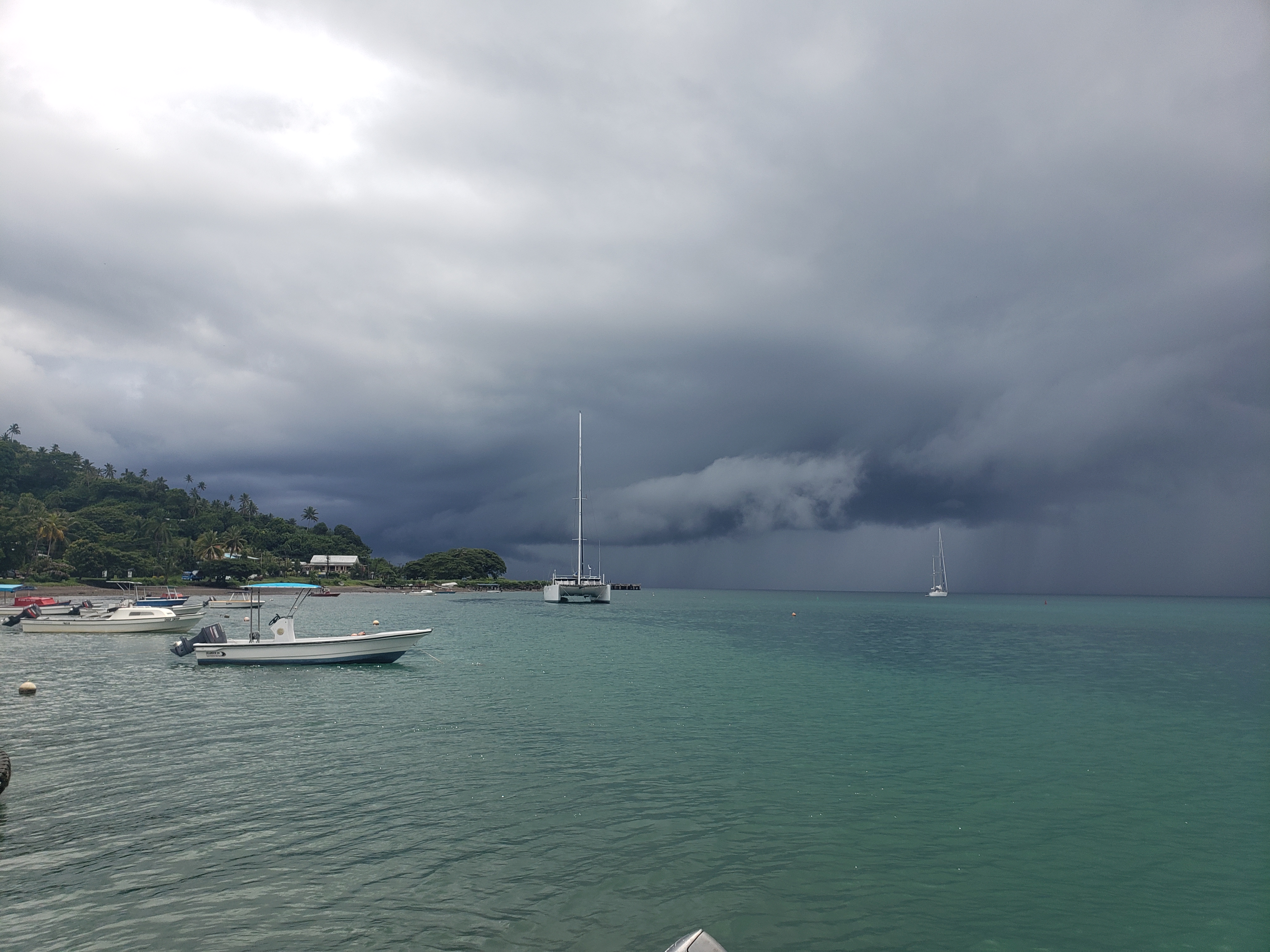
We have been at the dock in Savusavu, Fiji since the end of November and I have thoughts about it.   It was so nice to pull into the dock, plug in (we have had so many power issues!), have potable water on tap and not have to worry about anchoring, etc.   For a few weeks it was great!   Granted the holding tank pump out was not working when we arrived, so I have to make the very long trek (1/4 mile each way) up to the washrooms several times a day (and always a trip up at 11pm – Owen loves that I drag him up with me on those ones).   The marina we are in, Nawi Island Marina, is situated on a small island just across from Savusavu – there is a ferry that runs back once an hour at least (every ½ hour for a couple hours a day).   It is great – until you finish your shopping, errands, etc. and realize the ferry has just been there and you need to stand around in the sun waiting an hour for the next ferry).  Yes, we could put our dinghy in the water and take it over, but there is quite limited space at the dock for dinghies and the weather is unpredictable at best so we choose to stick to the ferry.

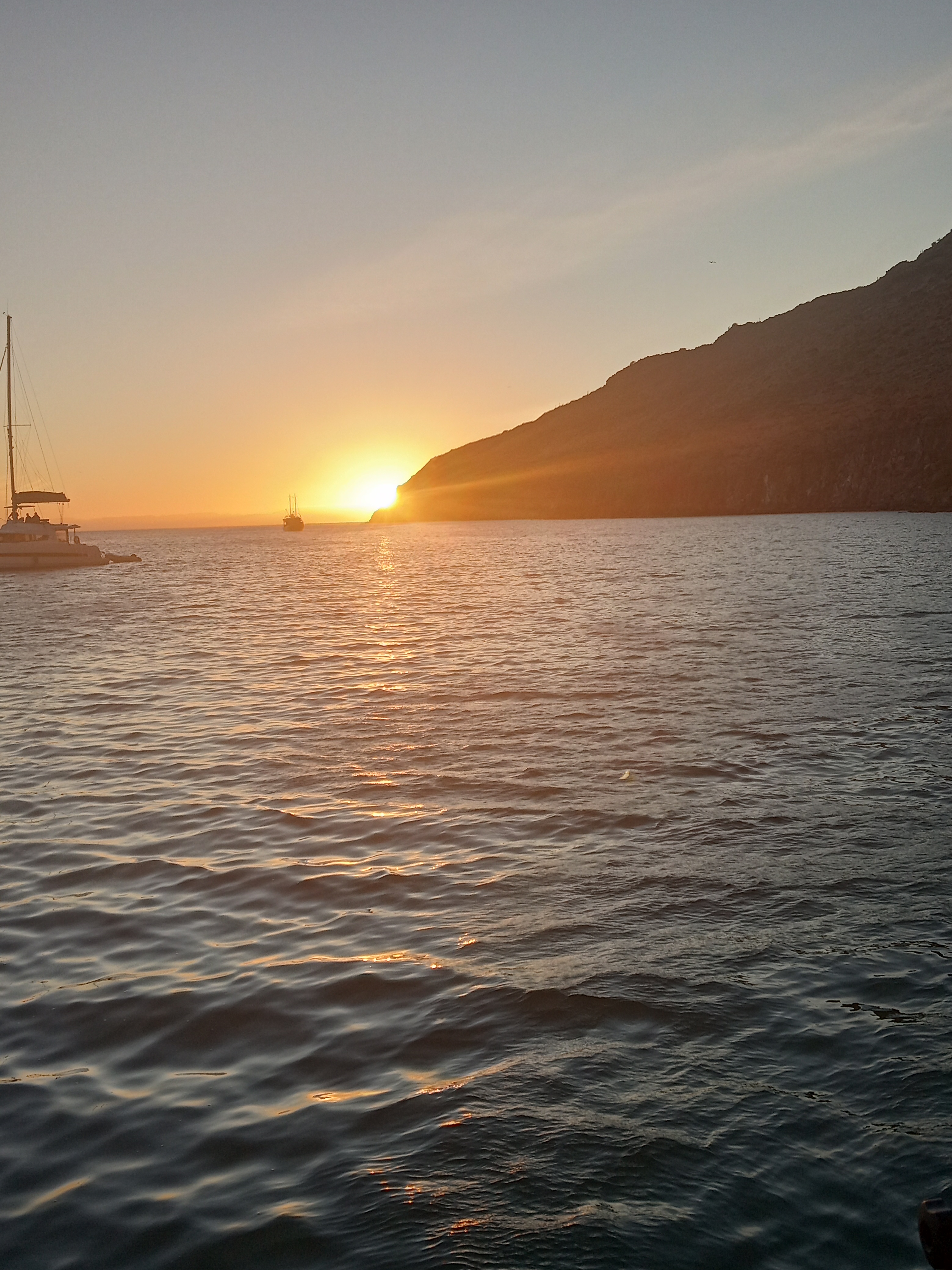
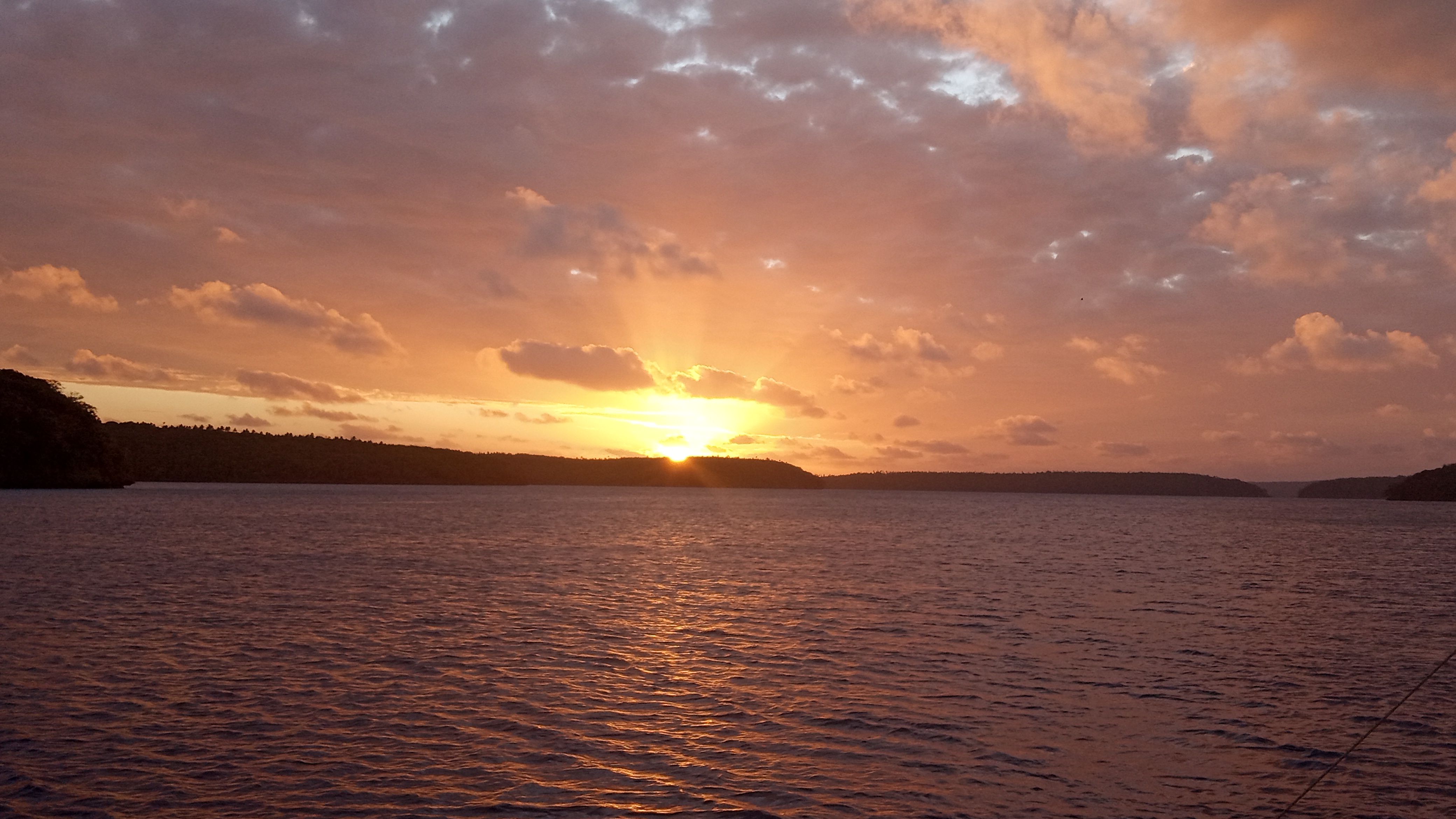
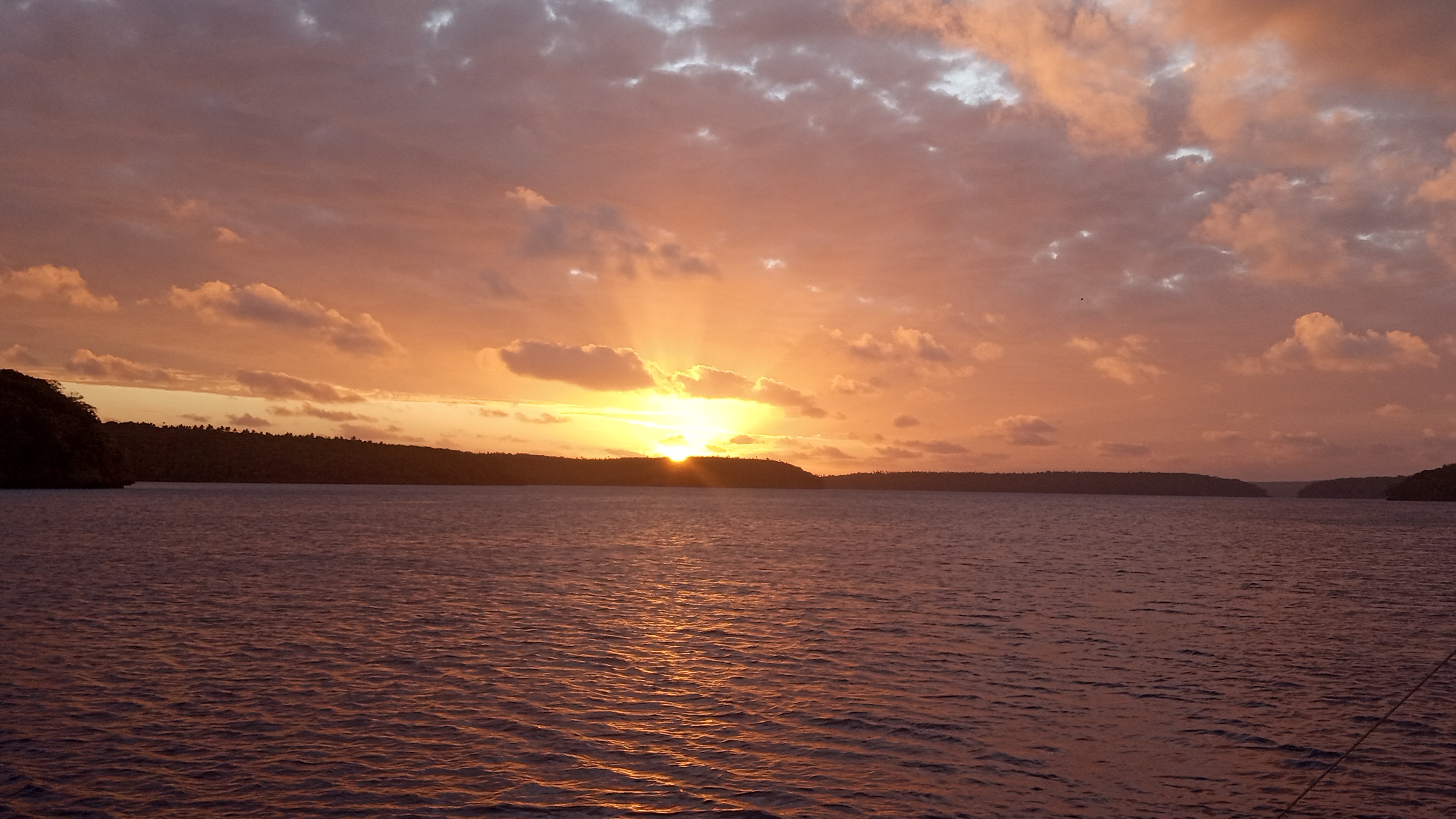
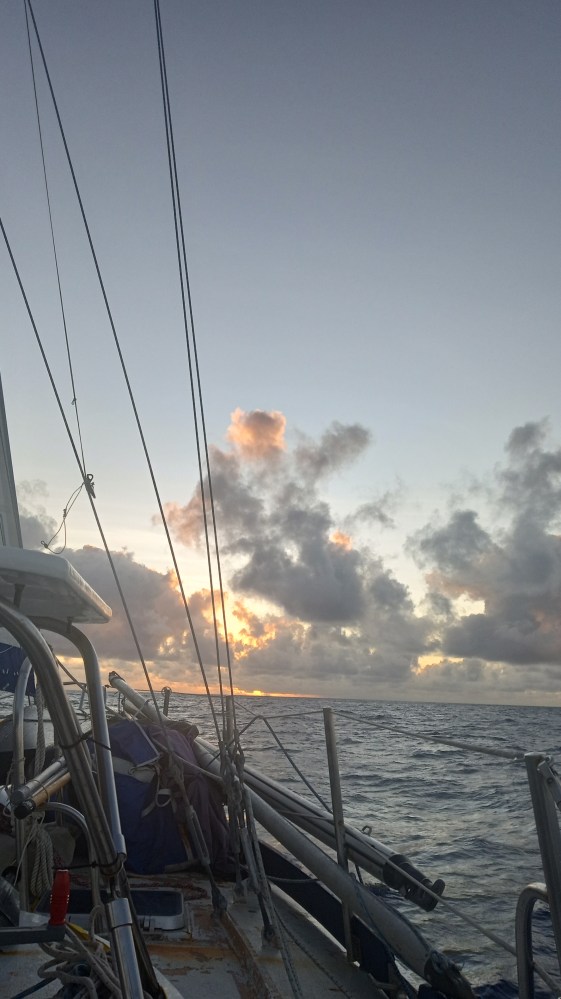
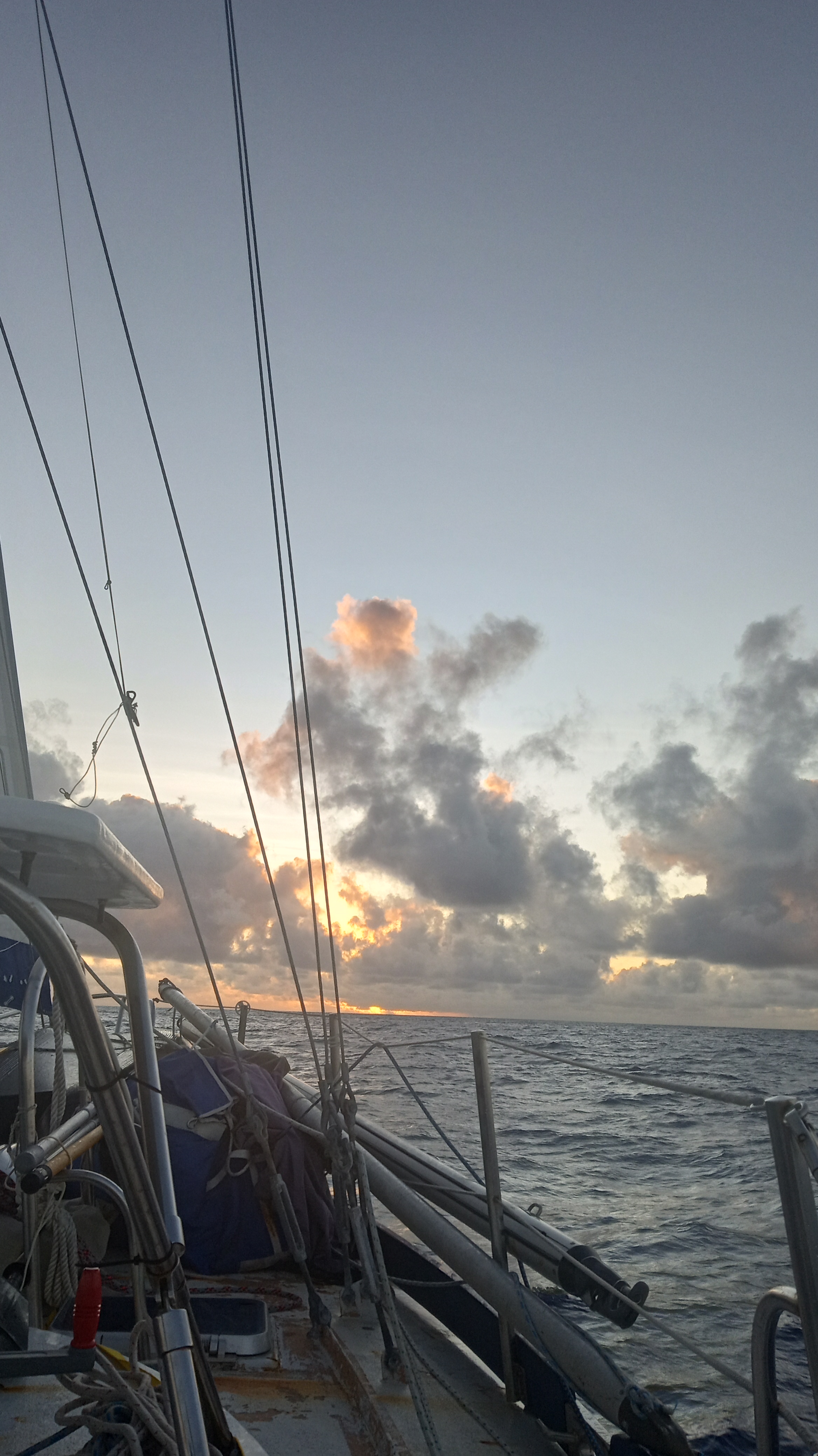
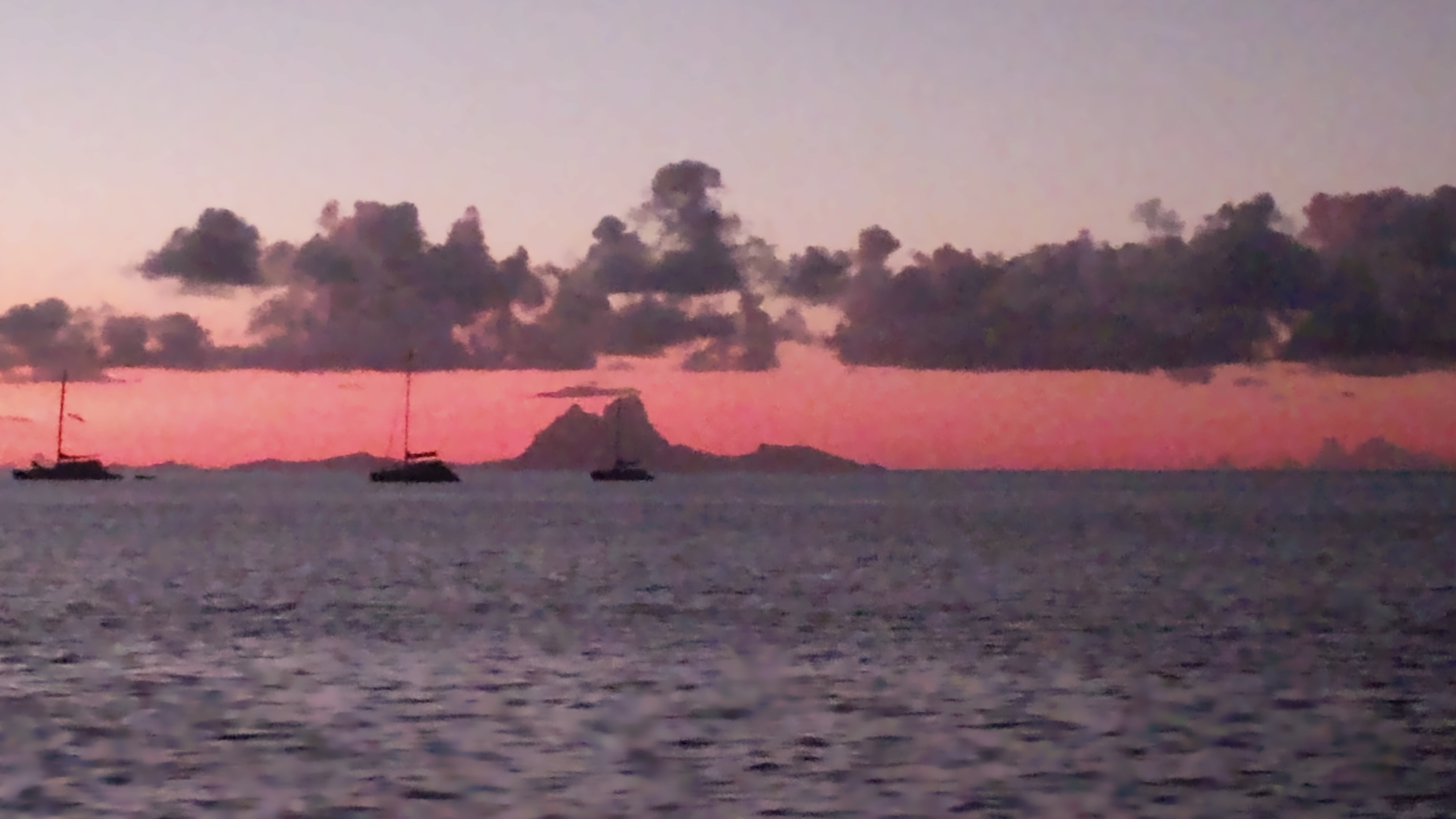
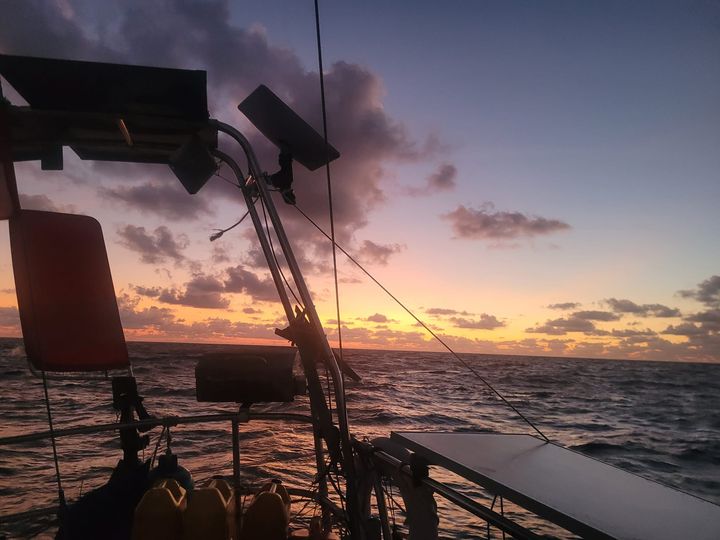
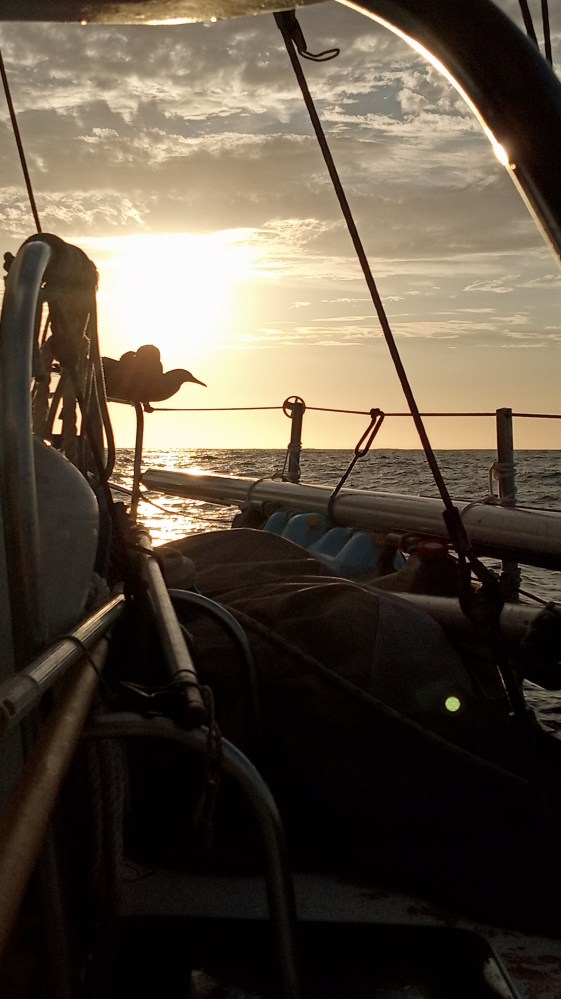
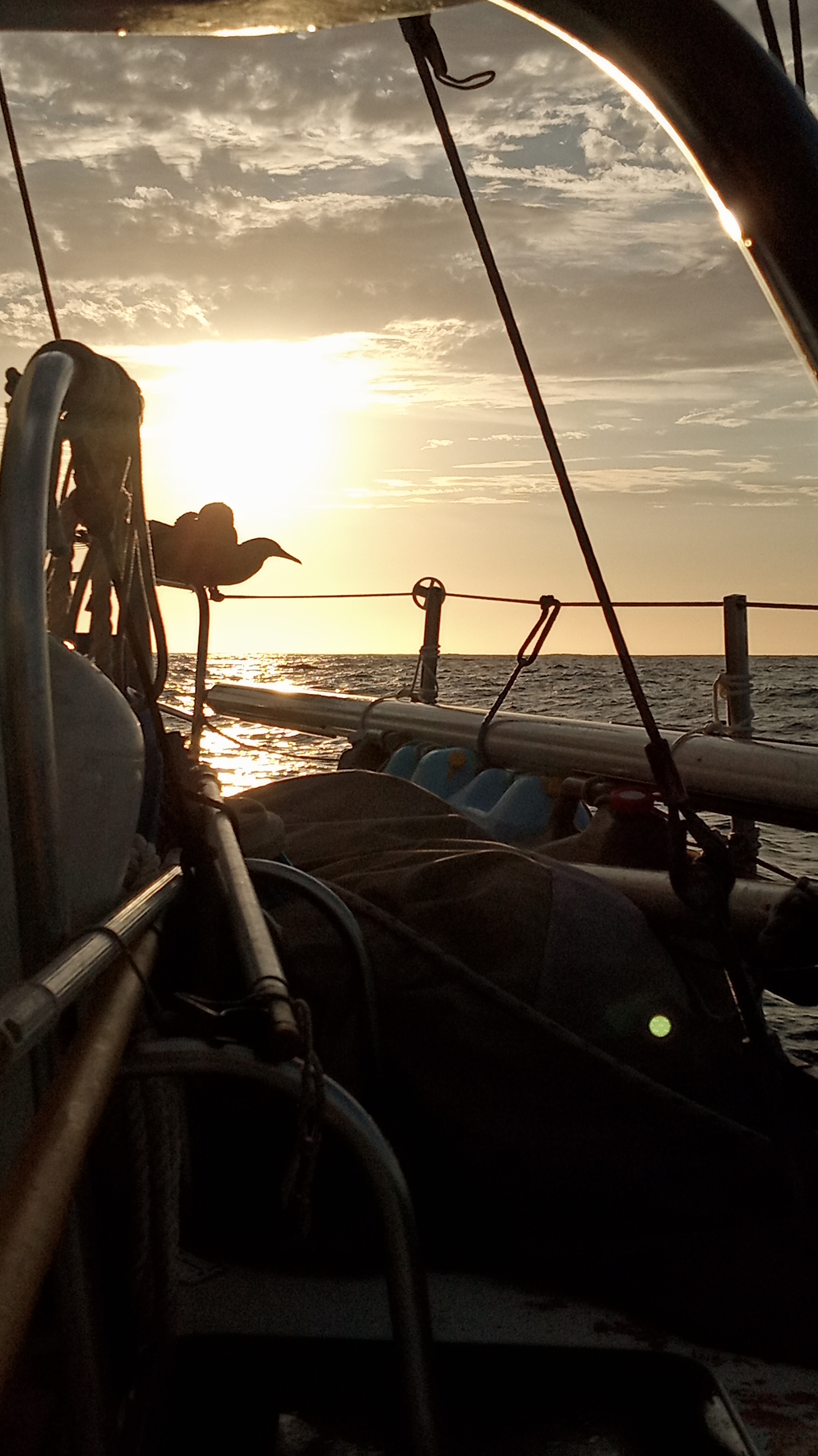
sunset on the way to Fiji

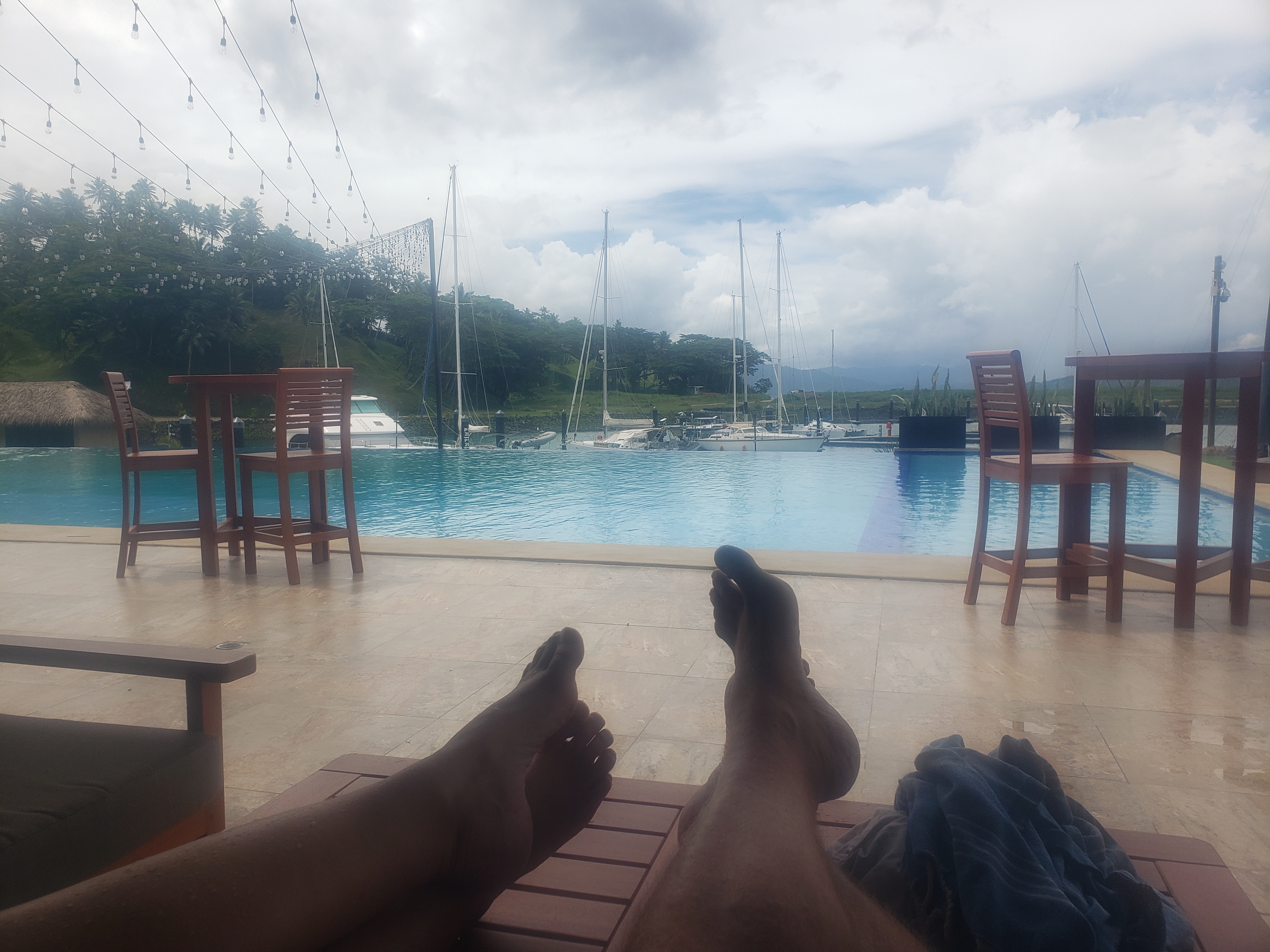
There have been a few growing pains at this marina – the pool was not operational for the first couple of months that we were here, and once they got it going, they were running private events, keeping marina tenants from using the pool.   Even now, the pool is open, but it is somewhat less than clean and inviting – they are still working out the kinks there.   There is a laundry service on the island, but it is insanely expensive (a recent fairly good-sized load of laundry cost us $81 fijian) so I end up doing our laundry by bucket, trying to time it between rain showers so that clothes have a chance to dry.   There are two restaurants here at the marina – one opened with the pool and serves an approximation of Mexican food – it is not terrible but sure not a Mexican taco!   The other has gone through a management change and the food can be hit or miss.  There is supposed to be a little coffee shop and bakery (when it was open we did enjoy a few good rustic baguettes and Turkish loafs) – when we got here they were opened at least part of the day most days – we haven’t seen them in weeks.   There was a small grocery store on island – it closed.  The saving grace is the staff – who are without fail spectacular!  The docks are incredibly well built and the washrooms are spotless.  I have no doubt that once they get all the kinks worked out, the marina will be entirely spectacular – unfortunately it will be priced accordingly – we were very lucky to get some introductory pricing for our extended stay.

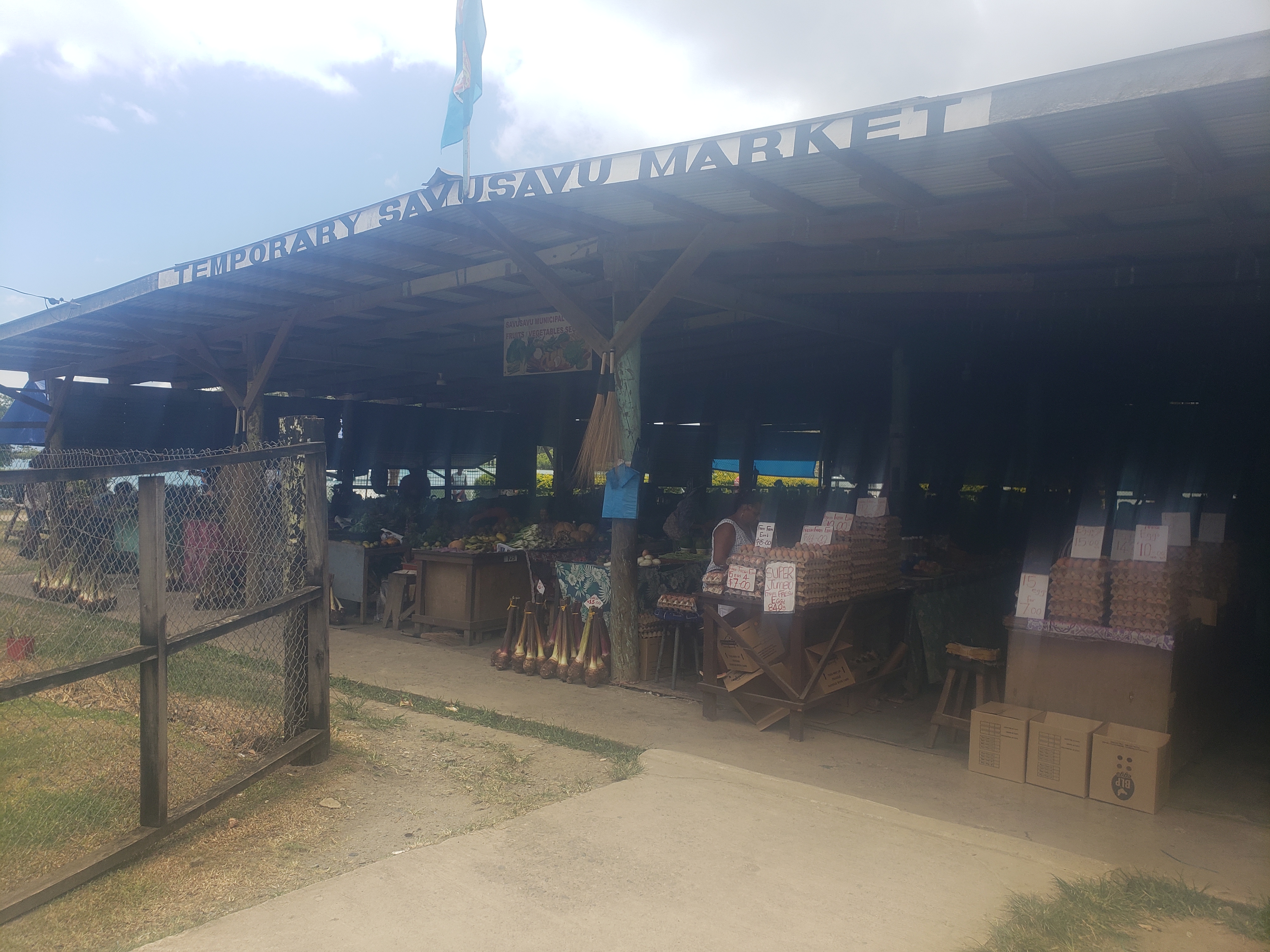
Savusavu is the essence of Fiji time – it is a small town (the entire “commercial” section is less than a mile long) with a big heart!   There are several grocery stores – a couple that were built since the start of construction of the marina, clearly geared more to a western buyer – definitely a bit more selection in these stores – but the price reflects that.    There is a fantastic little meat market where we can thankfully get very reasonably priced chicken, ground beef, etc.   The public market is in a temporary space that is crowded and dark and oh so hot – they have been constructing a new market that was to open in December – we are still waiting!    They do have a lot of fresh veggies but not a great selection – everything is of course seasonal – mango season was way too short, I haven’t seen tomatoes in weeks and so far I have never found any herbs (oh to have some fresh basil and rosemary!)  You can always get bananas – $3 fijian will get you a bundle of bananas that you could never get through before they are ready for banana bread.  I always have to look around to find someone who has slightly smaller bundles – it is too hot on board to be making bread!!!   You can also usually get eggplant, long beans, potatoes and spinach.   I have been lucky enough to buy avocados that are bigger than my head and passion fruit (I had no idea what it was but wow is it amazing – sadly now it seems to be out of season).  The grocery stores will occasionally have some imported fruits (apples and pears usually) and better potatoes, onions and garlic than I have found at the market.   I was amazed and delighted to find a container of spring mix lettuce at one of the stores yesterday and I have heard rumors of real mushrooms arriving but have not yet seen them.  There are a fair number of small, local restaurants – most of which have a nearly identical menu – if you are looking for curry or chow mein they have you covered!   You can usually also find a burger or a chicken burger on the menu and a few places have pizza – it is not fantastic but certainly not terrible!   The star in town is a small social club, the Planter’s Club – we go there for dinner with a group of cruisers every Friday evening.   The menu is not much different from everywhere else, but the prices are crazy!   I order a chili chicken type of stir fry for $10 or $11 most weeks and struggle to finish it.   A couple of times the serving has been so extremely large that we have taken the leftovers home and they have fed both of us for lunch the next day.  

The people of Savusavu (and Fiji in general) are the real reason to come to Fiji – you will be greeted with a smiling “Bula!” everywhere you go, and by nearly every person you pass on the street.   The people have the most beautiful big smiles and always make you feel so welcome.   Truly, Fiji is known as the friendly islands and the people live up to that tagline.   We have been blessed to have some lovely conversations with locals visiting Nawi Island or just hanging out near the ferry dock or at the restaurants.  

We had every intention of trying to get out for short sailing trips between weather events, but realized quite quickly after we arrived that our heat exchanger was kaput – after several weeks of trying to fix the existing one, Owen gave up on that and then moved along to trying to source a new one.   We ended up having to order it from a company in New Zealand – that process took some time.   Without a heat exchanger, we cannot fire up the engine and are stuck at the dock.   We finally received the new heat exchanger this week so hope to be able to finally get off the dock in the next week or two (the replacement of the heat exchanger has of course led to some job creep – Owen is working his way through the engine room, ensuring all lines, hose clamps, etc. are in good shape.   Additionally, he replaced the water pump which had also been leaking.  

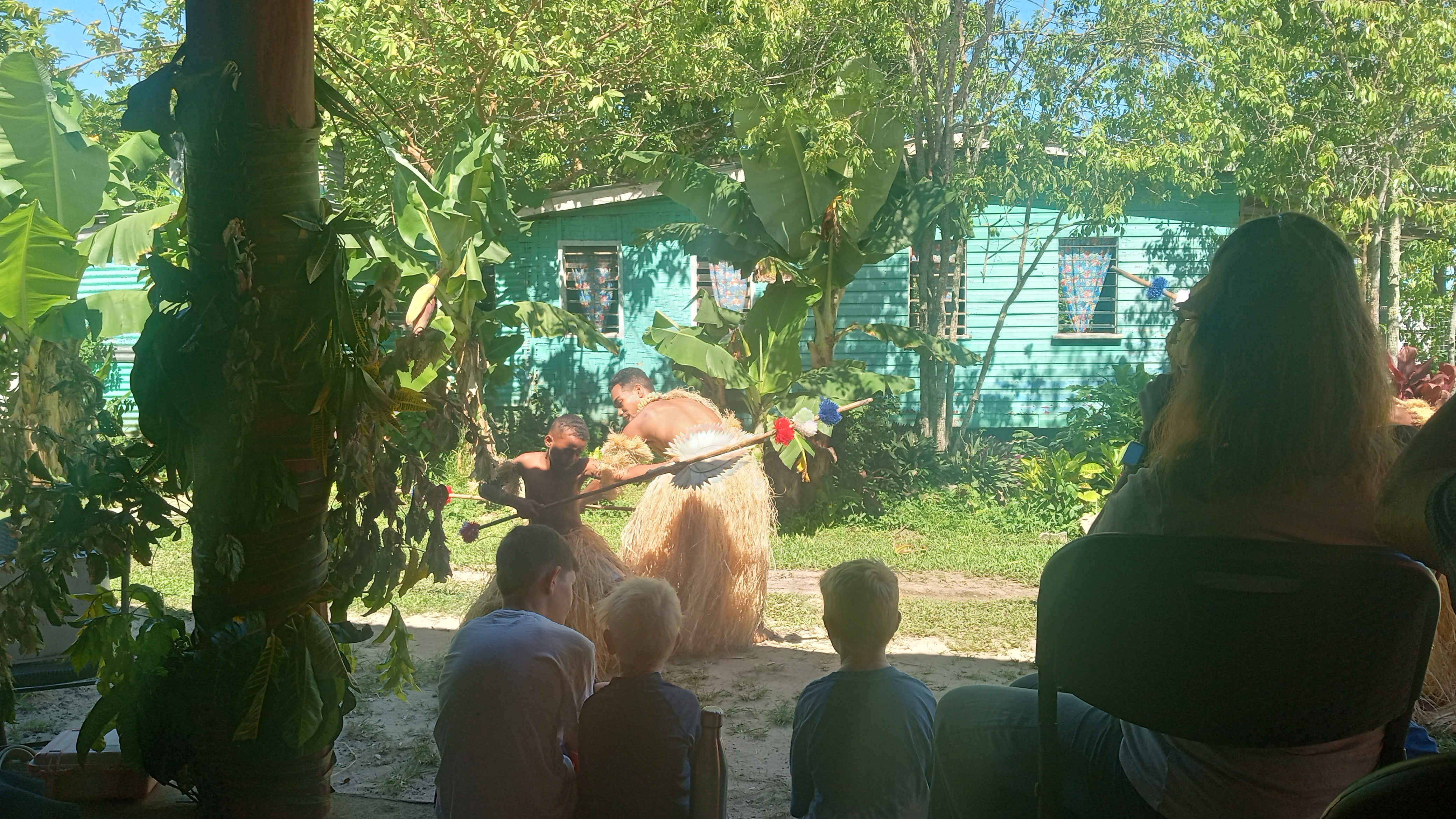
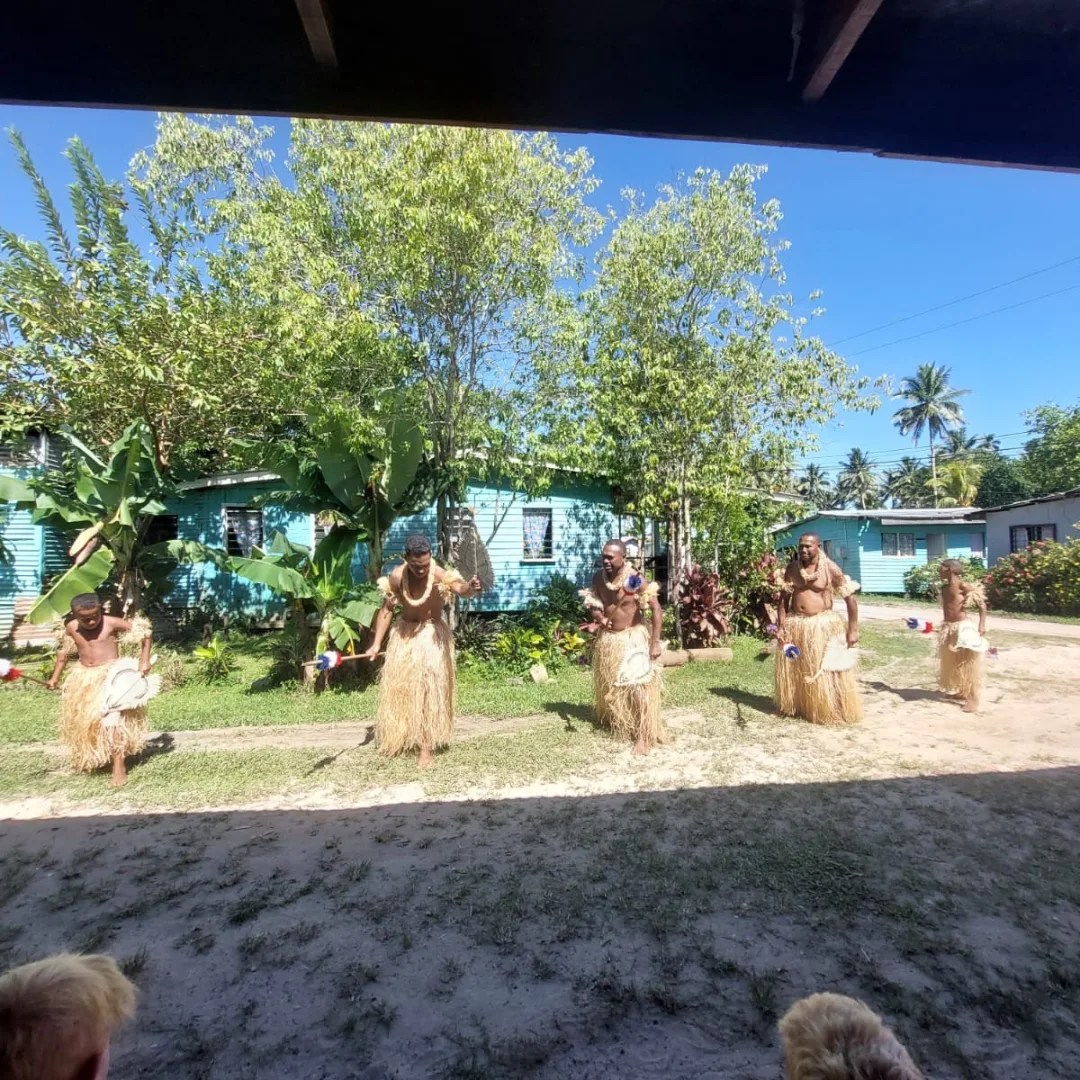
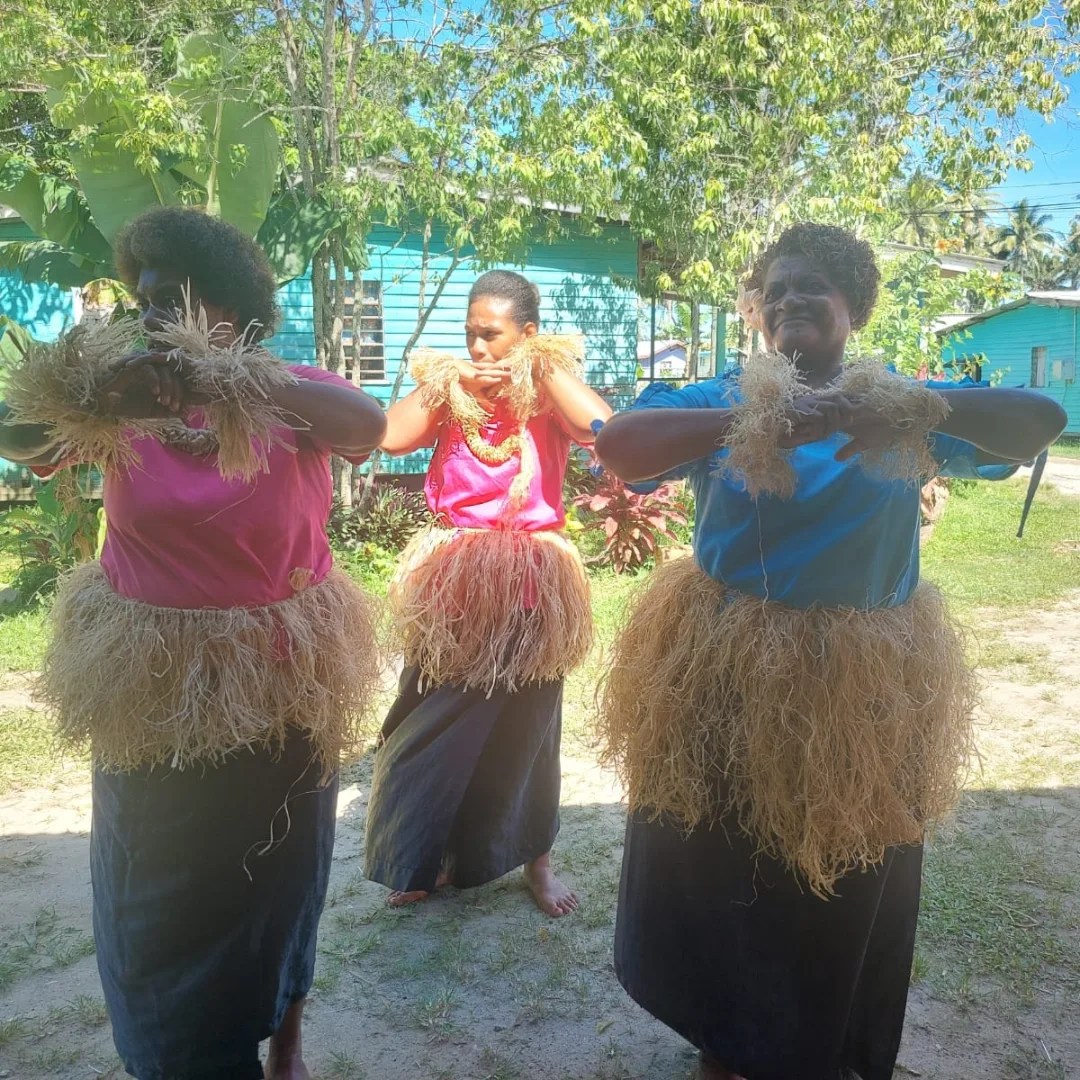
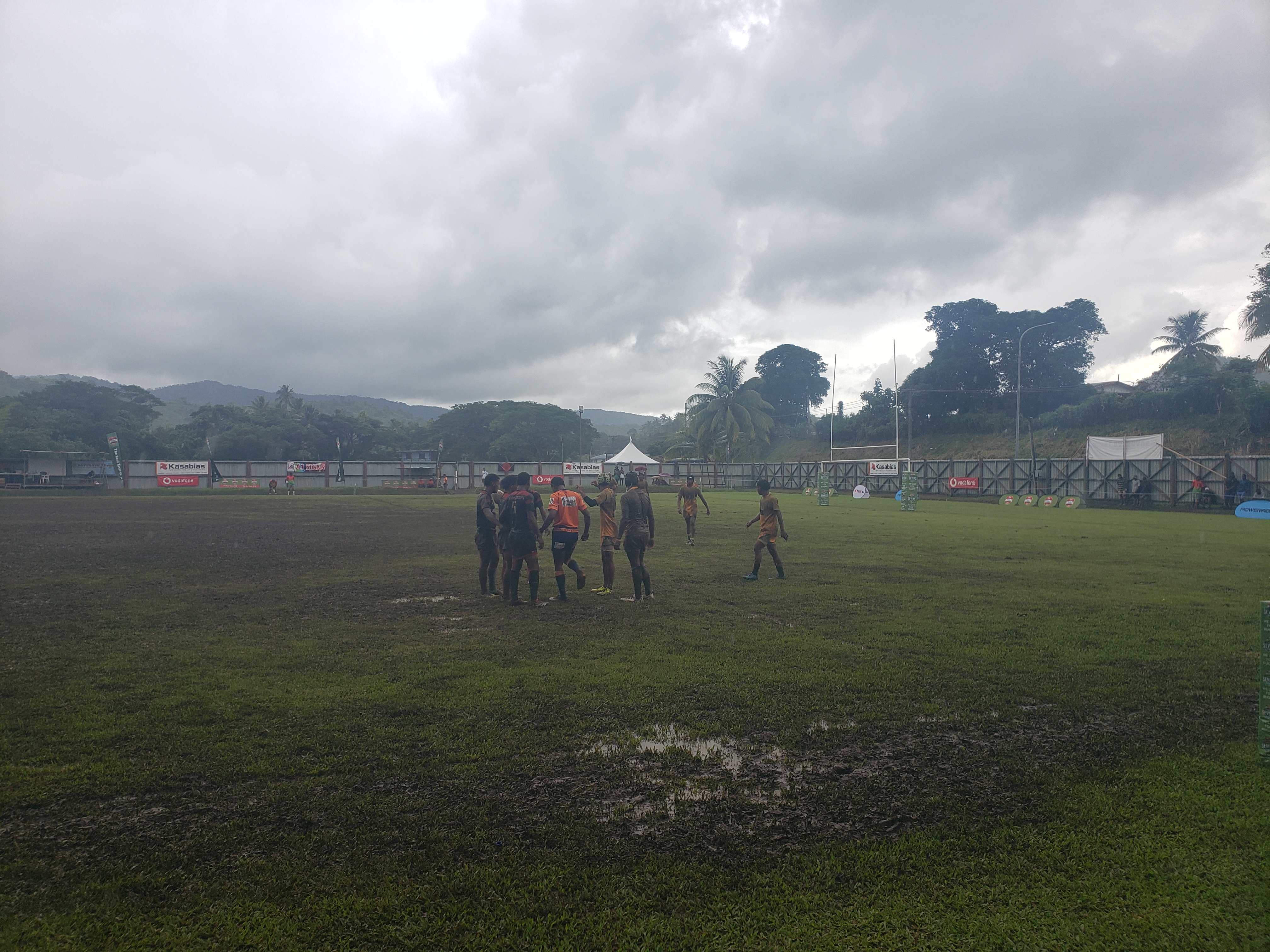
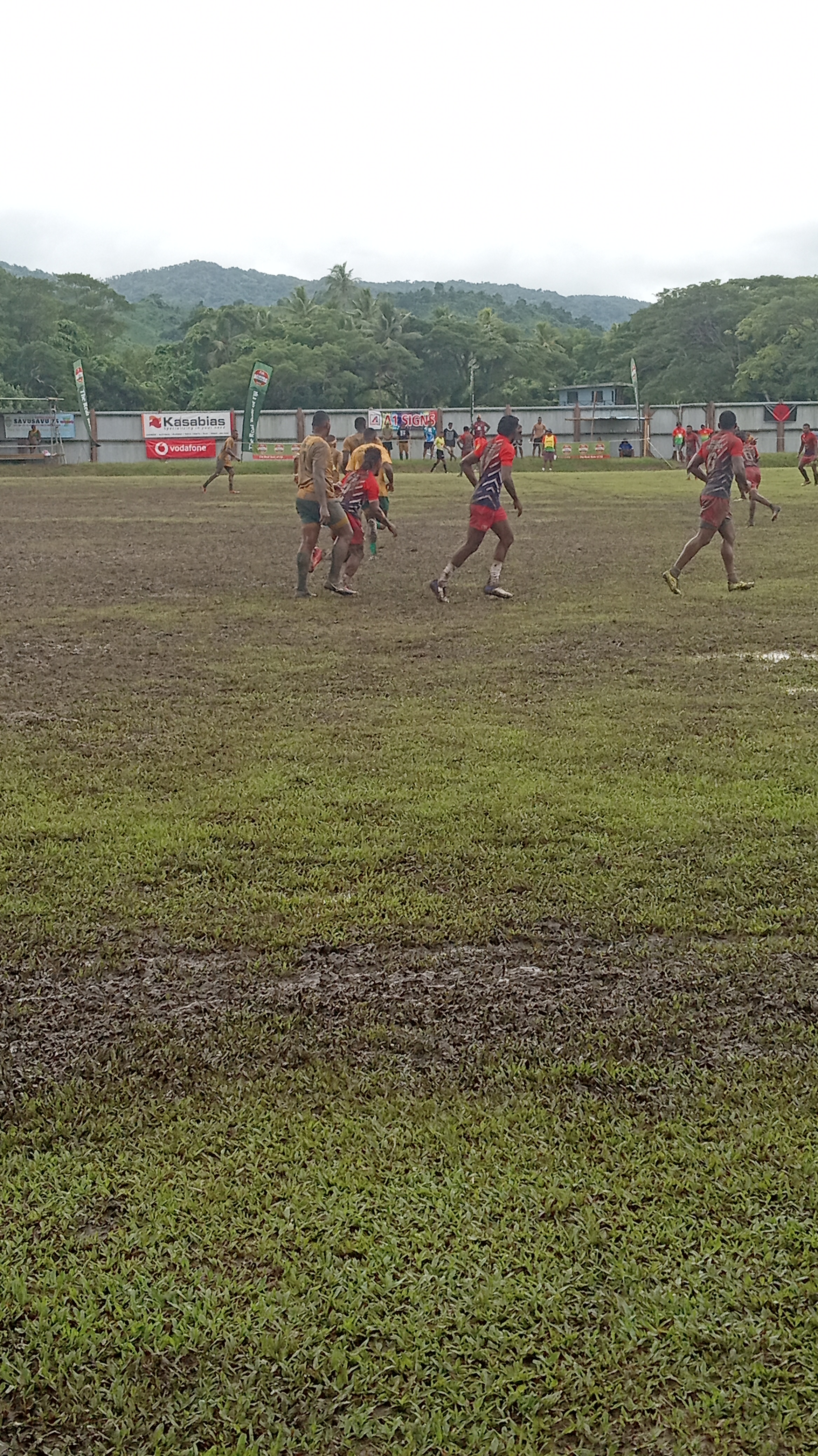
Our time here has been marked by incredible heat, oh so much rain and tons of humidity.   I have quickly learned that I am not cut out for a tropical lifestyle!   We have made some wonderful friends at the marina – pool time and dinners and domino nights have been abundant!   We have attended a couple of local rugby matches – we are quickly becoming fans of the game!  We attended a cultural day at a local village – which happens to be the home of one of the staff here at the marina.   He had said his brother was going to come and meet us when we arrived – we didn’t meet him initially so asked someone if they could point out where we might find him – turned out we asked Jeremiah’s uncle so he took the whole lot of us (8 gringos trailing behind him) to the family house to meet Jeremiah’s brother.   We all sat on the floor in the living room, chatting about life in general – it was a wonderful and welcoming afternoon.   We have been trying to arrange for a tour around the local part of the island with Jeremiah but have so far been stymied by weather and Jeremiah’s work schedule.   That is still the plan though.   There are also a couple of “touristy” things we want to do here before we head out – a local chocolate plantation, a trip to Labasa, and cooking in the hot springs here in Savusavu.

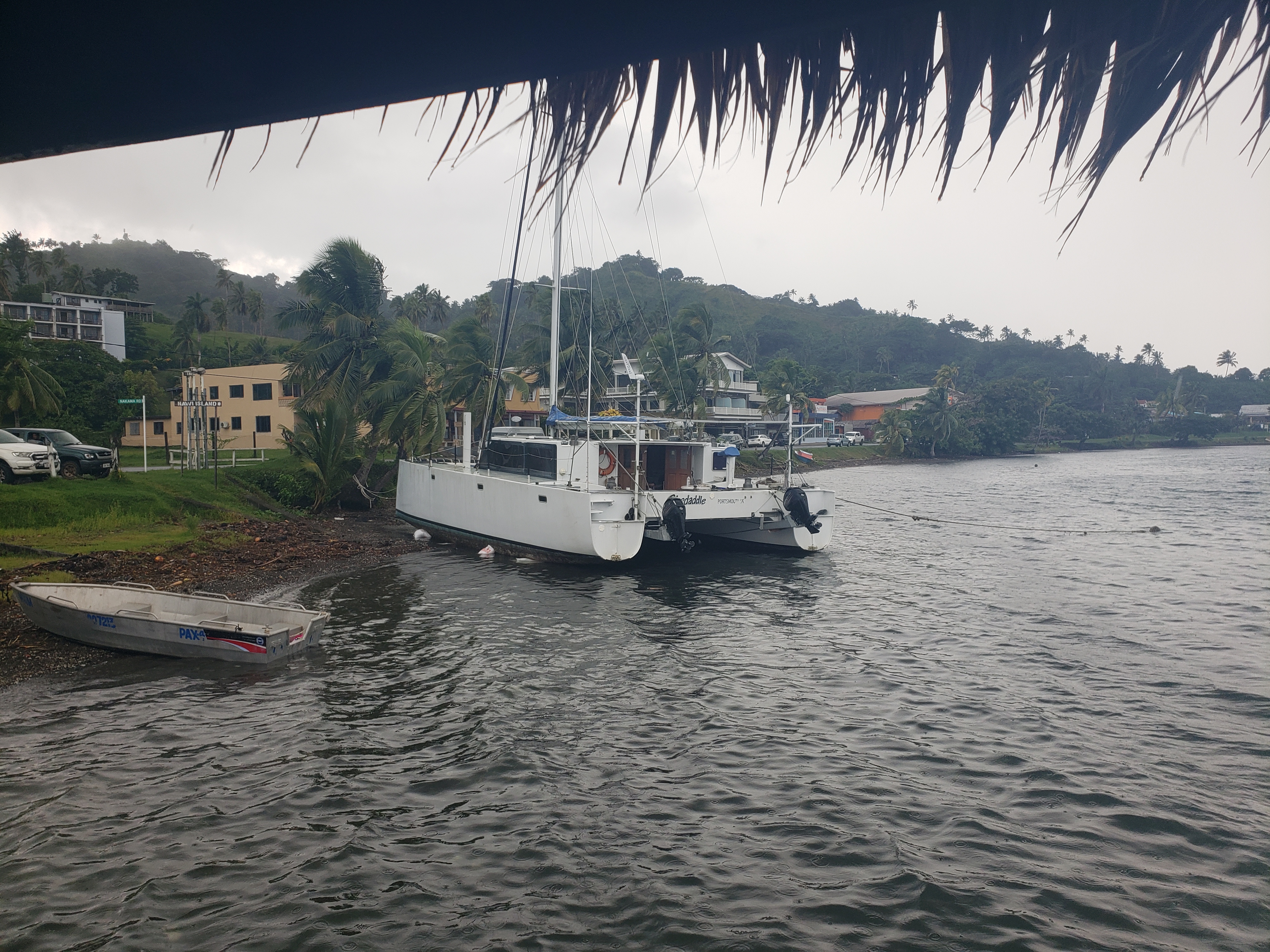
We are of course here in cyclone season and, technically, we have had 2 cyclones during our time here.   The first was not actually even named a cyclone by Fiji, but NOAA did classify it as a category one.   The reality was that we had about ½ an hour of 30 – 35 knot winds.   The second was a bit more dramatic – if only for the anticipation of it.    The cyclone was forecast for over a week – daily weather showed it creeping closer and building as it came.   The forecasts were pretty in agreement that we would not see the worst of it in Savusavu, but we were definitely going to get the edge of it – we could only hope that it did not do what other cyclones have done in this area, veering abruptly at the last minute and making all forecasting relatively useless!!   We spent that week getting everything tucked away, the headsail down, kayak and dinghy lashed down and finally, at the last possible moment we took down the tarp that keeps some of the rain and sun out of our cockpit.   As the system approached it did form into a cyclone – Rae.   Rae rolled over us during the day – moving slowly but maxing out at about 35 knots again.    We had the wind instruments running and mirrored to our tv below deck so we could keep an eye on it.   The eye of the storm of course made for some eerie calm conditions – a good opportunity to run up to the washrooms!  And then we were hit by the backside – unexpectedly, the back of the cyclone was much more intense than the front – we saw winds into the low 40’s for a fair length of time and then were hit with a few bigger gusts – our highest recorded gust was 53.4 knots.    Even through the highest winds, the protected conditions at the marina meant we had calm water – we were of course heeling in the wind, but no big wave action.   A few of the boats that were anchored or on mooring balls outside of the marina ran into a bit of trouble – a big cat ran up on the beach (and is still there), a ketch dragged but was quickly reanchored (on the other side of the channel) and we spoke to a couple who were anchored at the far end of the channel, as it turned out just slightly too close to the corral – when the big gusts hit, they drug just a small amount but that was far enough to land their rudder on the coral for a couple of minutes- they managed to get themselves pulled forward and didn’t experience any damage but it was a long night for them!  When all was said and done here, there was almost no damage at the marina or in town, a fact we are so thankful for.   Unfortunately, Rae parked itself on top of the Lau group for over a day, gusting up to 80 knots, and a few villages saw some pretty devastating damage – a boat from the marina just recently returned from sailing down to one of the affected villages with some supplies to help them in rebuilding the roofs and buildings that were destroyed, accompanied by another boat that was loaded with food (the village lost all their crops in the flooding). 

We also had one slight medical incident.   We were returning from a night out with friends for dinner – I went to get into the cockpit – somehow in ducking under the tarp, and lifting my feet over the cushion that was turned up to dry, I got my feet tangled somewhere (note to self – always take off your flip flops before getting on board) and in some probably comical pratfall, I quite literally flew forward, stopping only when my forehead crashed into the steel corner at the edge of our companionway – as the rest of me fell I sprained and/or bruised my ankle, banged up my shins and slammed my jaw into the hatch.   It was completely dark but I knew immediately that I was bleeding – a lot.  Owen got onboard, got a light on and immediately told me we were going to the hospital.   I went below and tried to see the cut – honestly there was too much blood to really see it but I was convinced that it could just be butterfly bandaged up and we could go to bed.  Owen was having nothing to do with that so, with a wad of paper towel held to my head, we headed up to the security office – the ferries had stopped for the night but they ran us right over to town, giving us a radio to call for a pick up on our return.   We arrived at the taxi lot to find one taxi left, with people getting into it – Owen shouted out that we had to go to the hospital and, seeing me sort of staggering toward them with a big bloody wad of towel at my head, they immediately got out of the cab and gave it over to us.   The hospital was not what I would call the cleanest place but they had me in, stitched up and given a tetanus shot (ouch!) almost immediately.   The security guards at the hospital called for a return cab for us and we were back on the island within 2 hours.    The bruises took a couple of weeks to heal (I had some impressive bruising on my jaw, a black eye and my legs were just bruises on top of bruises!) and I will have a pretty good scar but it could have been so much worse!  I hit just above my eye – I could have taken my eye out – or cracked my skull open, or knocked out teeth or broken something – I consider having a scar to be a very minor inconvenience where we could have had a major problem!

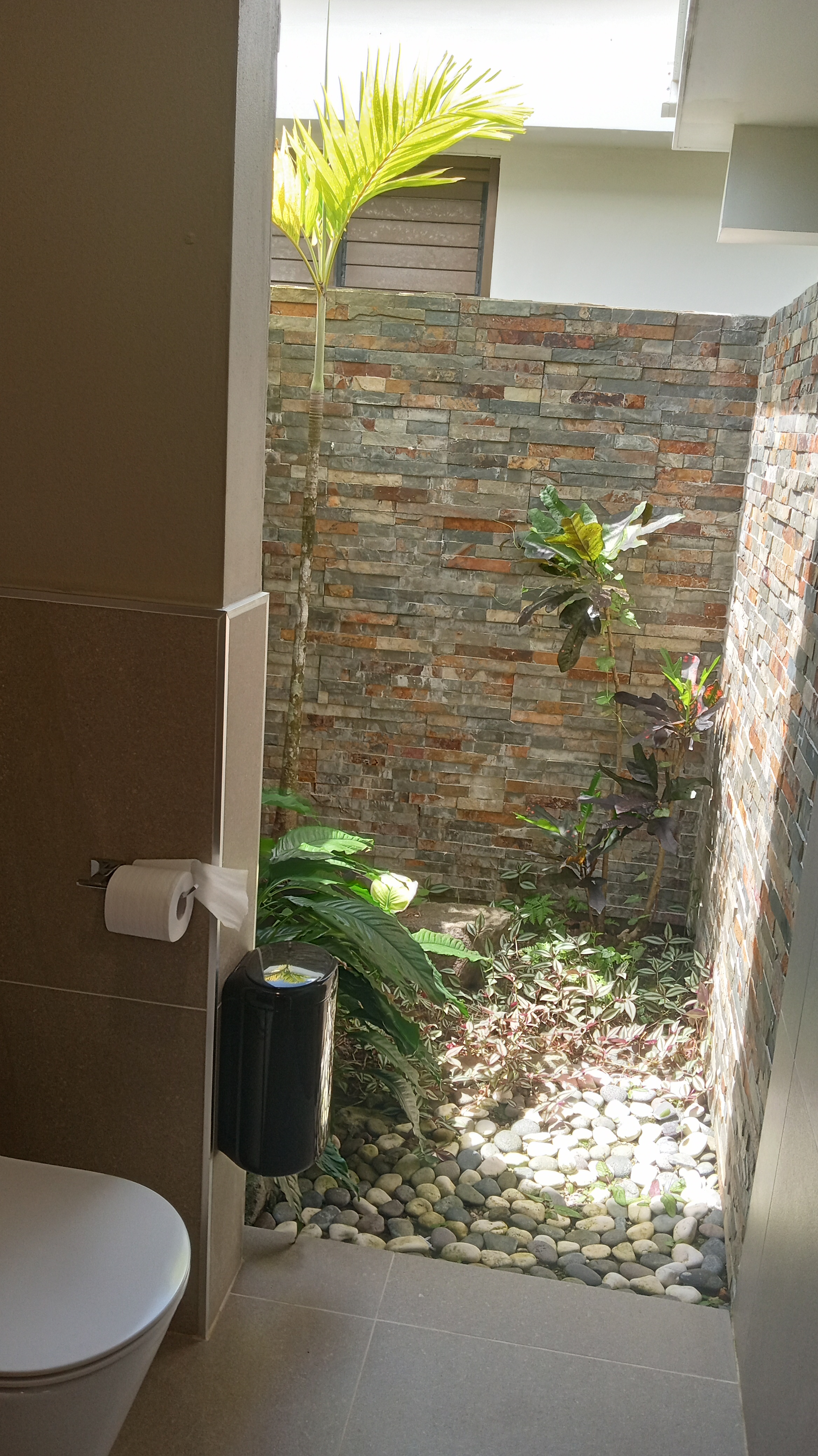
We recently decided that we needed a break from heat and humidity – our visas were expiring and so, instead of extending them, we opted for a brief trip to New Zealand to reset them.   We only spent 6 days in Auckland but it was a wonderful trip (worthy of its own post) and most importantly, for those 6 days, we didn’t sweat!!  We also had the opportunity to stop off in Nadi on the south island on our way out and in – we didn’t see much of it but did have the opportunity to do a bit of walking around and – Owen would probably say this was quite important – we managed to find a giant container of iced tea mix – pushed our luggage almost to the max weight but Owen is excited!

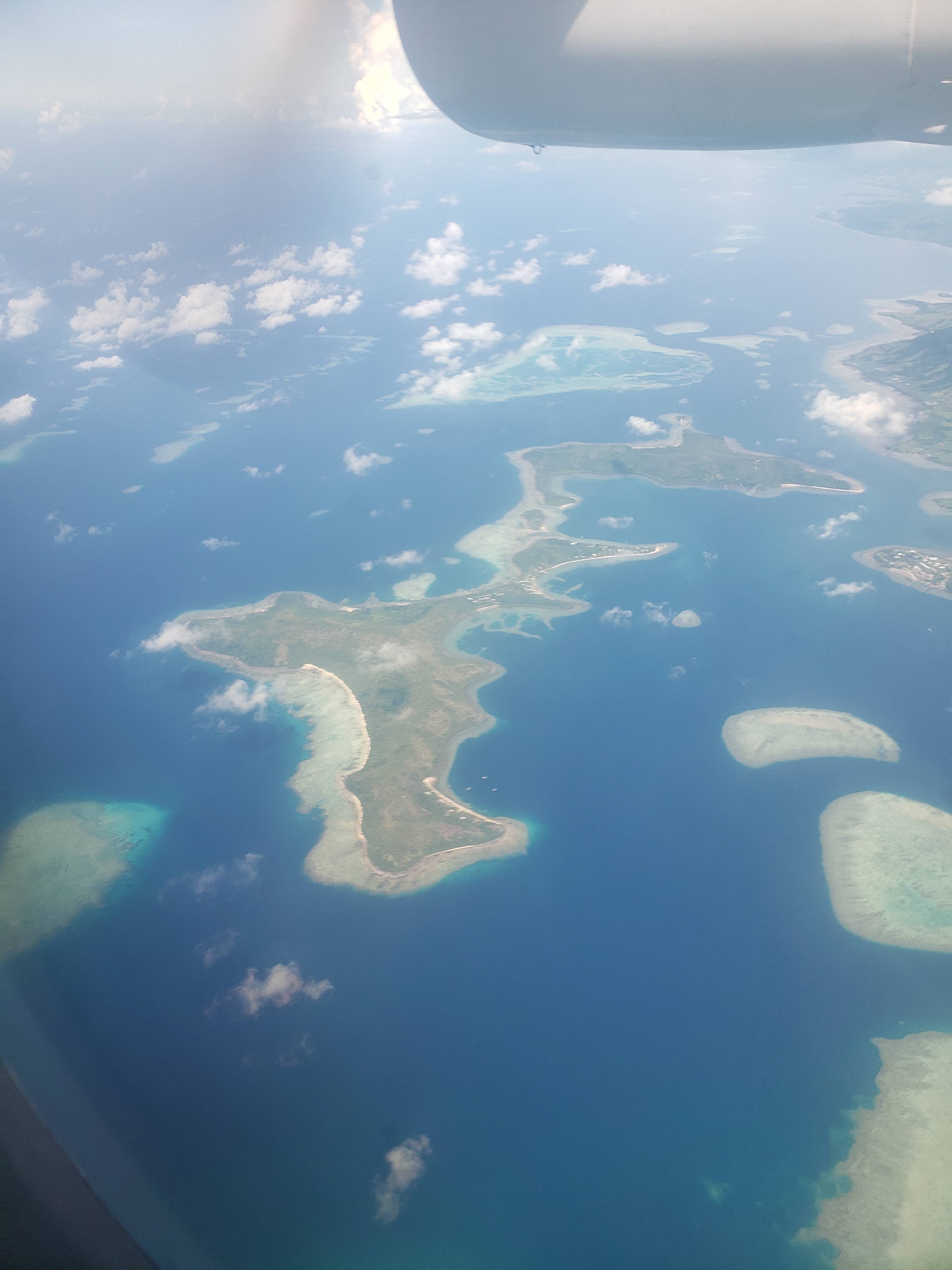
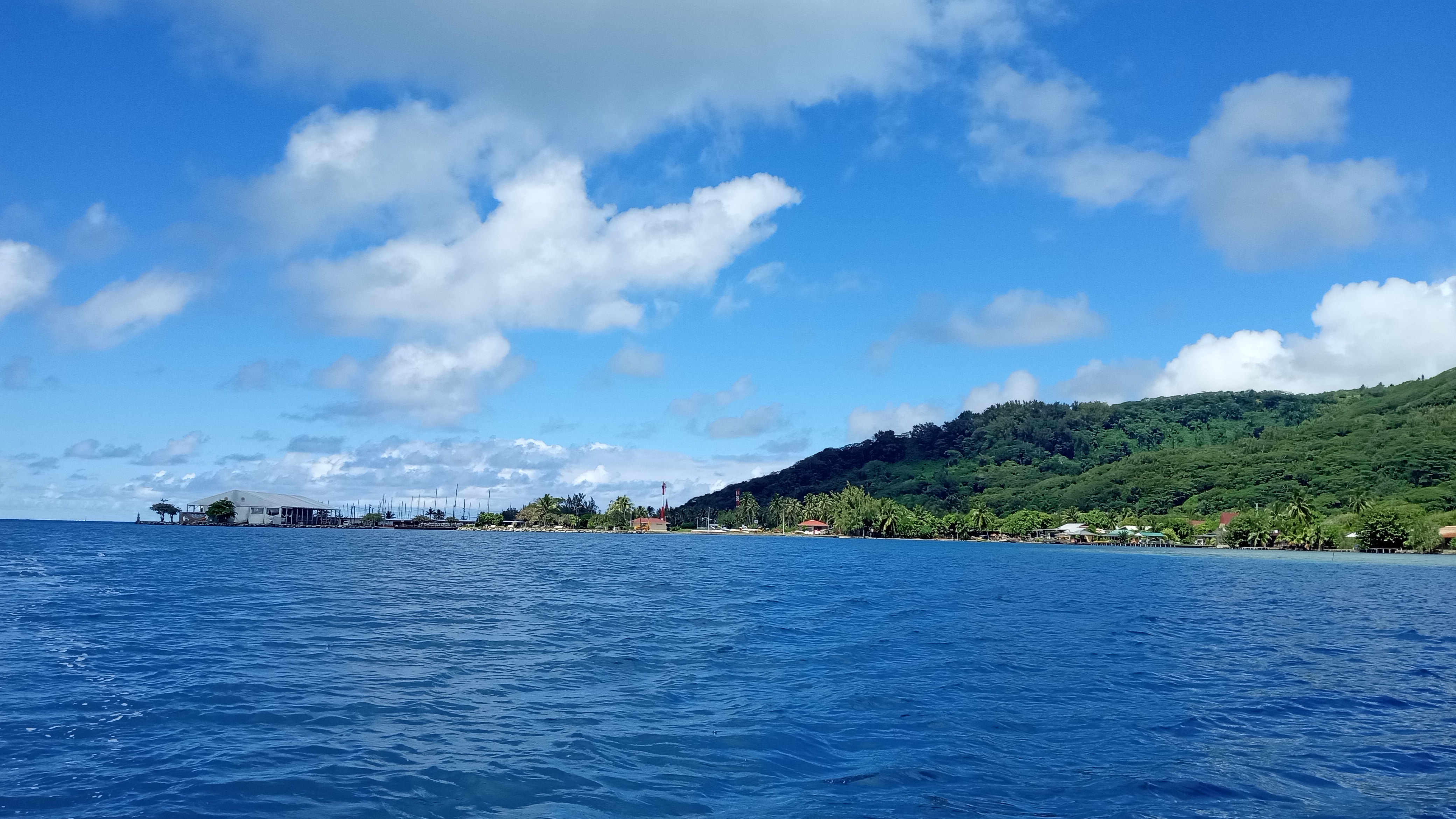
Fiji by air

What is next?   Well hopefully we can actually do some cruising once we get the heat exchanger in – we would love to be able to explore some of the Lau group and even some of the anchorages very near to us that we have heard are incredibly beautiful.   We do have the couple of touristy things to do here as well before we leave the Savusavu area.   And then?   And then we will begin making our way home – we will head north to Tuvalu, possibly the Marshall Islands and then we will head north, hoping to catch the high that traditionally sits in the north pacific.   Hopefully it will slingshot us around, landing us on the north end of Vancouver Island – we have heard of people who have been sent straight to Alaska on this course, but we will of course be making every effort not to end up anywhere in the states.    It is going to be an incredibly long trip – 40, 50, 60 days? – I am already starting to panic a bit about provisioning for such a long trip but we will figure that out.   Thankfully we can find most of what we need for provisioning here and we will definitely make a trip to Labasa before we go – where we know there are some bigger stores with a bigger selection.   The last time we did a big crossing I had Costco and some really sizeable grocery stores to assist me – this time will require a bit more creativity!

We have a fair bit of planning before that trip but are fully intent on getting to enjoy more of Fiji before we leave this beautiful place.

2024 in Review

As I sit here tucked into a marina on the other side of the world, ready to celebrate New Years Eve almost a full day ahead of our friends and family, I can’t help but think what an amazing year 2024 has been.   We have been to so many amazing places, while facing big challenges.  In 2024, we sailed roughly 9000 miles, starting with some further exploration of Mexico before crossing the Pacific Ocean to explore French Polynesia, Tonga and now Fiji.

When we started making this big plan to go sailing years ago, we had a direct plan as far as Mexico – the rest – an ocean crossing and exploring distant islands – really seemed so far out of reach it didn’t seem real.    Somehow, we did make it real.

The following is a brief recap of the highlights of 2024.

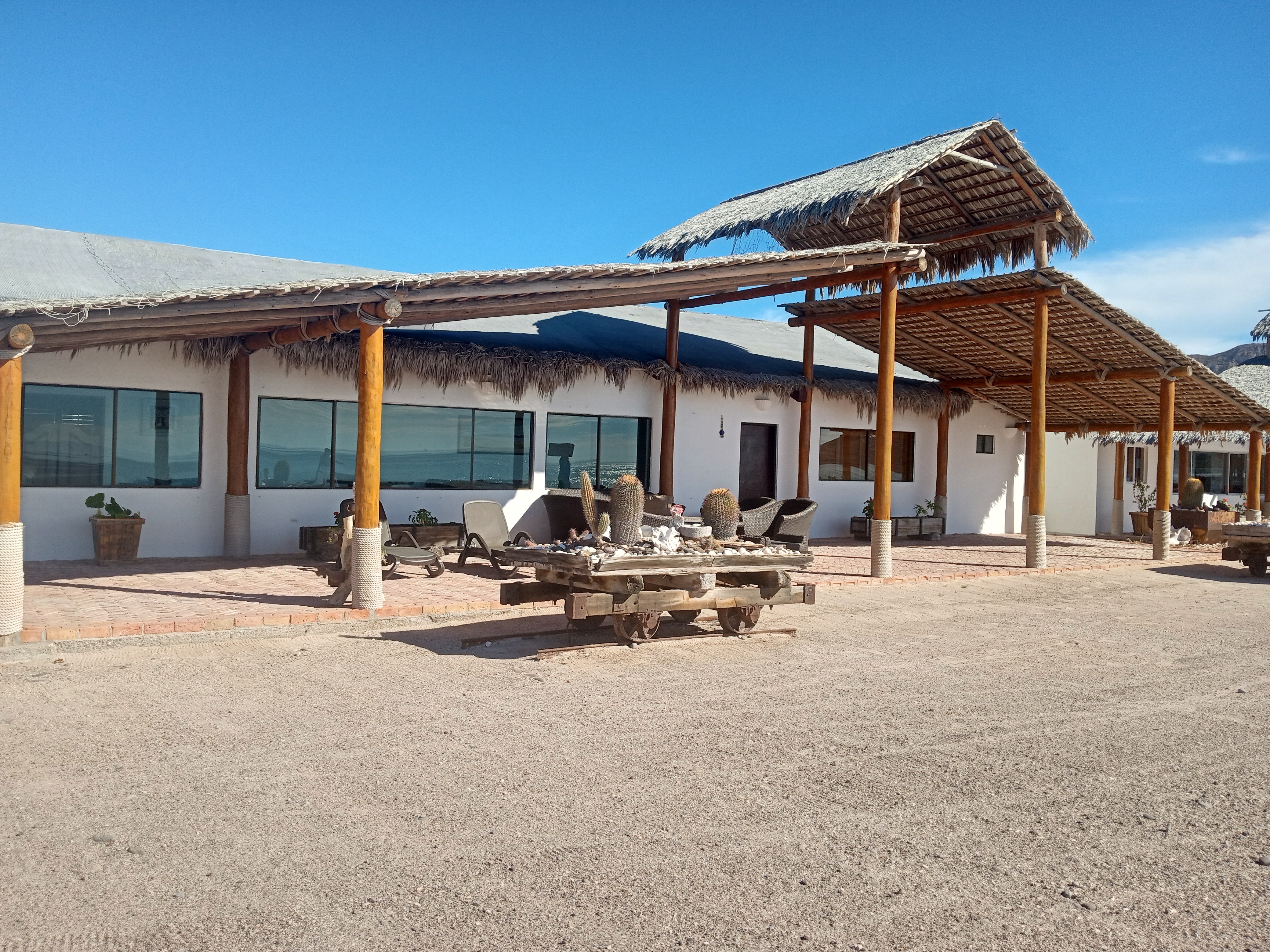
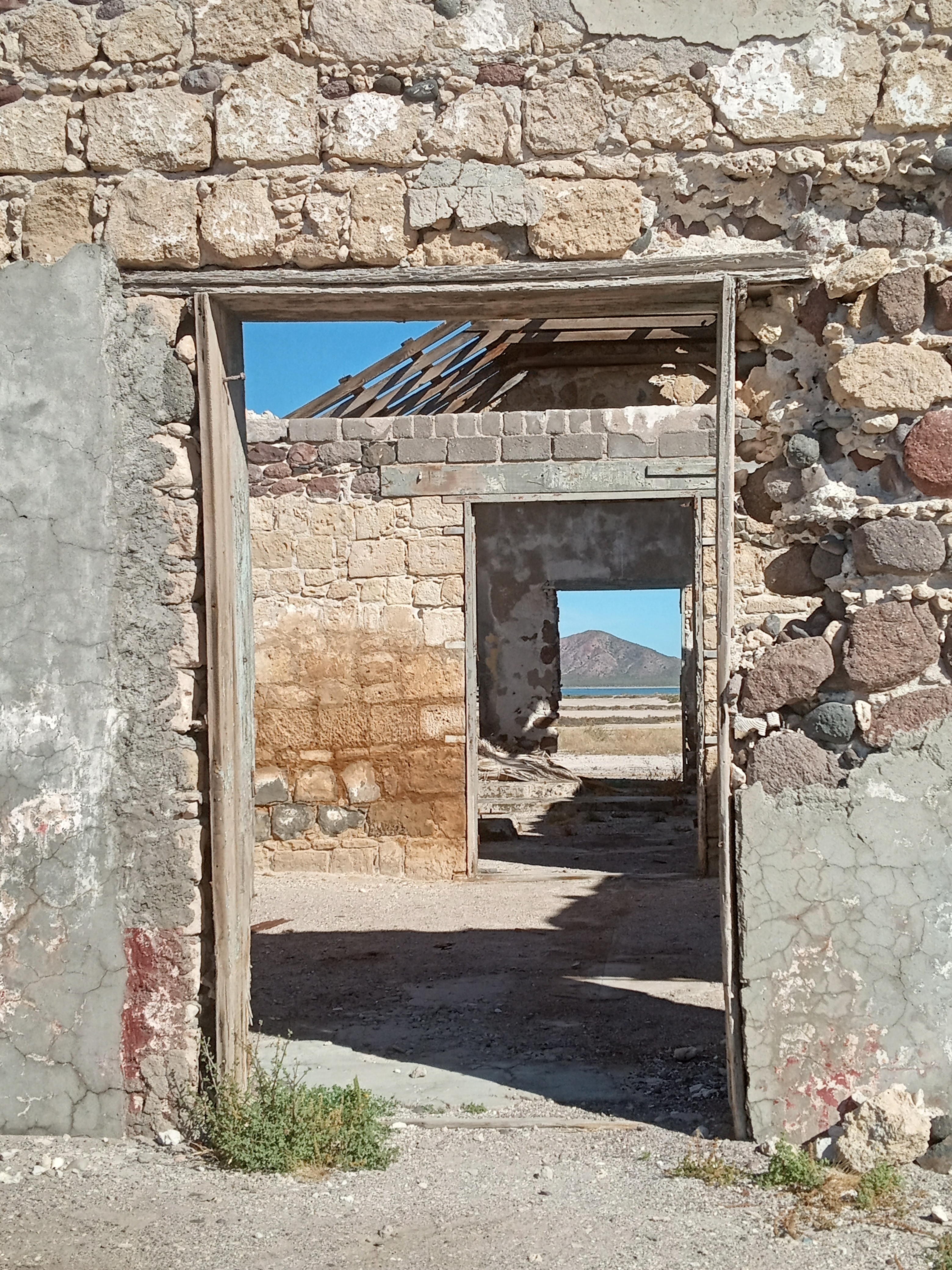
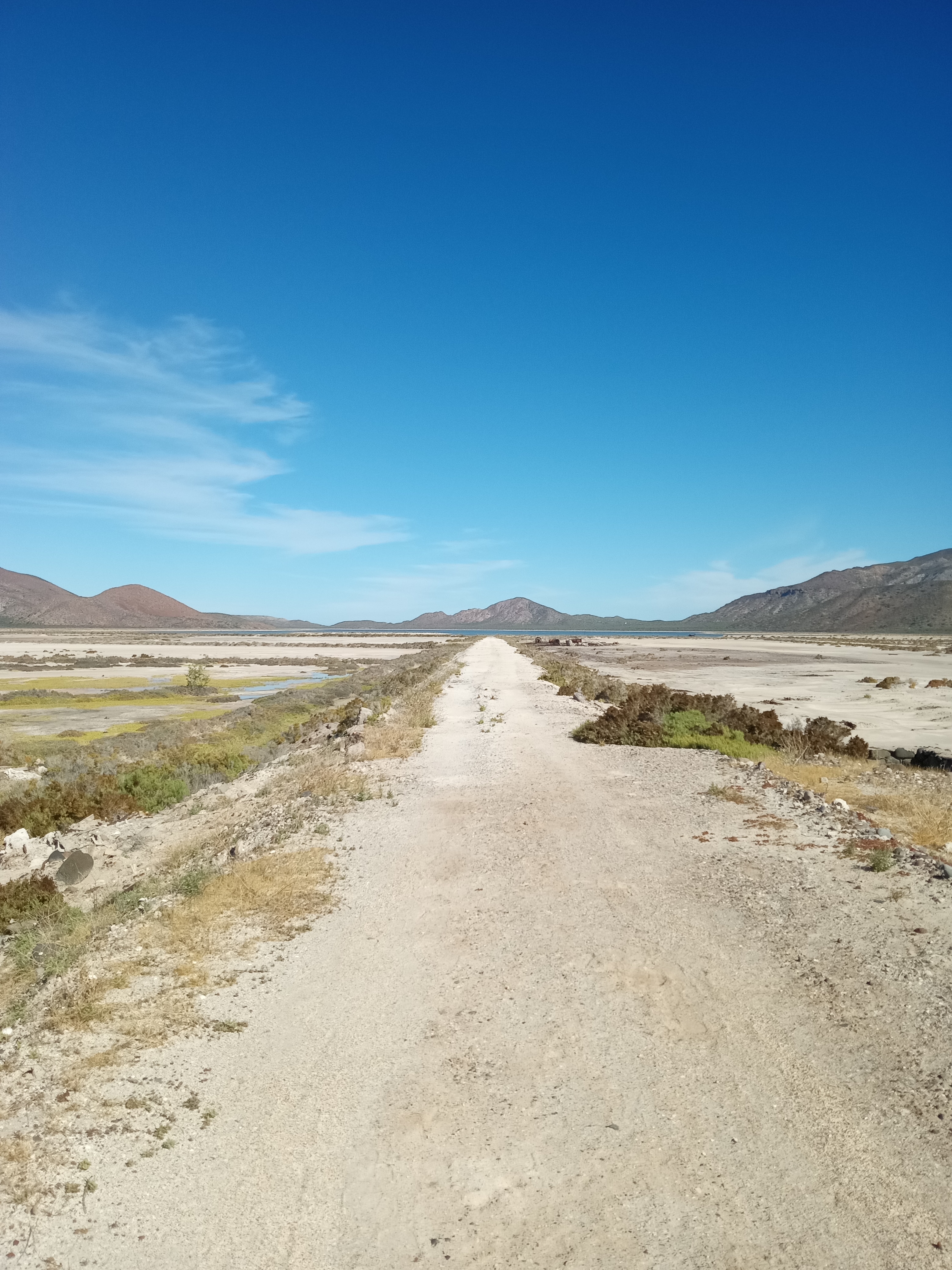
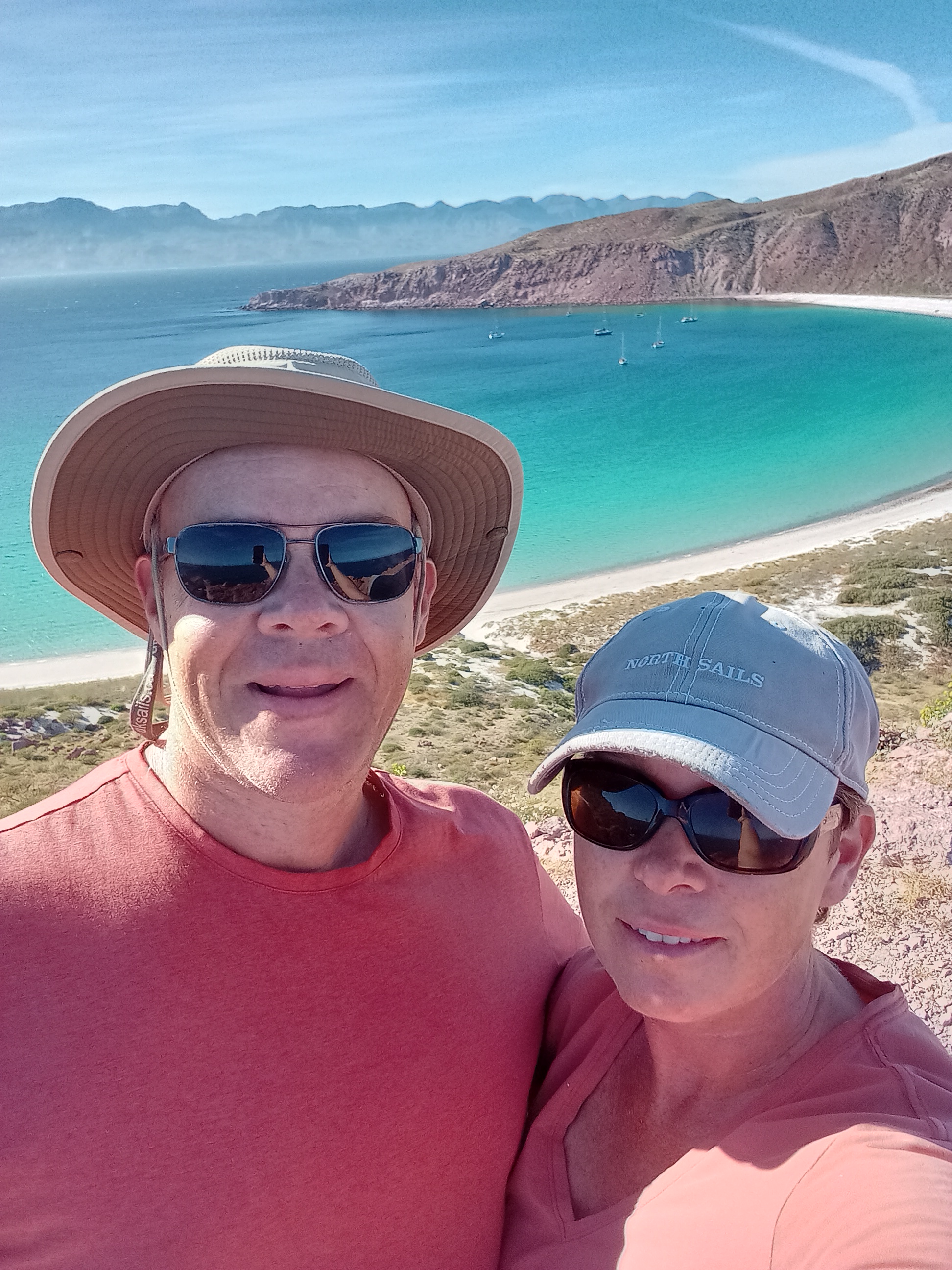
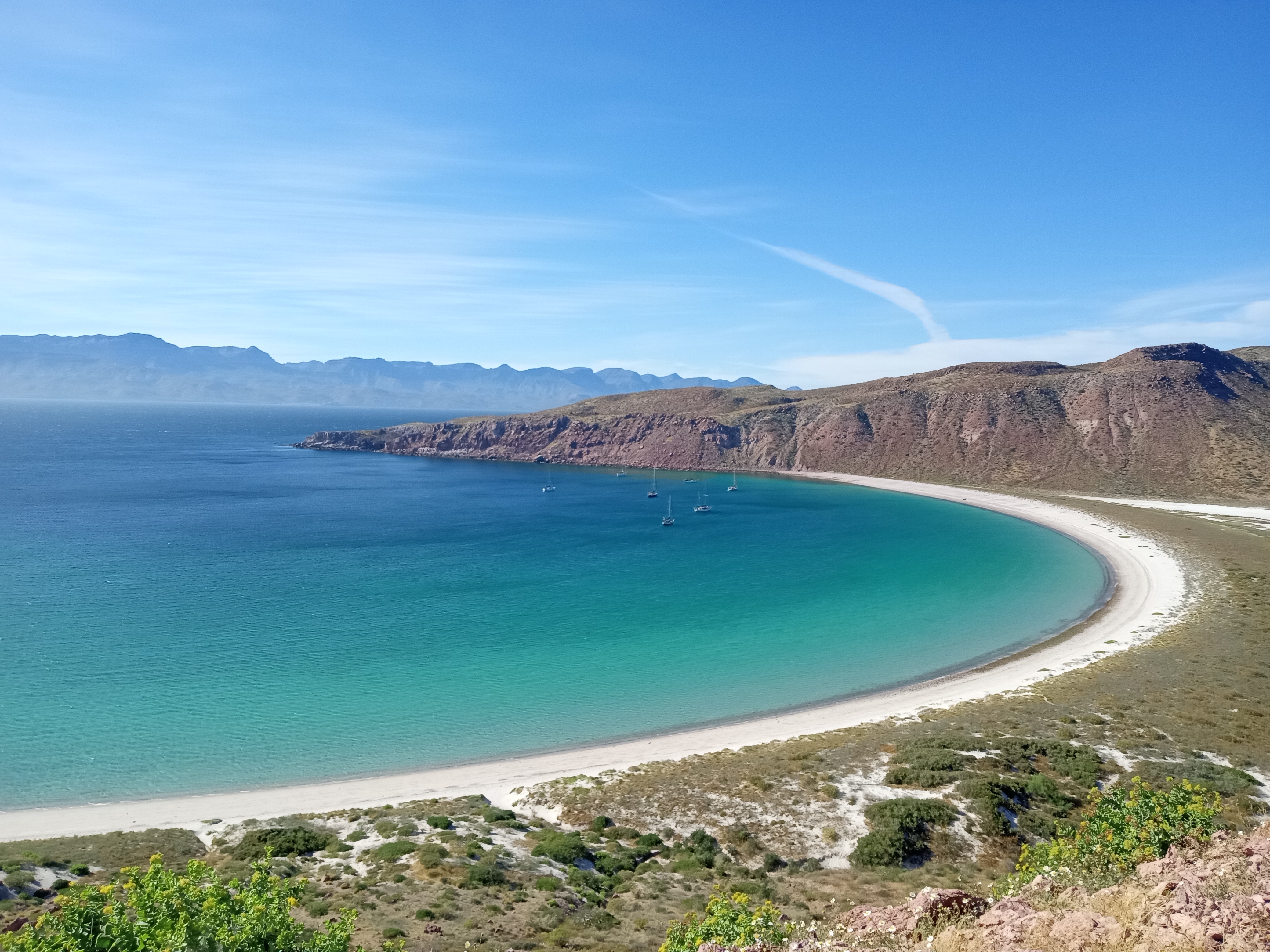
1.            Cruising the Baja – we started this year by cruising down the Baja peninsula, after nearly 3 months in the boat yard in Puerto Penasco.   Truly, being free of the yard was a gift in of itself, but our favorite stops on the way down the peninsula this time were probably Santa Rosalia, Isla Coronado and Isla San Francisco.   Having already explored Santa Rosalia on our way up the peninsula last year, we still managed to find lots of new spots to explore and enjoyed our time getting back into the cruising mentality.   Isla San Francisco gave us the opportunity for some hiking and some visiting and Isla Coronado gave us some excellent anchorages and the chance to explore an abandoned salt mine.     While it wasn’t always warm in winter on the Baja, the ever-changing beauty makes it some of our favorite cruising.

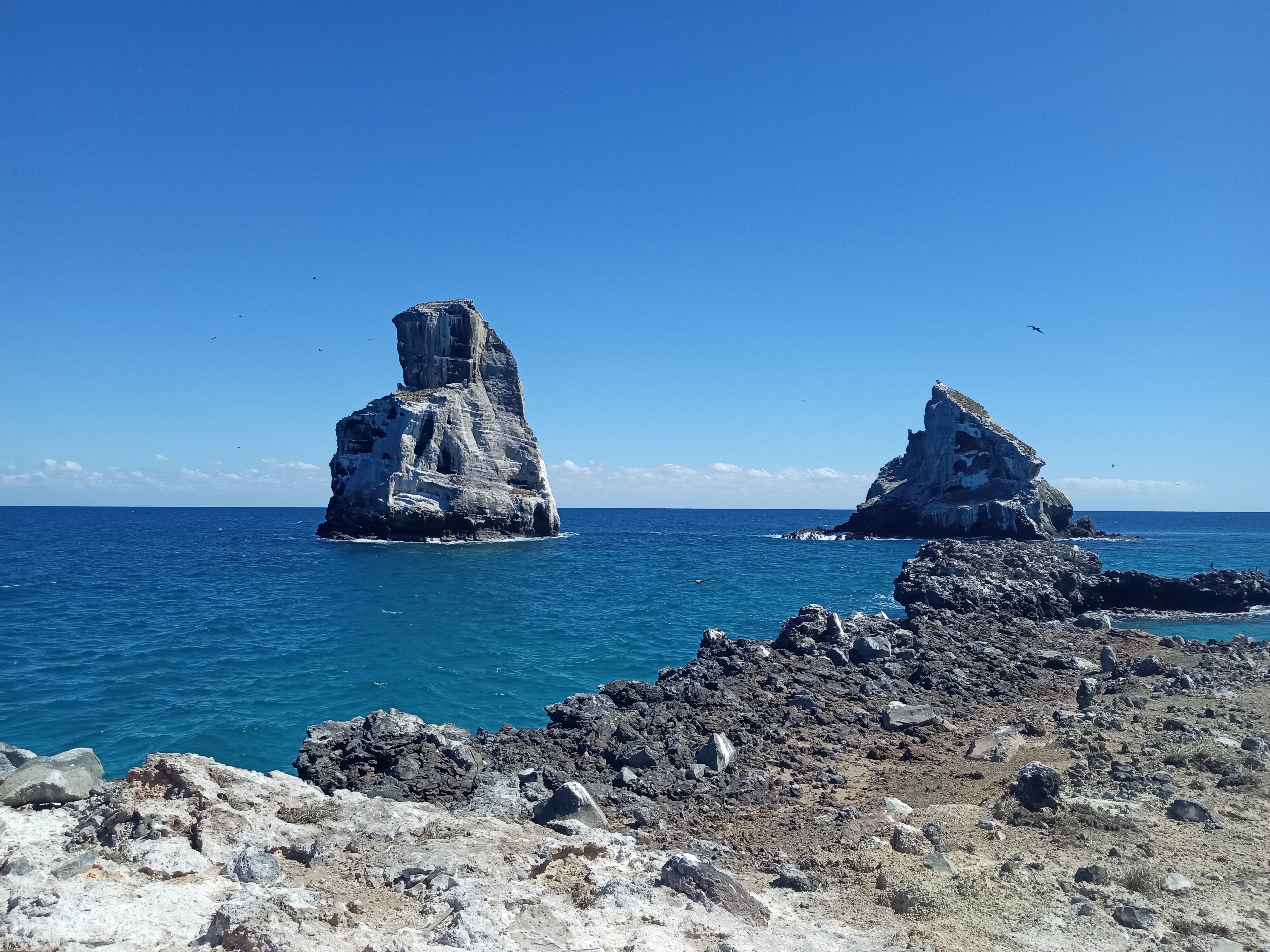
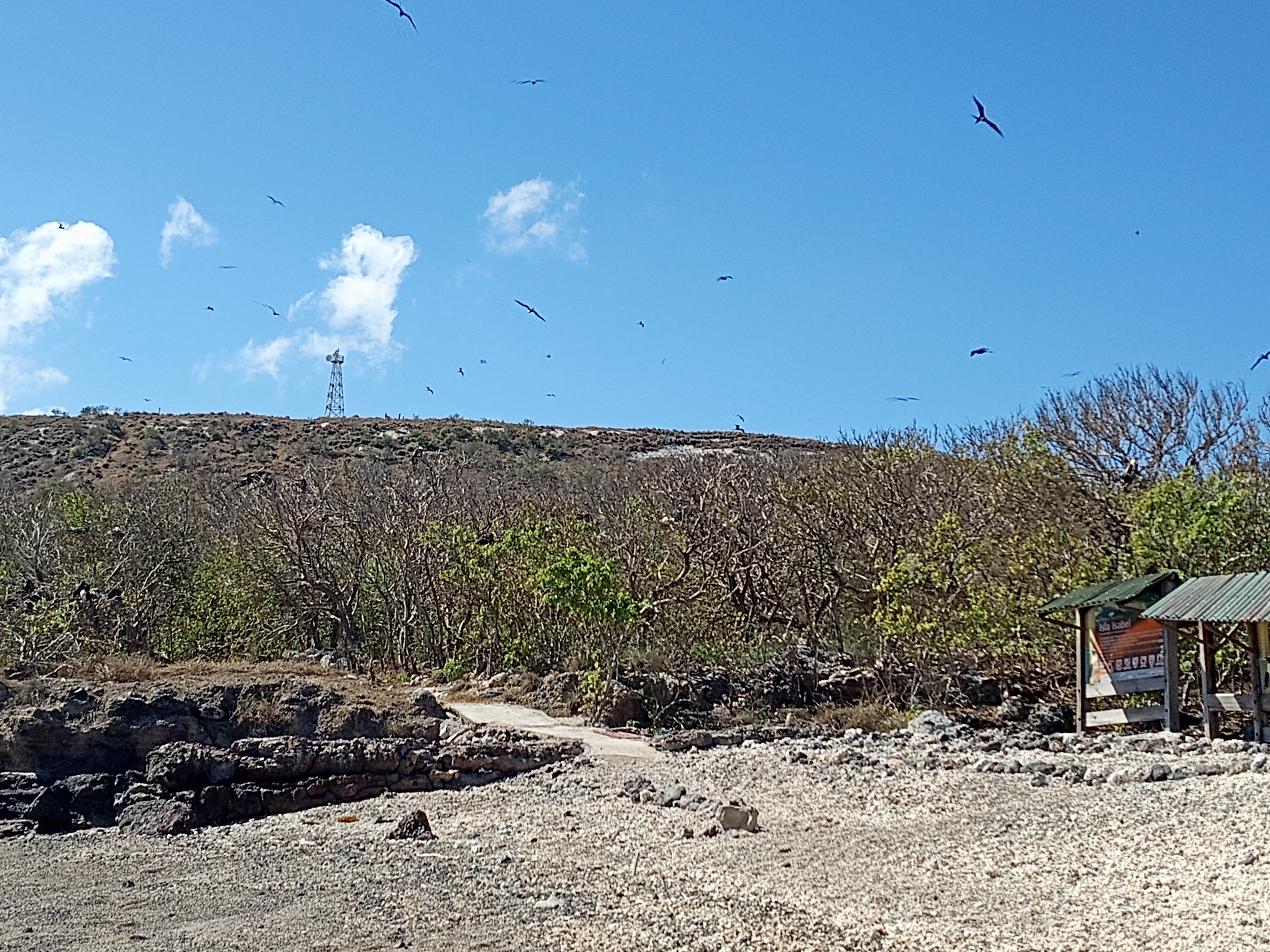
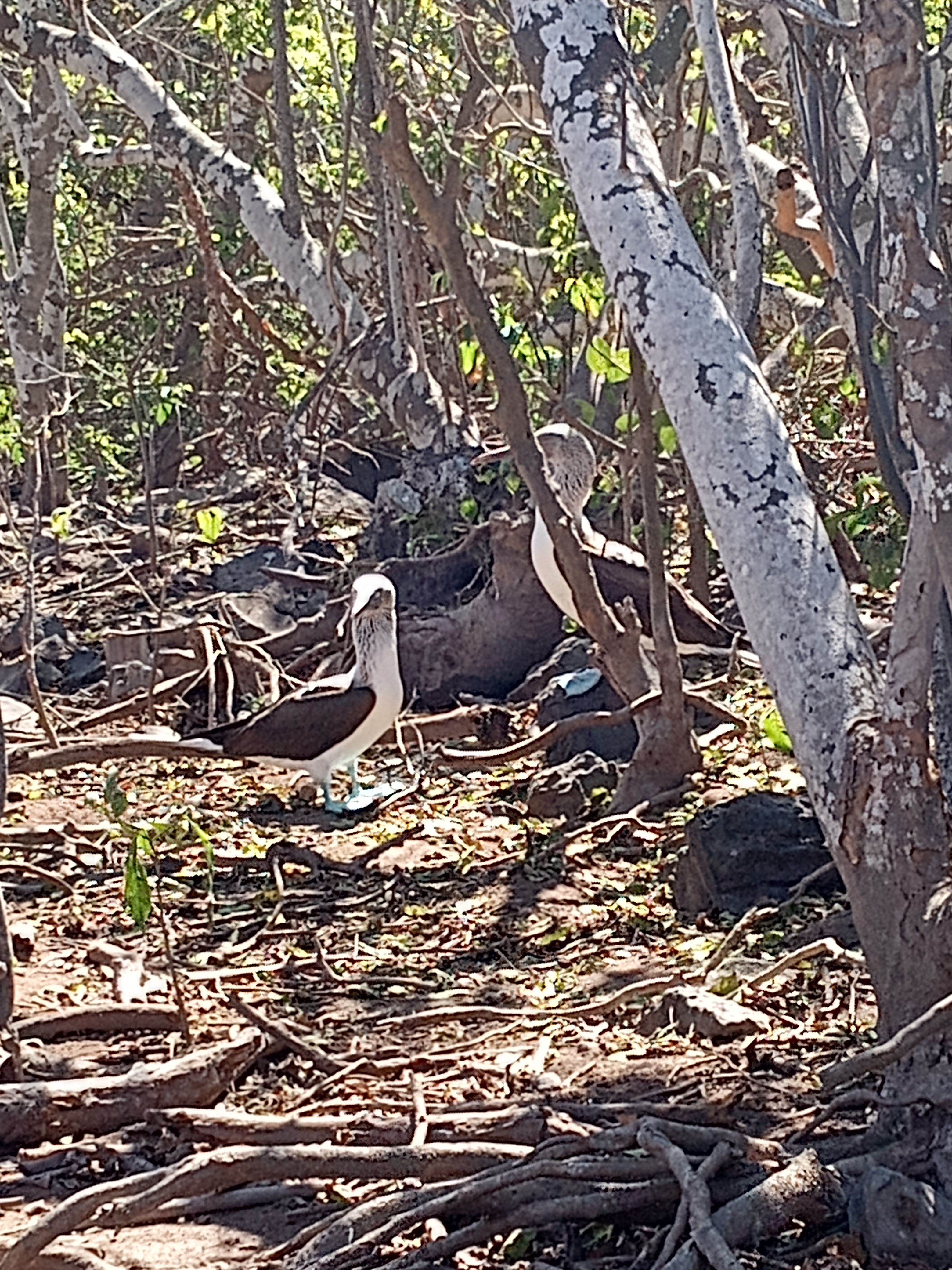
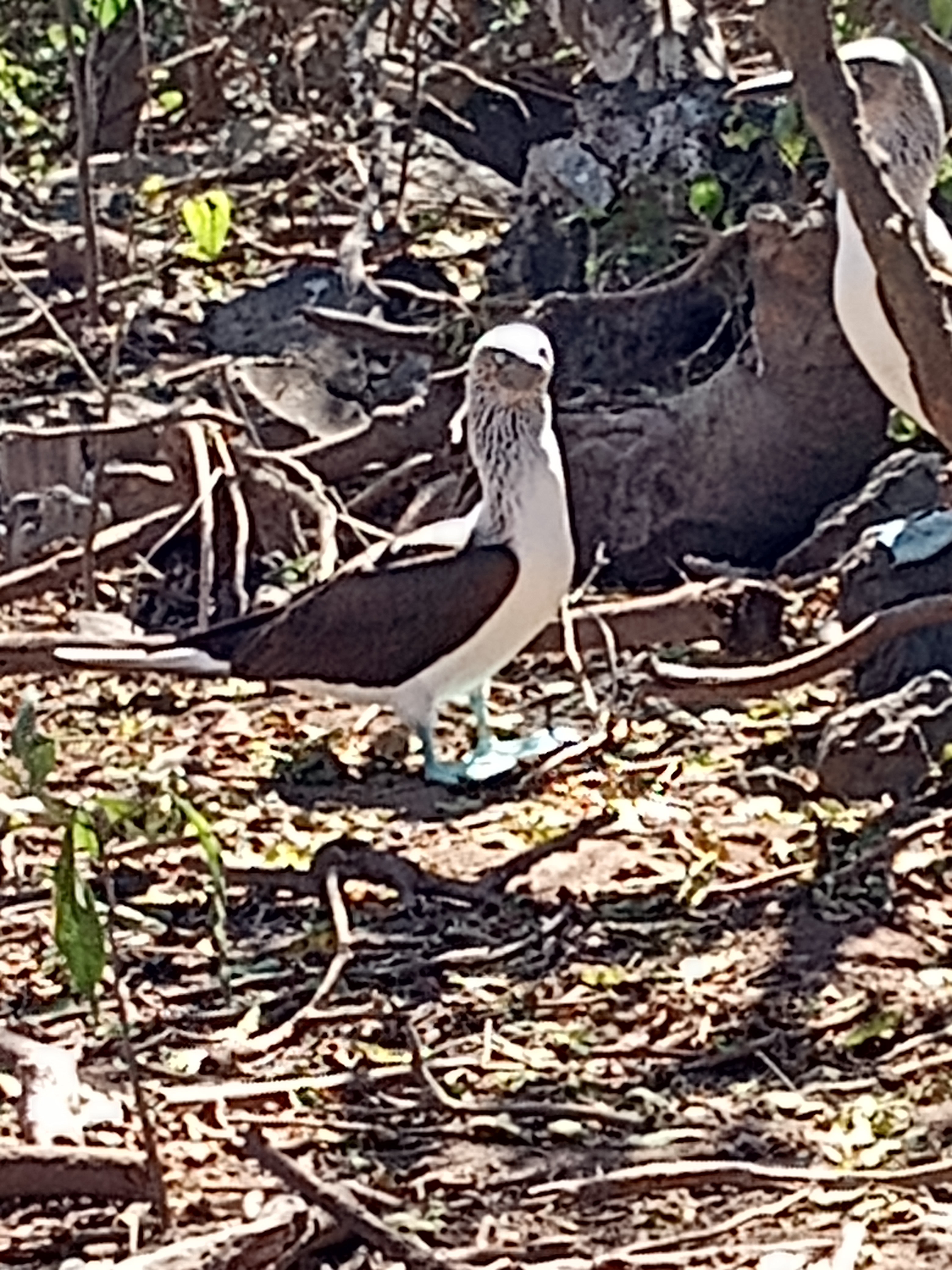
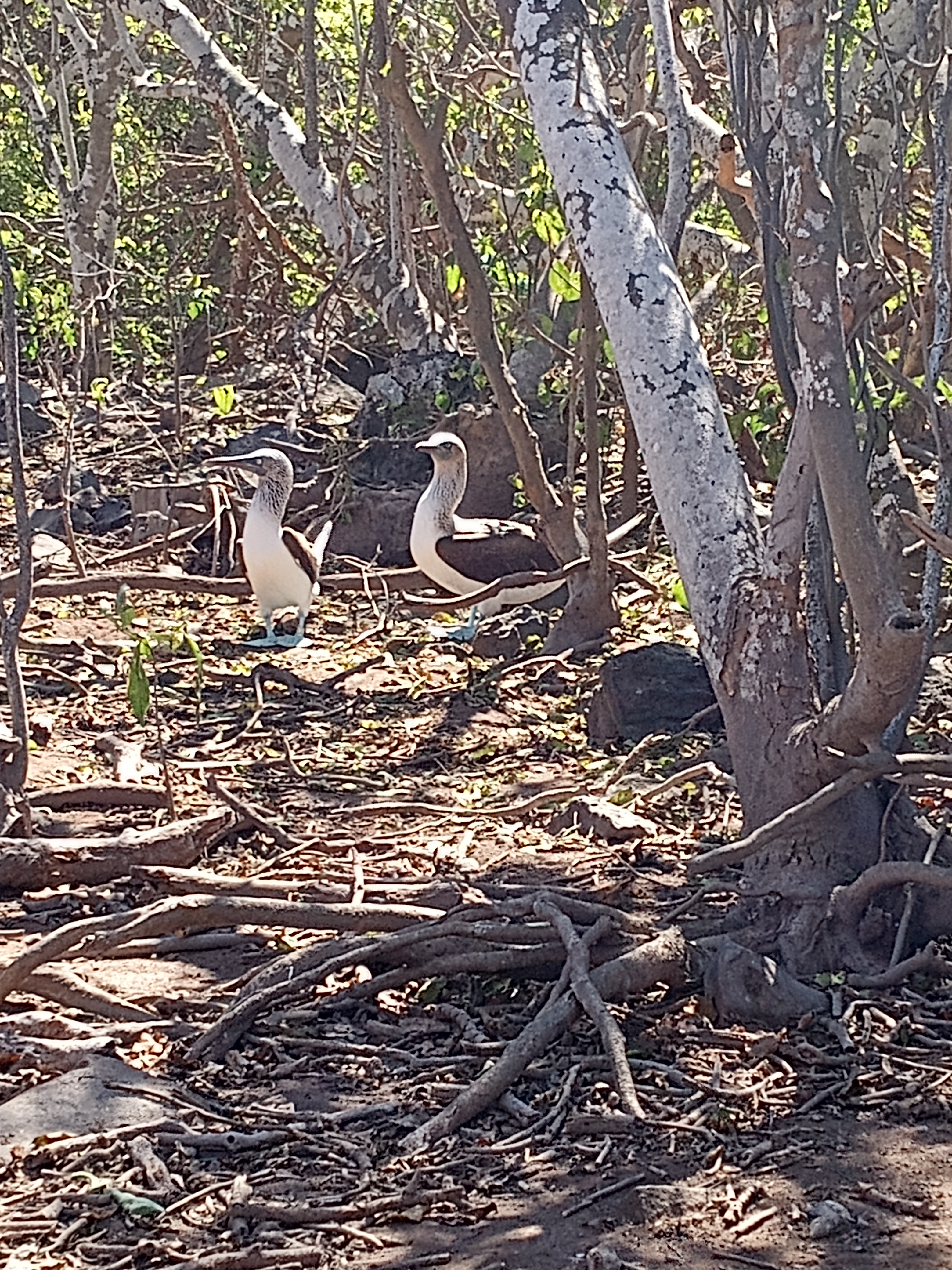
2.            Seeing the Blue Footed Boobies at Isla Isabella –  seeing the blue footed boobies has always been such a dream for me and in all of our bouncing  back and forth across the sea, we were not able to stop in at Isla Isabella until this last crossing.   We were so grateful to be able to stop in for the day and see not only the boobies but also frigates by the thousands.   Our stop was brief (the anchorage was frankly a bit scary so I was not sad to not spend a night there) but we made the most of our time and I finally got to see the characters that are the blue footed boobies.   My only regret was that we were too early for any fledglings to have hatched – there were lots of ornery mamas sitting on nests (many of them square in the middle of the path!) but no babies.   This was truly a bucket list moment for me and I was so happy to be able to tick it off!

3.            La Cruz cruisers gatherings – La Cruz has an amazing cruisers community and the local sailmaker makes it even better by holding weekly meetings for people getting ready to depart across the ocean.   During these Friday meetings, we had presentations put on by representatives from Fiji and New Zealand as well as information sessions on weather, the coast guard, passage planning and all other manner of topics.   It was a great opportunity to discuss weather windows as they started to approach.   The sail loft has a library of charts and they arranged for copies to be made for all who needed them.   In addition to the weekly meetings, La Cruz has some great restaurants which allowed for some fun nights out with fellow cruisers – both those headed out at the same time as us and with those we would be leaving in our wake.   I believe that being with this group of likeminded and supportive sailors gave us a bit more motivation and confidence to ready for the crossing.

4.            Crossing the Pacific – what an epic feat that was.   Our first big jump across the Pacific was challenging in so many ways but also gave us so many moments of beauty and wonder.   Realizing we had only made it 1/3 of the way across the Pacific when we arrived in French Polynesia was a good reminder of how truly vast the Pacific is.   We crossed the equator for the first time on this trip – turning us from Pollywogs to Shellbacks – to be safe we made a tribute to Neptune and then reveled in our new status! The idea of crossing the ocean had been so daunting – I am not sure we really understood what we were taking on – but we felt such a great sense of accomplishment in achieving that goal!

5.            Landfall in Hiva Oa – that first sighting of the lush and magical land of Hiva Ova was so breathtaking.   As we approached land, we could smell the earth – an incredible thing after more than 30 days at sea – and we could see the everchanging colors of green towering over us.  It was such a truly breathtaking moment.   Sadly, the anchorage at Hiva Oa was a true nightmare but that first glimpse of land was still such a treasure!

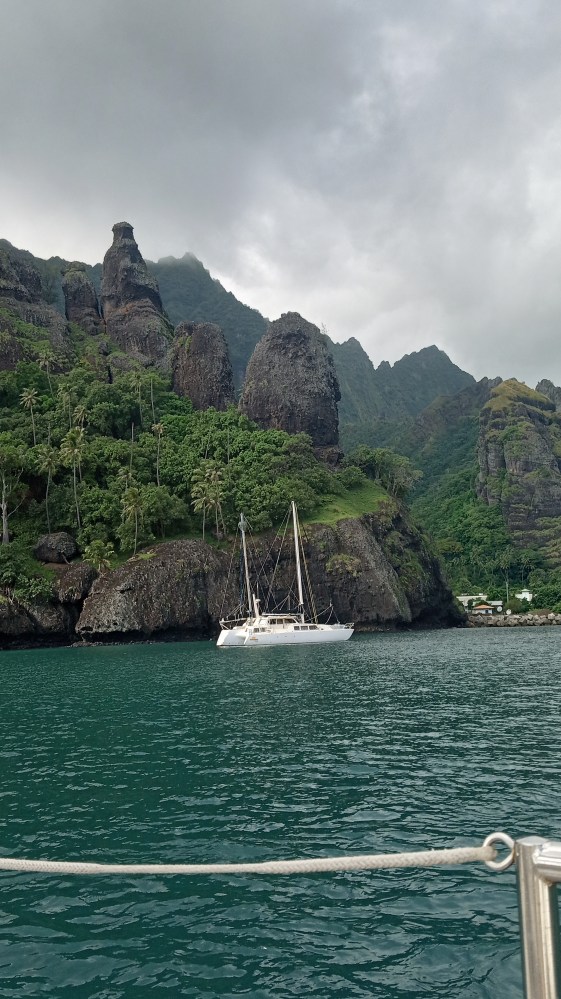
6.            Fatu Hiva – if you google the Marquesas, you are likely to see a picture of The Bay of Virgins at Fatu Hiva – the magical, mystical beauty of this bay is unparalleled.  This was one of our bucket list items for the Marquesas – it was gloomy and drizzly and the anchorage is so deep that someone dragging was a daily event – and even so, it was pure magic!

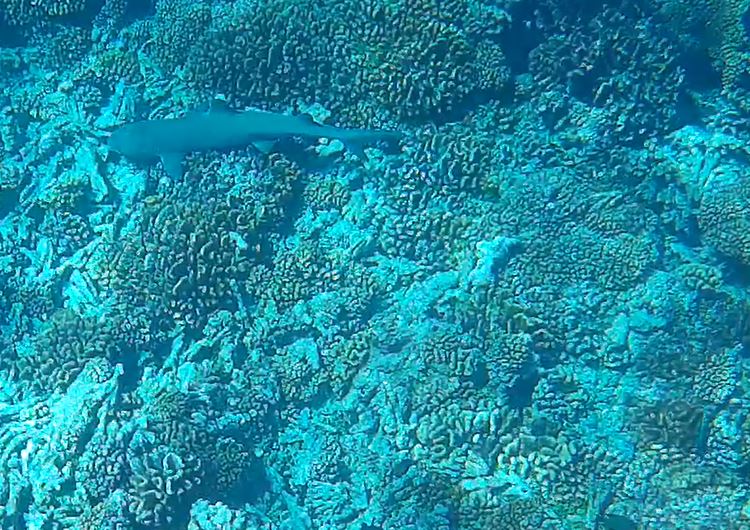
7.            South Pass Snorkel – Fakarava – Fakarava was our only atoll and on its own it was amazing.  The water was crystal clear, the community was lovely and the fact of being anchored inside of a reef was just simply cool.   But for Owen, being able to do a drift snorkel through the south pass was a dream come true – he saw multitudes of fish and sharks as he drifted through on the current – truly another bucket list item!

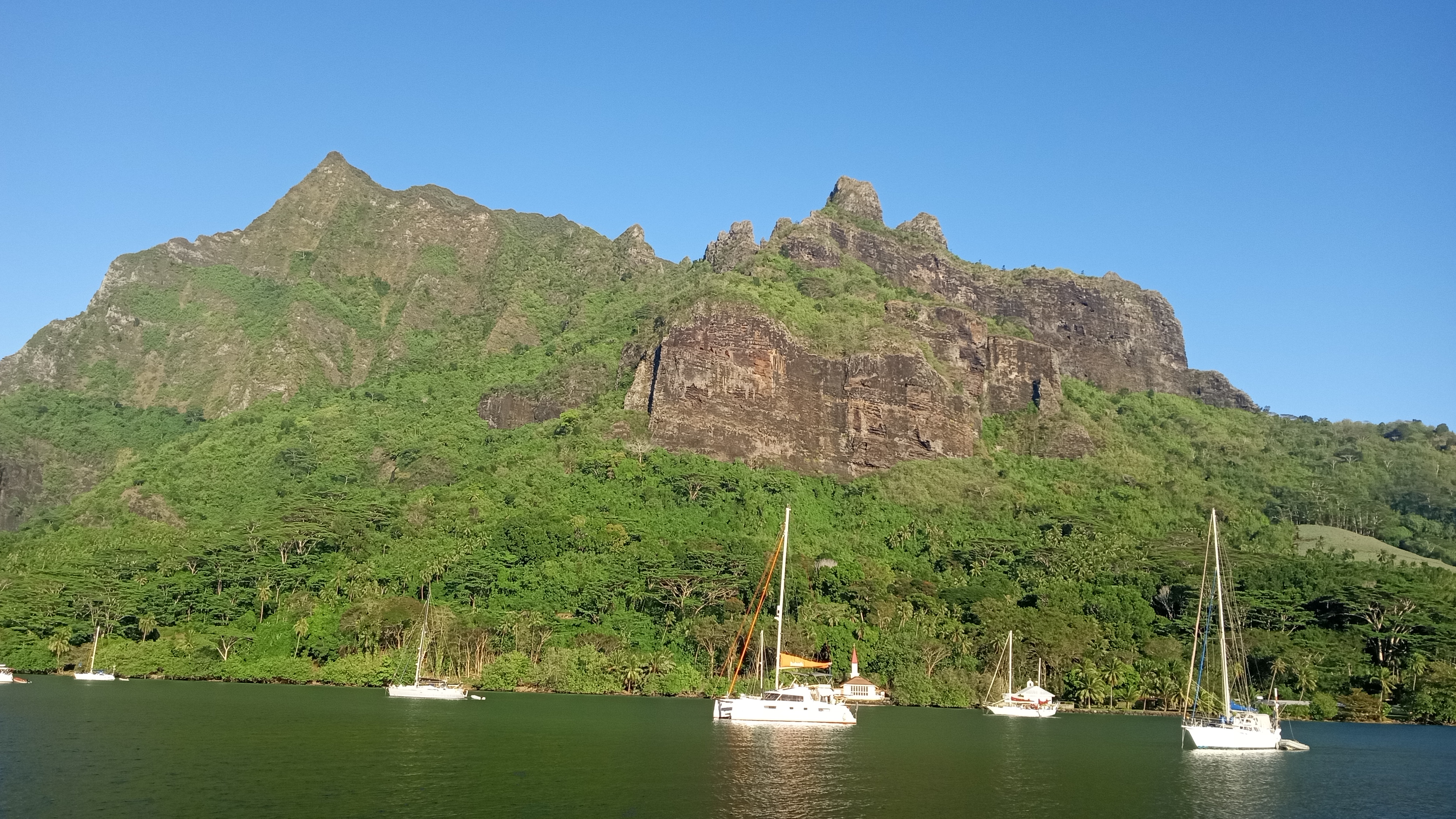
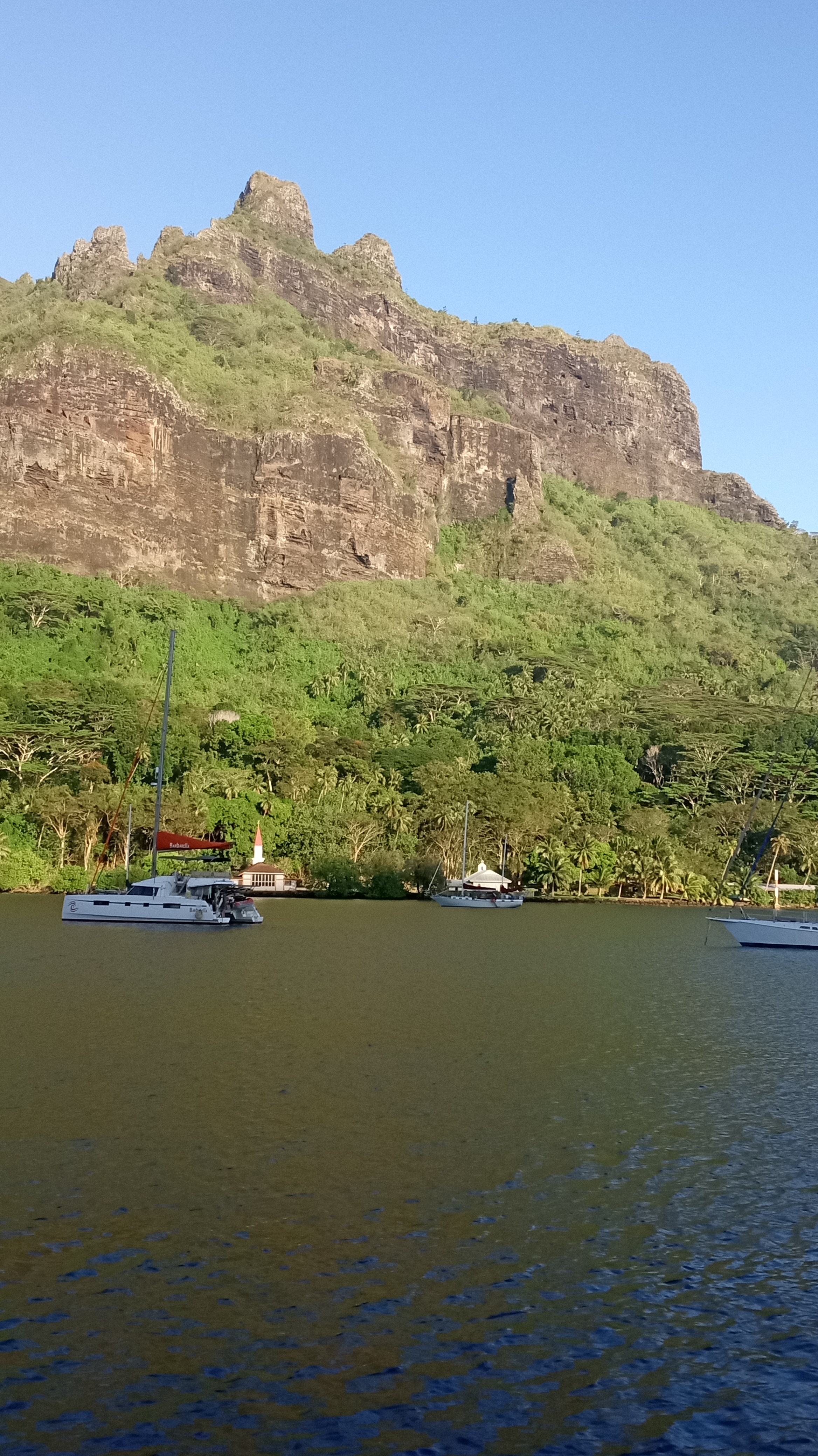
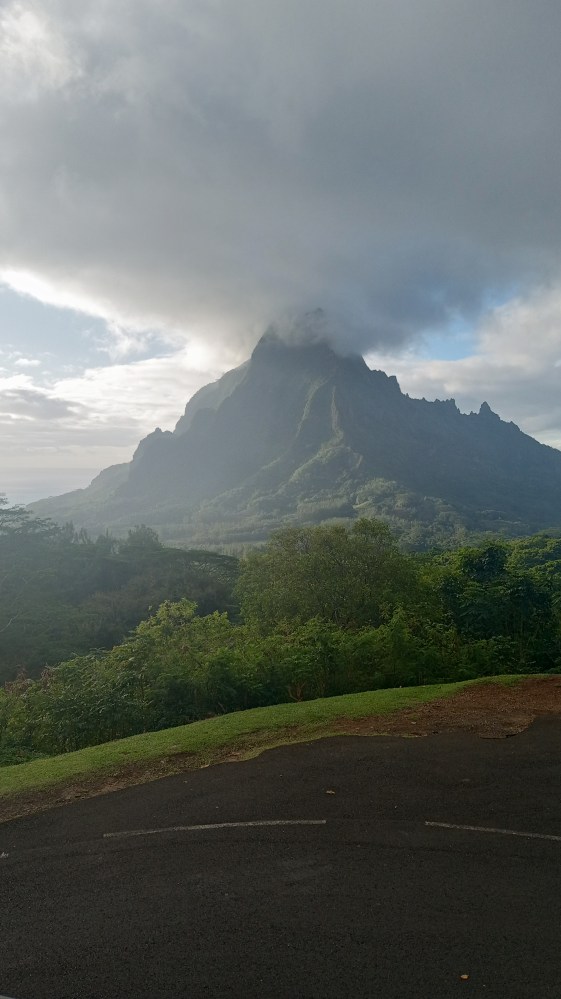
8.            Moorea  – Moorea was far and away our favorite spot in the Society Islands.   Combining the imposing beauty of the Marquesas with the flat, calm waters of an atoll, Moorea was truly the best of both worlds.   We anchored in Cook’s Bay, giving us easy access to town and stunning beauty.  Our tour of the Island, made even better by doing so with friends, gave us a look at all of the beauty of the Island.  Everywhere we went we were greeted with a smile.   It was heartbreaking to sail away from Moorea – given more time, we would definitely have stayed longer!

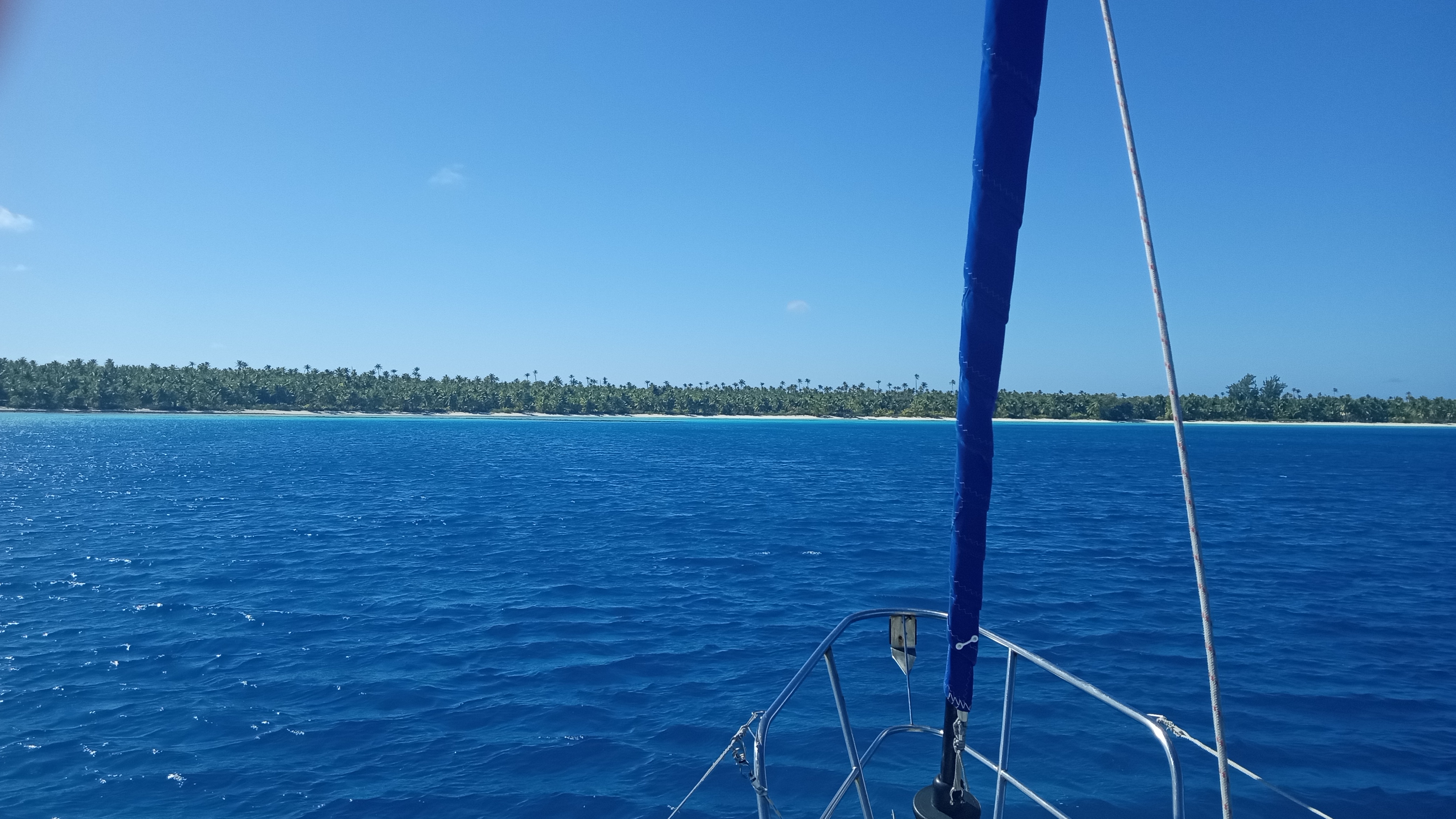
9.            Maupihaa – this was a totally unplanned stop that gave us one of our best experiences.   It is stunningly beautiful and the locals that we met (just a couple of the very few people who live there) were lovely.   We had the experience of being “trapped” with a number of other boats and that gave us the chance to meet many more fellow cruisers.   With a potluck, a sing along, a walk of the atoll and simply stunning scenery in all directions, it was truly a stop to be remembered!

10.         Tonga – Tonga stole our hearts and was our favorite stop of all.   We so enjoyed our two months in the magical Kingdom and would have stayed longer if the seasonal weather had not pushed us along.   The people of Neiafu, both locals and expats alike were wonderful and the anchorages were calm, peaceful and beautiful – as close to sailing at home as we experienced anywhere!   Even with a full blog post on Tonga, I don’t think we managed to explain how much or why we loved Tonga but suffice to say we have left a piece of ourselves there and hope to be able to return.

We are in Fiji now and loving it as well – though we have only seen the marina and Savusavu so far!   I look forward to much more exploring here next year, before we have to start the long trek home – 2025 should have some pretty epic moments as well!!

Wishing everyone the happiest of New Years and reminding you to chase your dreams – it is so worth it!!

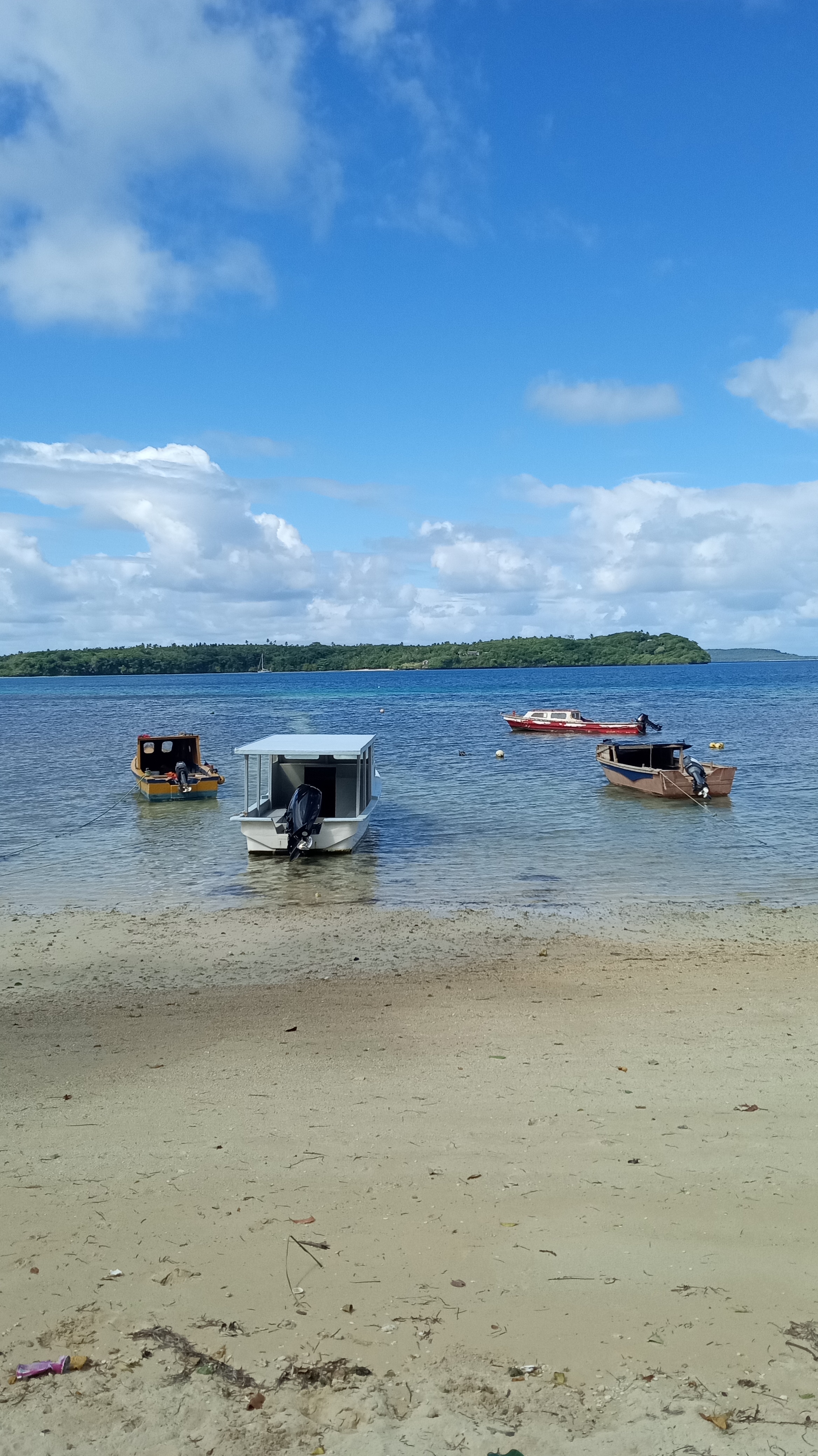
Treasuring our time in Tonga

We arrived in Tonga after a long day’s beating to wind – as we headed down the channel to Neiafu, we were unsure that we would make it in time to check in on that day and expected we would have to anchor out for the night before completing the clear in process.  As it was, we arrived at the “fishing pier” – the designated docking point for customs – at about 3:30 – but docking was not an easy prospect.   The fishing pier is a high concrete dock with a wreck on one end and a sand bar on the other.   When we arrived, there were 2 fishing boats tied to the dock with a frighteningly small space left to dock.  I made one aborted attempt and then finally headed in – thankfully the fishermen who had been milling around on the dock jumped up to take lines and to hold the boat off the dock while we repositioned our fenders higher than our deck – in an effort to keep the boat from sliding right under the very high dock!!!  

In very short order, the first official arrived at the boat, letting us know that clearance would have to happen quickly, failing which we would have to pay an overtime fee.   After settling himself down below, the very lovely customs agent requested cookies and pop before beginning the paperwork.  In quick order, we were also joined by a biosecurity officer and the immigration officer – the boat was bursting at the seams!!!   Thankfully, everyone finished up their paperwork quickly – Owen printed out our boat name and registration number more times than he could count.   We had some fees to pay and mentioned that we could not do so until such time as we were able to obtain some Tongan cash – the biosecurity officer kindly walked us out of the dock area, directing us to the nearest bank machine.   The officials let us know that they would wait for us to come back for payment so that we would not need to come in the next day.   We quickly found the ATM and then grabbed quick ice-cream cones (we needed to break up the big bills provided by the machine so that we could pay the fees), and then returned to settle up.   Within an hour of arriving, we were departing the customs dock and headed to the mooring field – a quick pass through showed that all mooring balls seemed to be occupied.   We considered anchoring but realized that we were in 80 feet of water over a bottom that the reviews indicated did not provide good holding.   We decided to make a last pass through the mooring fields and spotted a mooring ball that we hoped was available.  We asked the nearest boat and they indicated that they thought it was available so we tied up and settled in.

The first night was such a delight – flat calm water after 12 days at sea.   We sat in the cockpit watching fruit bats come and go from the trees on shore and thanking our lucky stars for bringing us to this amazing place!   The next morning, we were sorting the boat when we were approached by the dive captain who owns the mooring balls – unfortunately, the one we were on was actually for one of his dive boats.   He was giving us suggestions as to where we could anchor in shallower water, when, just as we started to get untied, the boat in front of us left their mooring!!   We quickly grabbed it up – we were so thankful we did as it would be weeks before one was available again!   We headed into town to do a bit of exploring and to grab some groceries and dinner.   The town is shabby, but the people were the friendliest we have encountered anywhere!  While we were out, we saw posters advertising the Vava’u Sailing Festival – which was set to begin that weekend (this might explain the packed mooring balls!).   After realizing that the entry fee included several meals and a “cultural” day, we decided it was something not to be missed and we quickly bought tickets.

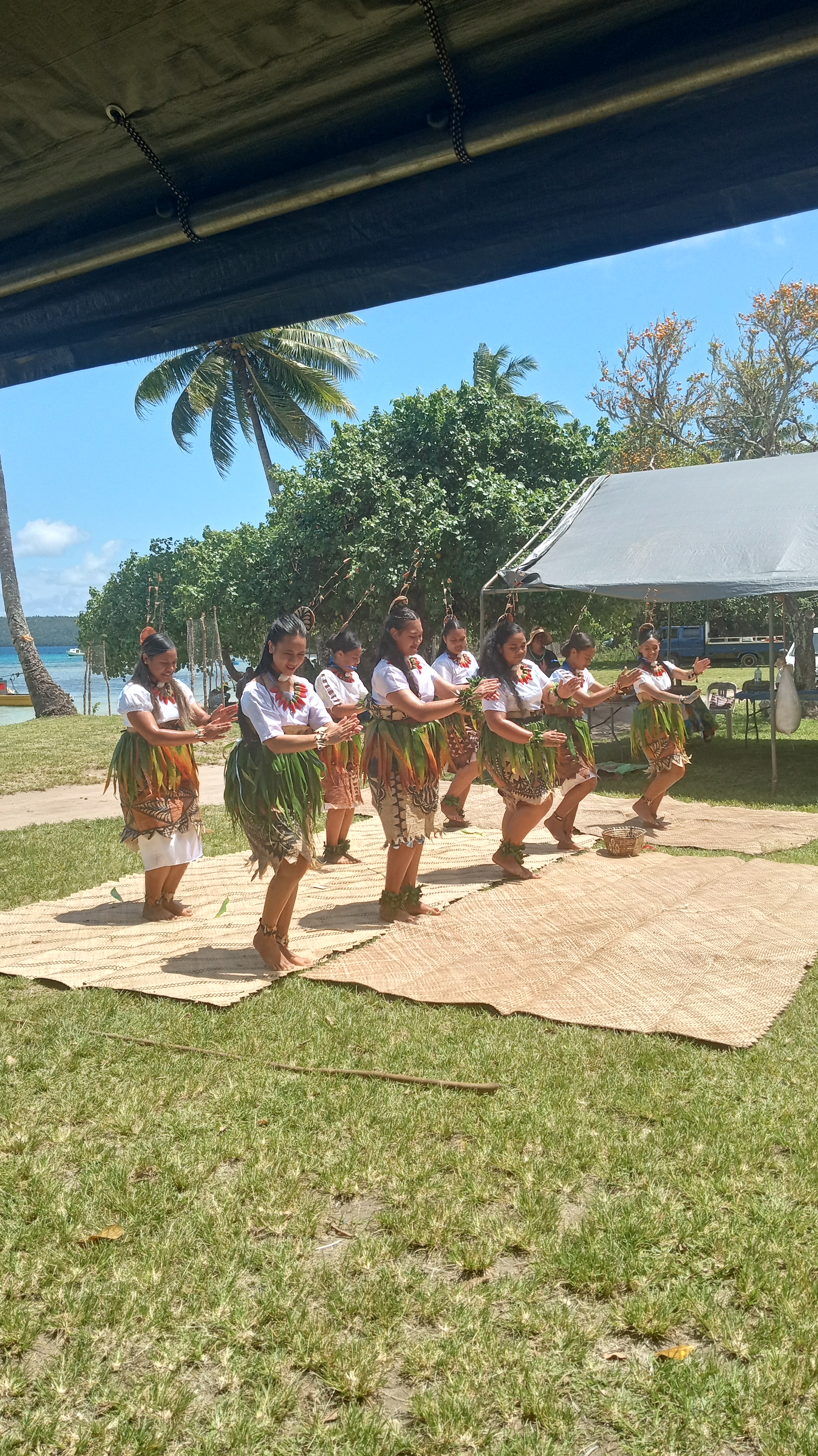
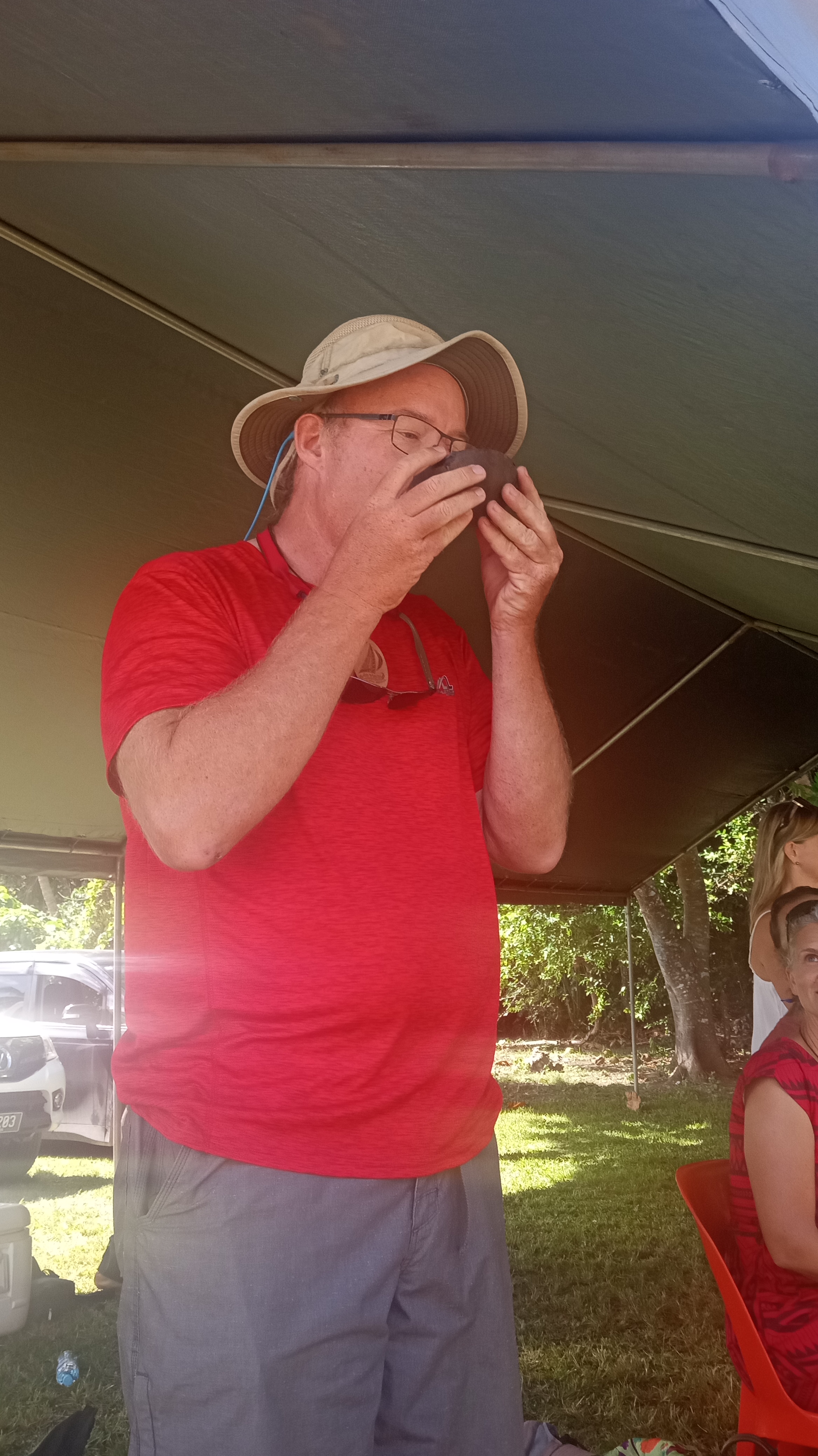
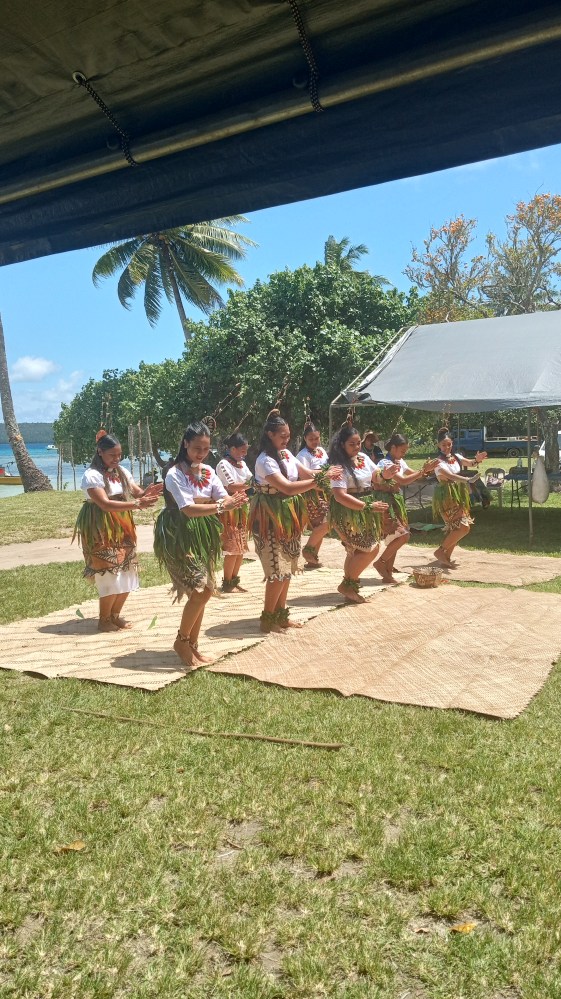
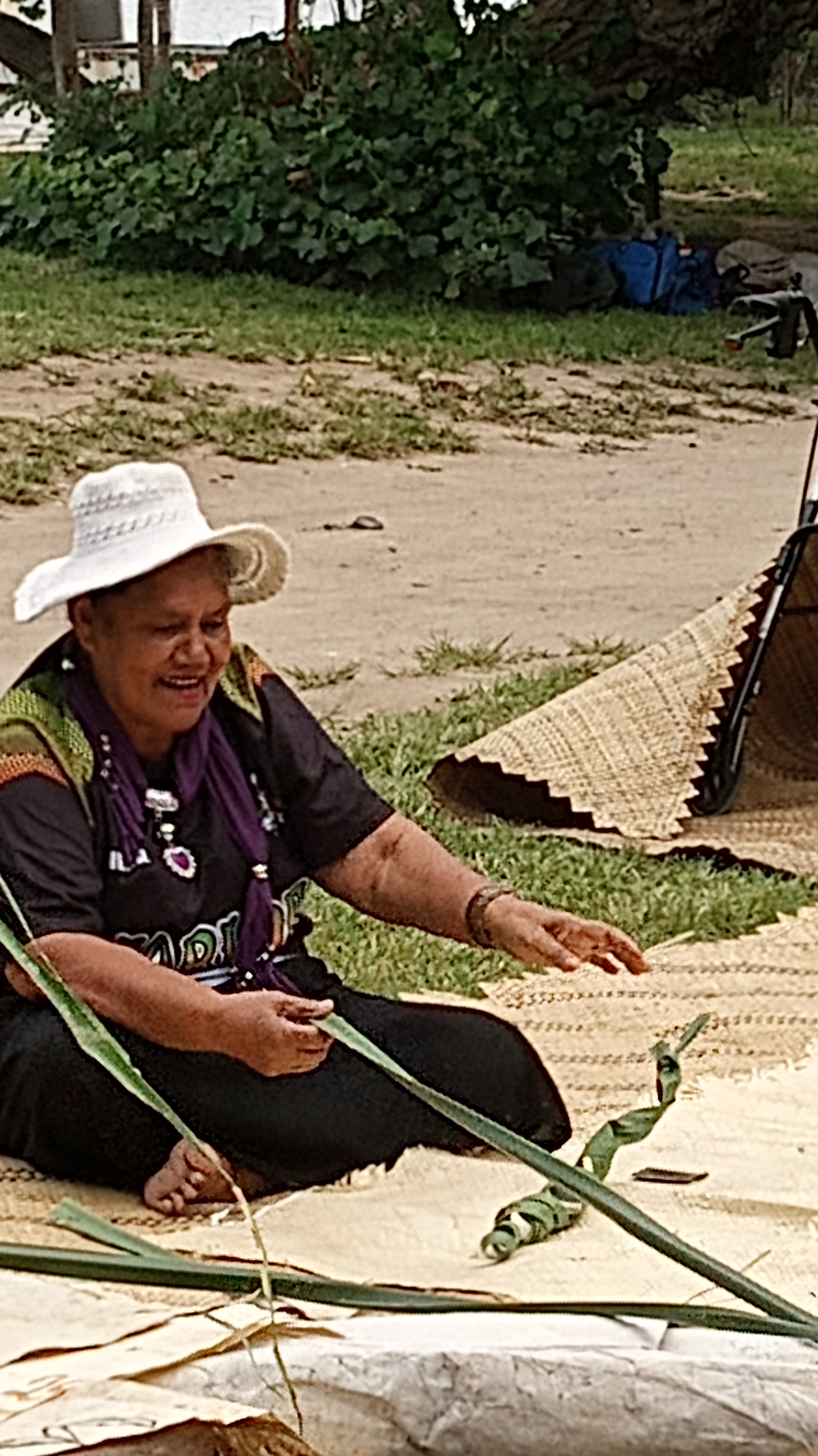
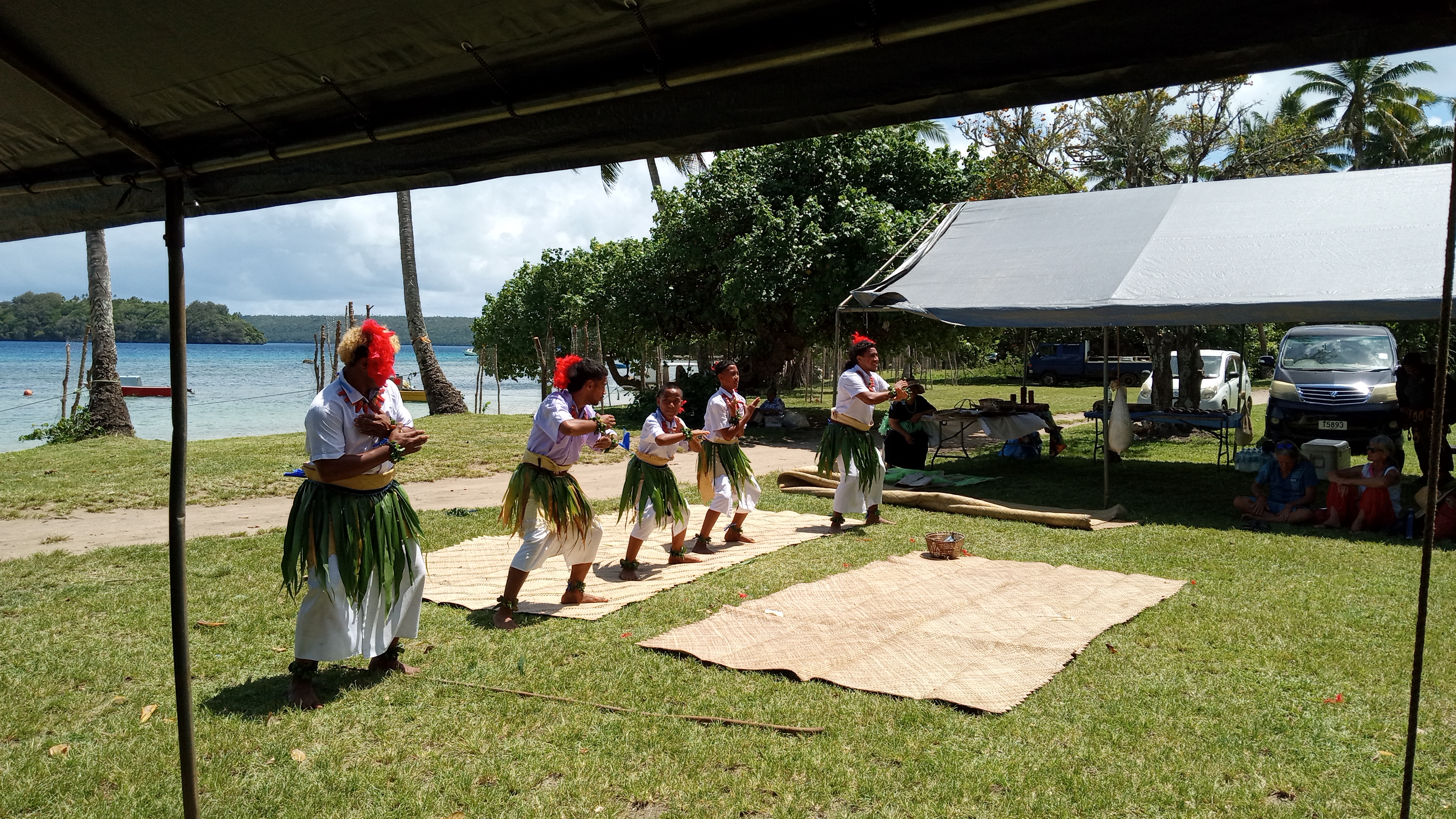
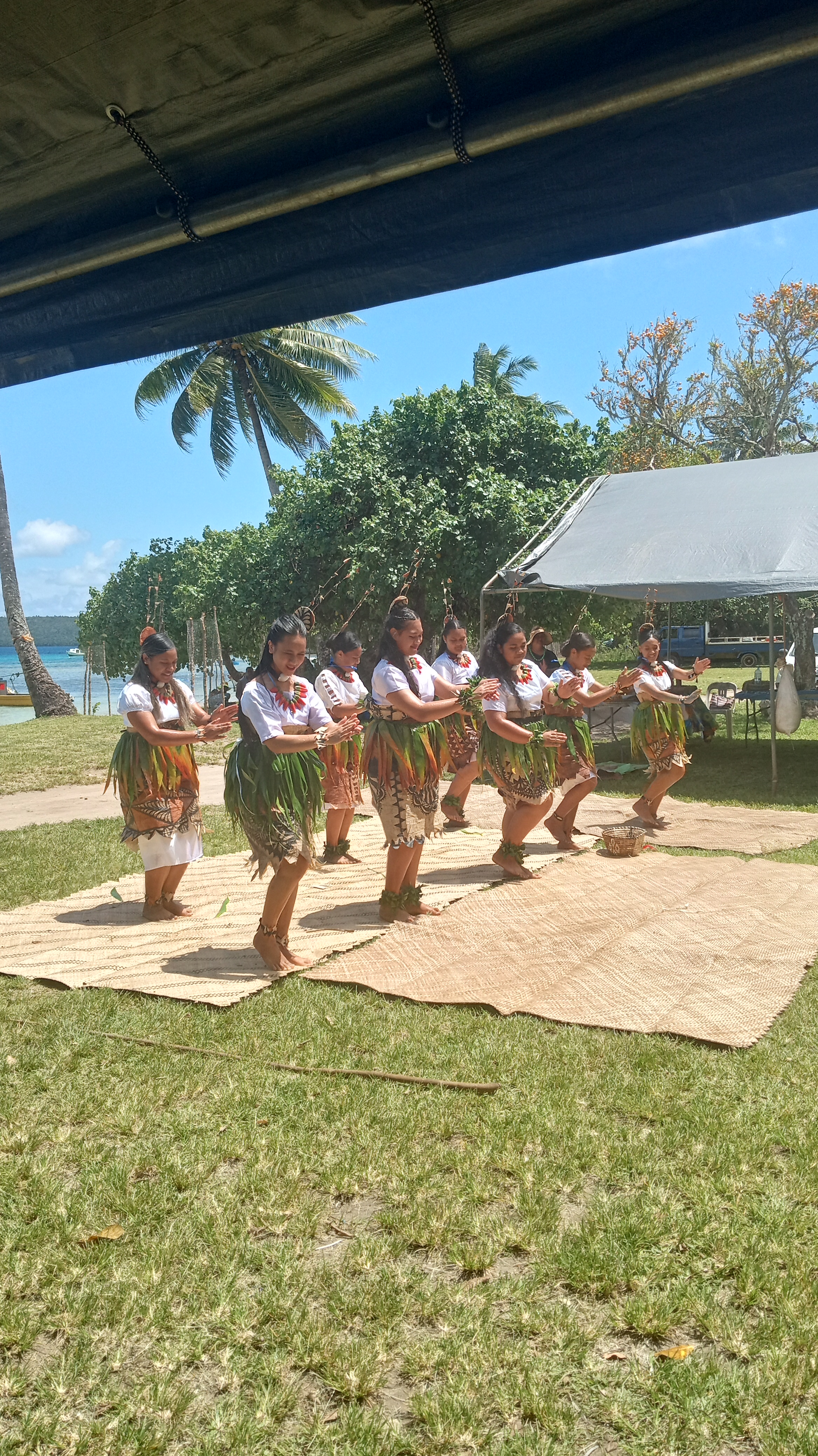
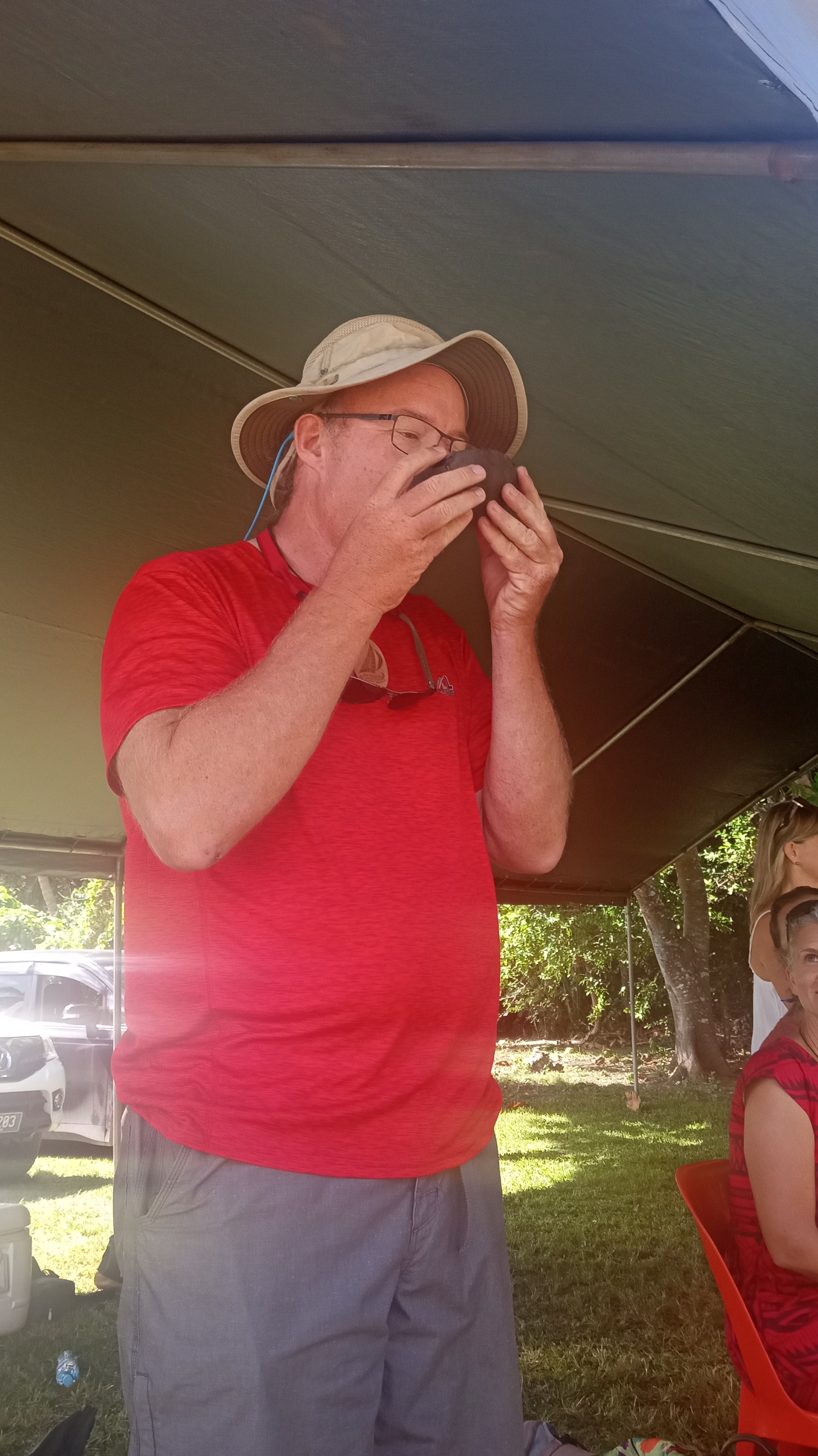
As a result, our first full week in Tonga was a whirlwind.   We began with the “Sausage Sizzle” – a barbq hosted by the boat yard on the Saturday.   We ran into people we hadn’t seen since Mexico, met up with some of our fellow “Trapped in Paradise” boaters, and met some new people.   Monday was a dinner with a presentation by one of the New Zealand marinas, Tuesday was a breakfast with another New Zealand presentation, Wednesday was a race day (we didn’t race), followed by a barbq, Thursday was the Cultural Day and Friday was a wrap up dinner.    Thursday was our favorite day of the week – we were bussed over to the other side of the Island where we were able to see umus in action (pit ovens) and try the yams being cooked in the ground, wrapped in banana leaves.  We saw a weaving demonstration and had dancers perform for us.   Lunch was a monstrous buffet with roasted pig, yams, salads, rice, corned beef cooked in banana leaves and stewed papaya.   There was so much food, I literally had a heaping plate in one hand and was holding the papaya (which was served in an underripe papaya shell) in the other hand.   The afternoon was finished with a Kava ceremony. We all had the opportunity to try this traditional drink that forms such a strong part of the Polynesian culture. Kava looks like mud water and the taste was somewhat similar to Buckley’s – they serve a fairly large bowl of it and you are expected to drink it all – we managed, but I don’t think I felt my tongue until hours later!!! We had a wonderful day and so thoroughly enjoyed our very small glimpse into the Tongan culture.

There were several good restaurants in town, which made for great nights out.  Our favorite perhaps was the floating pub – the Hideaway.   The Hideaway is owned by a Canadian couple and serves margaritas made from lime juice that is squeezed from the limes in their own tree.   As for food, you can have anything you want so long as it is fish and chips (or fish or chips!).   We had so many great afternoons visiting with the owners, Bear and Char, and with other cruisers.  On one particularly fun afternoon, a group of guys off an Irish boat came over with their instruments and we had an enjoyable afternoon listening to them jam.   Perhaps the most fun part of that afternoon was that a group of locals had swam over for a drink and they were probably the most entertained by the music!   Bear and Char also own a deli in town and it was there that we were able to find the first good steaks we had had since leaving Canada, along with chicken breast, roasted sliced ham and other foods we hadn’t seen in forever!!!   But to make me an even bigger fan, Bear broke out the Pierogi maker one weekend – what a treat those were!!

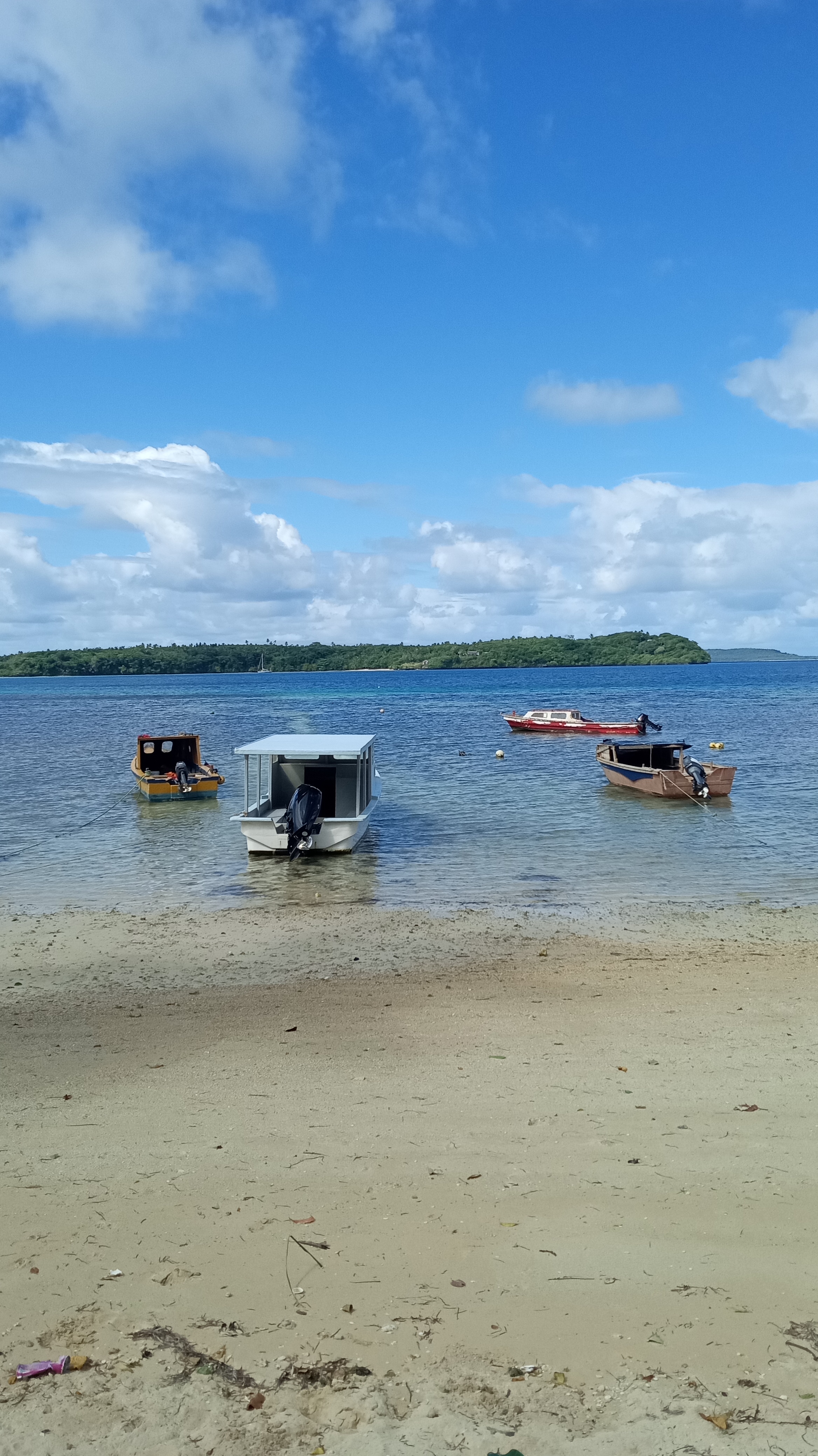
While we were so enjoying our time in town, we were also eager to get out to explore the anchorages around the Vava’u group.   We were so pleasantly happy to realize that many of them were very protected and flat calm – so much like cruising at home.    Once the sailing festival wrapped up, we loaded up on groceries and headed just a few miles around the corner to a beautiful anchorage with crystal clear water.   There were several boats in the anchorage but even so it didn’t feel too crowded.   I inflated my paddle board and Owen launched his kayak and for the first time in a very long time we felt like we were casually cruising – it was delightful!!!  Our big adventure from our first anchorage was to take our dinghy and motor around to Swallow’s Cave – it was creepy cool to dinghy in through the entrance and arrive at a cave that was sadly covered in graffiti left by past visitors.   We opted not to get in the water there (we had both read that sea snakes like the cave!) but we drifted around in the dinghy – the only boat in there for a bit – we were just heading out of the cave when a tour boat came barreling in – good timing on our part!

After a few days in our first anchorage, we were itching to get out and explore some more.   We initially intended to head out to an anchorage that was very near to a reef we hoped to be able to snorkel.  Unfortunately, the winds were blowing right into the anchorage and having a reef right behind us suddenly didn’t seem like a good idea – we did a little donut in the anchorage and then headed about 6 miles away to another flat calm anchorage.   We were midway on our passage to this anchorage when we heard a mayday call on the radio.   Oddly – no one else answered it so we got on the radio with the caller – he was solo sailing and had just taken the boom to his face.   He was just a couple of miles out of the harbour but his call was not getting through.  We reached out to the operator of the Hideaway to find out if there was a local contact for emergencies – turned out it was him.   We still seemed to be the only boat that was able to consistently communicate with the other sailor so we kept communicating with him while Bear mustered a local boat, a nurse and a couple of sailors (one of which was Canadian Coast Guard) to head out to help.   Within a couple of hours, the sailor was on board the local boat, being brought in for medical attention and the cruisers were bringing his boat into the dock.  It was a tense afternoon but before we knew it, everything was fine on the emergency front and we were approaching the new anchorage.  

The difference with this anchorage was that there was not really a beach – we knew that people were walking from this spot into town but we couldn’t exactly figure out how they were doing it.   As it turned out, we were soon joined in the anchorage by a couple of other boats that we knew and it was decided that we should do a trek out to Veimumuni Cave – a natural spring pool in a cave just above the high tide line and about a half hour walk from the anchorage.   The day we were to go we joined the other boaters on a very shallow beach that we hadn’t even been able to see from where we were anchored.   We put out stern anchors and tied to shore, hoping that we would not be high and dry when we got back.   From there we climbed a short hill, walked through a pasture (we had to wait for a couple of cows to get up off the path to let us through – thankfully the bull was tied up), down a road through one small village and then through another village to the cave.   We did have a short detour though – we were headed through the first village when we discovered a small puppy lying on the side of the road – he couldn’t stand up and we were worried that he had been hit by a car.   We debated how we should handle it – there didn’t appear to be anyone home at the house where the dog was (though we didn’t know for sure if he was from that house).     It was so hot and he was obviously in distress.   There are no vets on Vava’u and we worried that he was not going to be able to receive care.   We reached out to a volunteer group that coordinated some animal care – bringing in a vet once a year.   We were not getting a response from them on Whatsapp – we were about ready to walk into town and try to radio them when we remembered that there was a restaurant near to where we were that joined in on the morning net – so we knew they had a radio.   One of the couples stayed with the puppy while the rest of us headed to the Humpback Lodge to see if we could get some help.   They immediately offered us the radio and then suggested that they should go pick up Dave, Denise and the puppy.   In the meantime, Denise had finally reached the volunteer group and it was finally decided that the puppy would come to the restaurant and then they would do a video call with a vet.   We were so appreciative of knowing that the puppy would be well taken care of.   We left him behind at the restaurant and headed off to the cave.   It was again a bit creepy but we did go swimming this time!  After a short swim, we backtracked and decided that, as we were going to pass by the restaurant again, it was a good idea to stop for lunch and to check in on the puppy!   We had a lovely lunch and then traced our steps back to the beach.  Unfortunately, we had not left the boats anchored out far enough and found our dinghies high and dry!!   Luckily, a big group makes quick work on getting the boats walked out to the water and we were soon floating again and headed back to our boats.

We finally realized we were running out of food and fuel (as we were still running the boat for hours every day to keep the batteries charged) and decided to return to town – it felt like coming home!!  Thankfully there was more room on the mooring balls and we were able to grab one.  

And so our time in Tonga went – a week or so in town, followed by a period of time out at anchor, returning when we finally needed supplies.  We snorkeled on bommies in the anchorages and tried to explore on the paddle board and kayak.   Sadly, I went to put my paddle board in the water one morning only to find that it was deflating.   An inspection showed that one of the seams was opening up.  I dug out the pvc glue and got to work patching it.   Unfortunately, as soon as I inflated it again, it opened up a seam next to the original patch.   After a couple of attempts at fixing it, I finally had to admit that years of being out on the back deck in only a mesh bag had allowed the glue to start to deteriorate – my board had to be given last rites and retired.  

We joined a garbage clean up during one of our times in town – one of the local dive-masters arranges a pick up nearly every week – it was a bit disheartening to realize how much garbage was around – especially as there are garbage cans everywhere – we spent two hours and picked up about 40 bags of trash between the group – we were hot and sweaty by the time we were done but were happy to have helped out.    

We were able to meet up with several other cruisers during our time in town, meeting for drinks at the Hideaway, dinner at several restaurants and a return visit to the Humpback Lodge to check on the pup.   We were so happy to find out that the owner of the dog had not wanted it back and the owner of the restaurant, having fallen in love with him, decided to keep him – she had renamed him Survivor!  He was thriving – we were there on a particularly busy night and he just made laps of the restaurant and kitchen, being scooped up by patrons for quick cuddles as he scurried by!

As the season latened the weather did become a bit more unpredictable with more showers and some stronger wind.   We had a few systems come through –  during most of these we just battened down the hatches and hid out below – which of course made for a steamy hot boat!!   One of the storms however, we were hanging out below when we heard a radio call from a 10 year old boy advising that his Dad was in town and his boat – a 70 foot catamaran – was dragging.  In short order we had four dinghies tied to the back of the boat and Bear, who ran the deli and the Hideaway, was hunting around town to find the Dad.   Thankfully the kiddo on board was able to find the battery switches so we could get the engine fired up and he knew how to work the windless (it had a few quirks) so we were able to get the boat safely away from the rocks.  Dad showed up in due course and the boat was soon secured to a mooring ball.  The entire time we were working to secure the boat it absolutely monsooned – we were drenched to the skin and actually pretty cold by the time we made it back to the boat!

We were saddened to realize that we were going to quickly be left behind in Tonga as most boats were making their way to New Zealand for cyclone season.   There were a few false starts, boats were all set to go only to have the weather take a turn for the worse.   As much as we felt bad that people had done all their prep for nothing, we were happy to be able to get out for one more visit, one more trivia night at the pub.   Unfortunately for some of our friends, some of the false starts turned out to be due to damage – one boat returned because they blew up 4 sails in 3 days.   Another returned when they felt some bad play in their rudder – they decided to haul out and leave the boat in Tonga to be repaired.   We were also horrified to hear that a boat lost their mast midway between Tonga and New Zealand – they had actually re-rigged in the Marquesas after discovering broken strands on their rigging on their Pacific crossing (on rigging that had been done new in Panama).   Thankfully, they were near several other boats and there was no other damage to their boat.   Three of the boats transferred fuel to the boat and one of them transferred another crew member.   They had a long, slow motor to New Zealand but made it safely.

Finally, after watching our friends head out north and south, and knowing that the friends who had put their boat on the hard were going to be flying out soon, we had to admit that it was time to move along.   We struggled with leaving – we were loving Tonga so much.   We did have a reservation in Fiji and we knew that, in the event of a cyclone, we would be much safer on the dock than at anchor or on a mooring ball, and so, sadly and with some regret, we finally did our last provisioning and cleared out of Tonga for what we hoped would be a 4 or 5 day trip to Fiji – as it turned out, we ended up taking a detour that added nearly a 100 miles to our trip – but kept us clear of the lightning and squalls from the South Pacific Convergence Zone, which had settled in just to the north of Fiji.   It ended up being a 6 day trip but, other than quite a lot of rain showers, it was a relatively easy passage.

It is so hard to put our finger on what we loved so much about Tonga – it may be that it was the first time in a long time that we had the opportunity to slow down, or that we were finally able to connect with some other cruisers.   Perhaps it was that the people were unfailingly lovely or that the anchorages were the most serene we have had since leaving Canada.  Whatever the reason, we have both left a piece of our hearts in the beautiful paradise that is Tonga.

Trying to Leave French Polynesia

When we left Raiatea, our weather forecast called for a possible wind hole a few days out – we were prepared to drift our way through.   We had set our sites for Samoa, knowing that it might be possible to stop at Suwarrow if the weather disintegrated.  We were having a good trip, running downwind and making good time though conditions were a tad rolly.    We woke up on day two and, after an hour or two were finally able to get Starlink to connect and give us a weather forecast.   The news was not good – the wind hole that we had been anticipating seemed to have been filled in by a nasty system moving up from the South.  We were likely heading into 40 knot winds and 8 meter seas – not something that we even wanted to consider!  

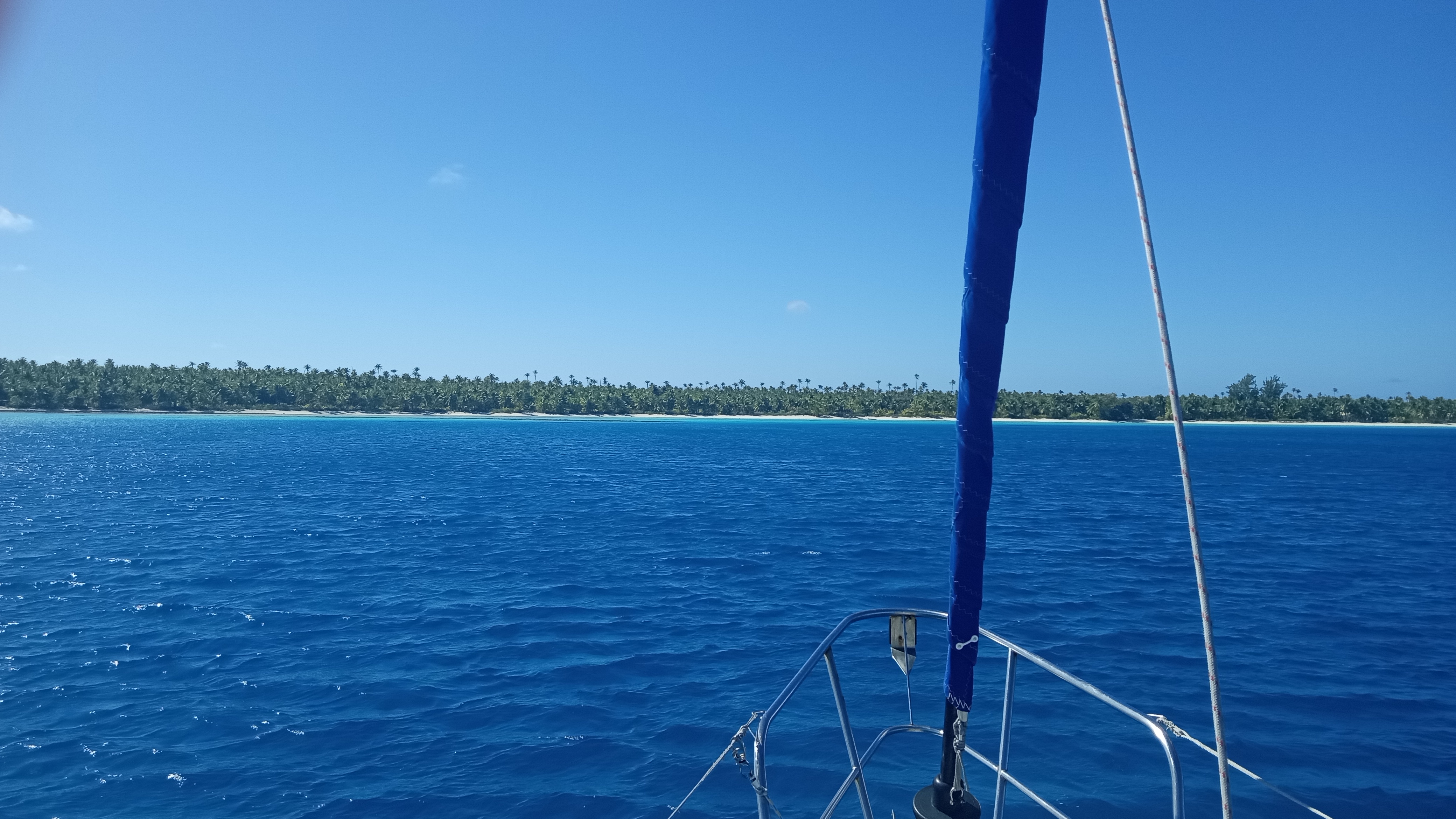
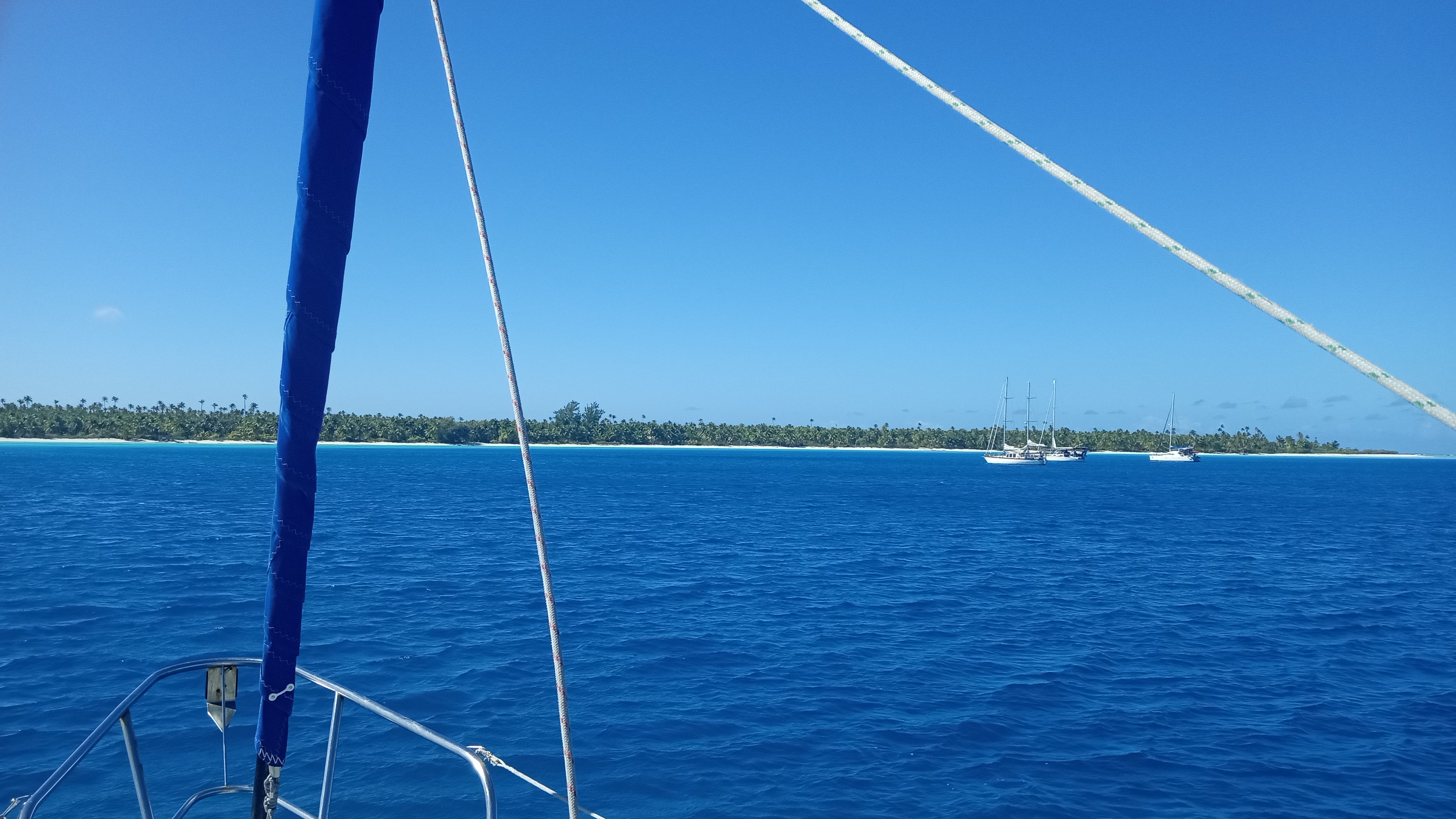
In looking at the charts, we realized that we were almost due north of the last of the French Polynesian Islands, Maupihaa – a very small atoll in the middle of the Pacific.   We altered course for the 70 mile trip down to Maupihaa.   We were a bit nervous with this plan – if we didn’t make it to Maupihaa before the wind filled it would be nearly impossible to get in through the very narrow, shallow pass.   In that case, we would be hundreds of miles from the nearest safe harbour and would likely just have to batten down and suffer through the system.   As it was, we arrived mid-afternoon and in good weather – we lined up the pass on the chart and started to approach – it was so hard to see where we were to go in – it seemed that waves were crashing directly across the pass.   We were slowly approaching where the pass should be when I noticed something in the water – at first, I thought it was a small fishing boat – then suddenly, it became apparent that it was a whale – just drifting around near the entrance.   We had seen a humpy breaching just a few minutes earlier but this one, and as it turned out, a smaller one, were just swimming around, enjoying the choppy conditions.   They both dove and we thought they were going to head right across the front of the pass – so we did a quick turn around and then slowed right down – waiting for them to surface to confirm that we weren’t going to run into them as we made our way to the pass.   We waited a few minutes with no sign of them and finally had to just hope they weren’t lingering in our path.  We were looking at each other saying that we didn’t even want to try entering this pass – but the alternative, riding out the storm outside, was even worse.  We finally noted that we had to enter on a bit of an angle and, taking a deep breath, we picked up our skirts and headed in through the pass.    The pass felt insanely narrow (I actually wondered how catamarans were actually making it in!) and so shallow!  We finally made it through the pass, making a sharp turn just as we entered to avoid a bommie and them slowly followed the path through the bommies, that was thankfully well charted on Navionics, to make our way to the North anchorage.   We knew we would likely want to be in the South anchorage to reduce fetch but there were several other boats in the north and daylight was slowly ebbing so we dropped the hook for the night.    We had a brief visit from one of the other boats, confirming that everyone was going to be moving the next morning.

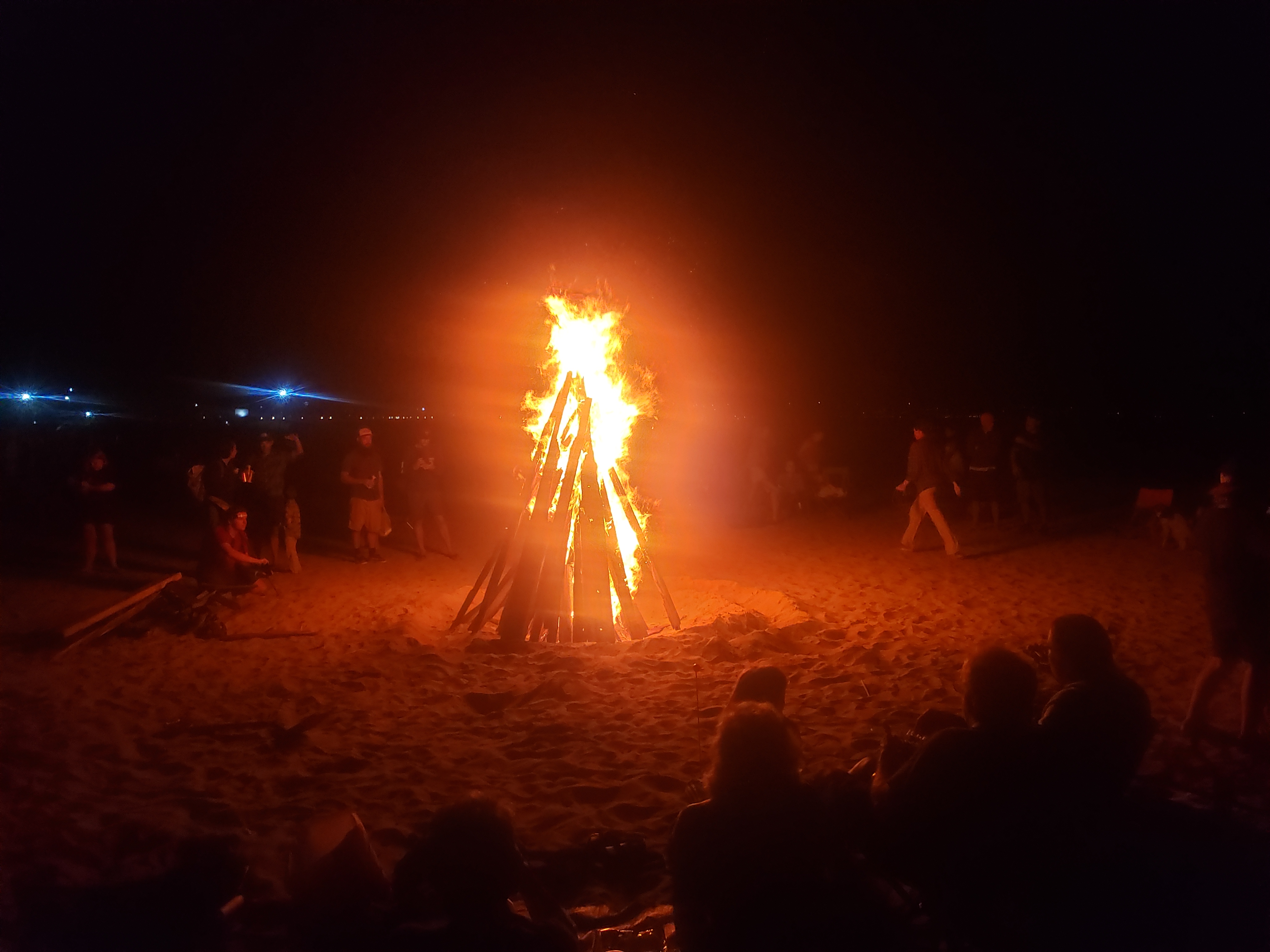
We spent the last of daylight sitting out in the cockpit in awe of the paradise that we had arrived at – green water, white sand and palm trees.  There were a couple of houses on shore at the north end but it was too late in the day to go explore.   We would learn from other cruisers that the residents of the north end were wonderfully welcoming and had hosted a pot luck on their beach, building a bonfire and providing Coconut crabs and rice as part of the feast.

We were up early the next day, with the wind already howling up the reef.   We pulled anchor and joined the other boats to move to the South anchorage.   It was a long slog moving slowly against wind and waves but we finally joined the other boats and again sat back to admire the beauty that is Maupihaa.   The atoll is populated by about 9 members of one family – many of whom have not been off the island in years.    Almost as soon as we had dropped the hook, one of the other boats dinghied over to let us know that there would be a potluck on the beach the next night, near the home of one of the locals.

Of course, the anticipated weather system started to roll over and it was soon rainy and grey.   We wondered if the potluck would still be a go but soon saw other boats headed into shore so we loaded up our offerings and headed in to join them.   There were seven other boats in the anchorage and we soon dubbed ourselves the “Trapped in Paradise” group.   When we got to the beach, we discovered that, because of the rain, Hina – one of the locals – had invited us into her home.   Everyone poured into her house, bringing in benches from outside and being sure to not fall through the floor!!!   It was in a bit of disrepair but with the warmth of the gathered group, it was a wonderful gathering place.   We all shared in dinner and then the instruments came out – a full-fledged sing along followed.

The next day, a call went out on the Whatsapp group that a few of the boaters were going to go in and see what they could do about reinforcing some of the weak points in the floor – they were looking for long screws to assist in the mission.   There was also a message that there would be another dinner on shore that night, to cook up the coconut crab that had been caught by a few of the cruisers under the direction of Hina the night we arrived.   We unfortunately didn’t have the screws to help with the floor and decided to have a night on board instead of going in for crab.  The next few days passed with us constantly checking weather and discussing the options with the other boats.   On one of our last days, we headed in to go for a walk, landing at the same time as one of the other crews, so we all headed along the path towards the north end of the island.   There were a few signs that there was probably more of a population on the island at some time – some abandoned buildings and vehicles.   Apparently, there had previously been a pearl farm and a copra farm but we don’t know if either were operational any longer.  We were nearing our turn around point when we met one of the other Island residents.  Pierre had not been off the Island in nearly a decade.  He was happy to walk along with us, showing us the traps he was setting for the coconut crabs.  He also showed us a number of the local plants and explained their medicinal qualities – I guess when you are on a remote Island with no medical care you learn to make use of what is available to you.  Pierre let us know that all of the information that he was passing onto us had been given to him by his grandmother.  It was such a wonderful experience to chat with Pierre and learn from him!

The weather windows finally started to open up – a few of the bigger faster boats left first, followed by a couple of the monohulls and then finally, we made our way out, again weaving our way out of the pass.  We were so delighted to realize that Maupihaa had in fact been our favorite stop in all of French Polynesia – we would have missed it if not for the change in forecast!

Our plan now was to following a nearly directly west path – leaving Atutaki and Nuie to the south and Suwarrow to the North.   This would give us some plausible stop in points if the weather changed. 

As it turned out we had a nearly idyllic passage from Maupihaa to Tonga.   We were running nearly downwind, making over 100 miles a day.   Our 10th day out was finally a bit slower, with the winds dying down and then our last day, the twelfth at sea we woke up to the wind having turned on our noses – it was a bit of an upwind slog the last 30 or 40 miles before we finally turned into the lee of the Vava’a group of Islands in Tonga.   

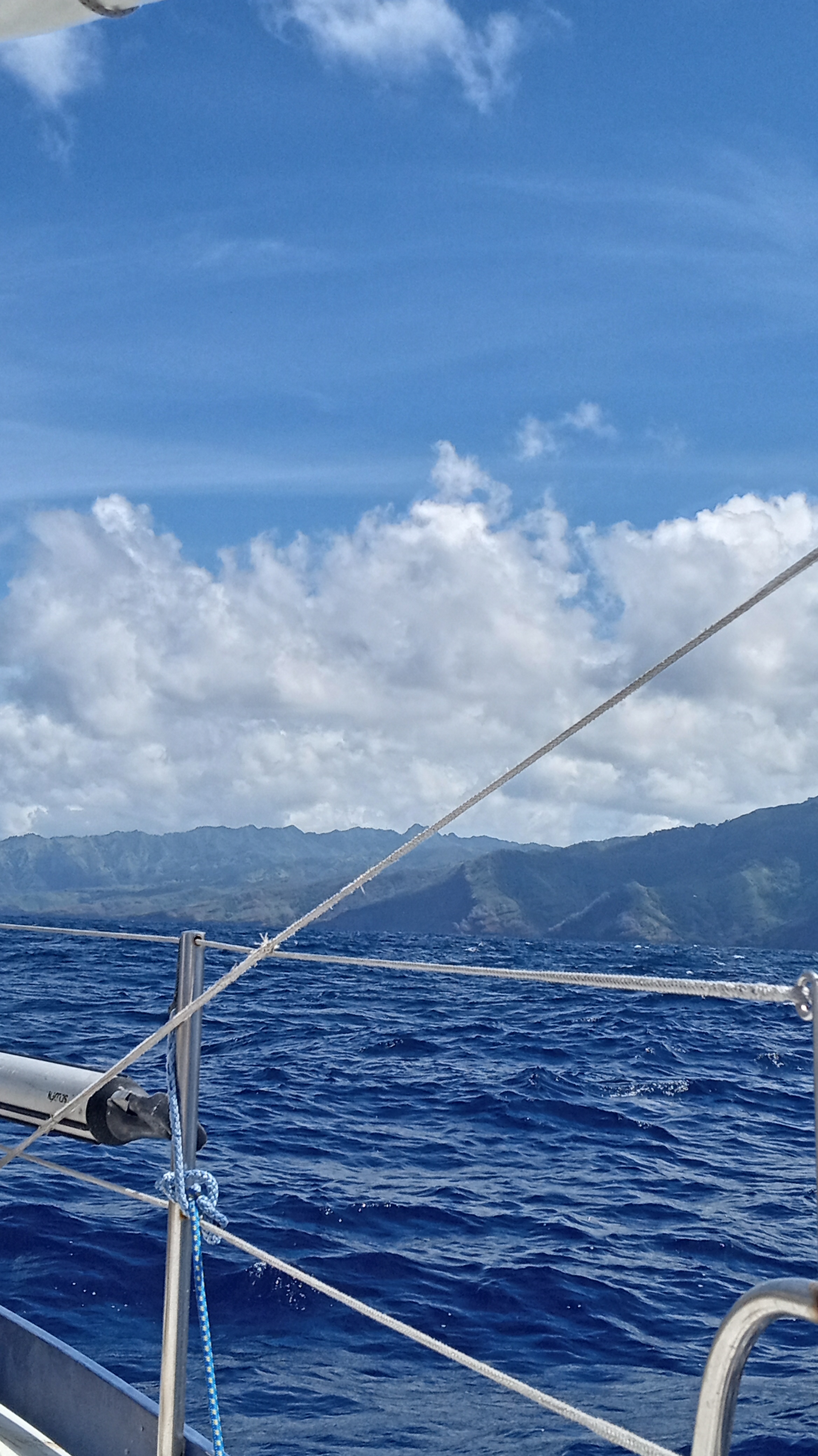
finally approaching Tonga

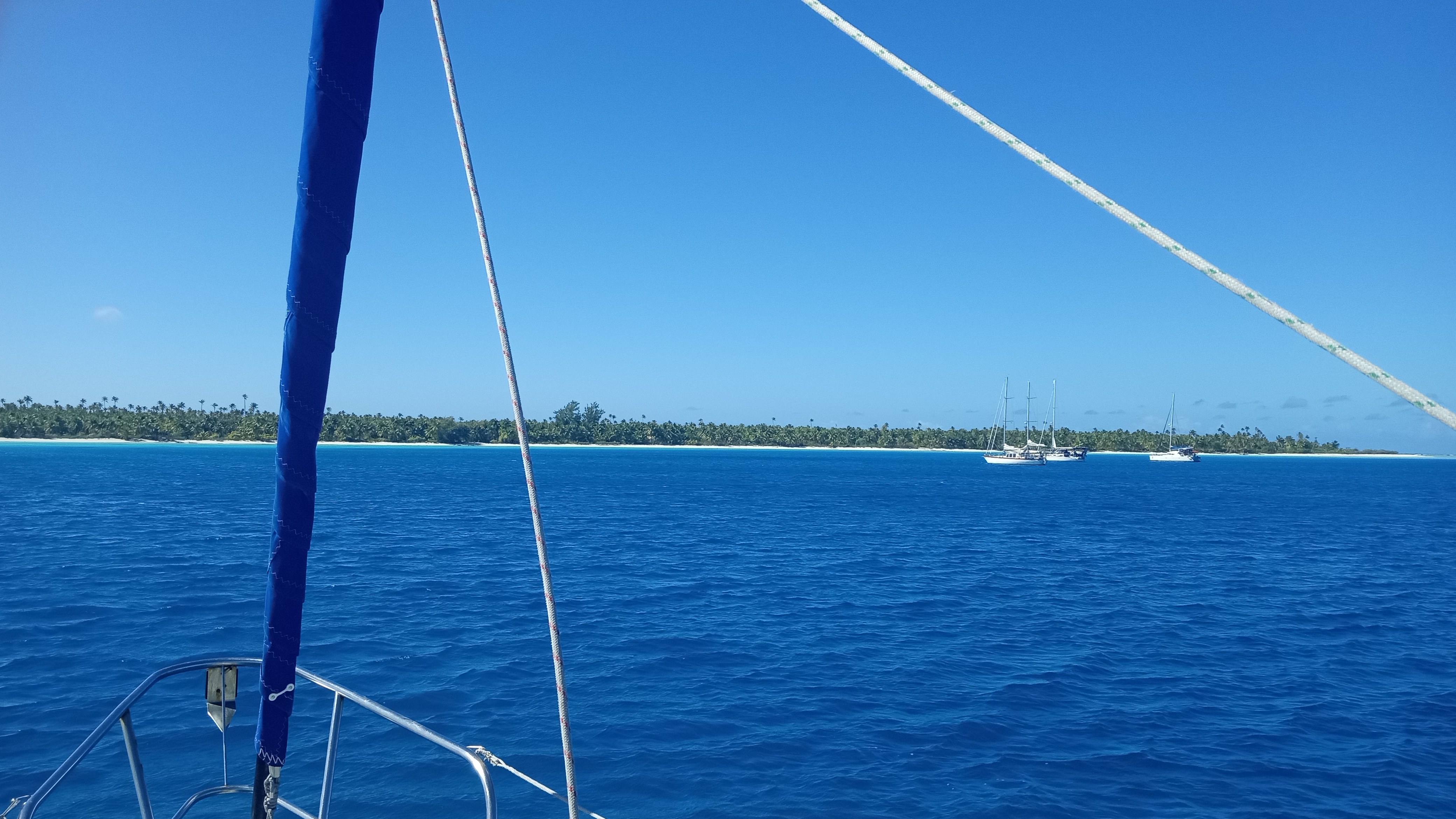
And so it was that we finally escaped the grip of French Polynesia and arrived at a new country – a month later than intended perhaps but we were so excited to explore this new land.

The Society Islands – Love them, hate them

We departed Fakarava headed for Tahiti with both a sense of anticipation and trepidation.   For the last few years, there has been a constant stream of information coming out of French Polynesia, the Society Islands in particular, reminding cruisers that in fact, the residents of the Society Islands were just quite tired of us.   There have been continually expanding restrictions on where you can anchor – some places have time limits and some are just prohibited.  We have read story after story of people being chased away from anchorages because the residents on shore are tired of the visual pollution of a fleet of boats off of their beach.   We arrived in Tahiti hoping it was not as bad as we had heard – sadly, it was.

Our arrival in Tahiti was later in the afternoon, after a two night passage.   We knew we would not make it through the channel, past the airport and to either of the approved anchorages on the west side of Tahiti before dark so we opted to pull into Point Venus.  In reading the Navionics notes we knew that anchoring in this spot was limited to 3 days but we only intended a one or two night stop to get ourselves settled.   We anchored late afternoon, after a very slow trip through a small reef and directly into 25 knots of wind.   The anchorage is beautiful, with a community park on one end and a few houses.   We tucked the boat away for the evening, spent a few minutes out in the cockpit enjoying the surroundings and then headed to bed.   The next morning we woke up square in the middle of a paddling regatta.   There were small fleets of boats paddling different courses and nearly every one of those small crafts had a support boat – those boats continually buzzed our boat, moving directly under our bow, rocking us every few minutes and letting us know in no uncertain terms that we were in the way.    We finally decided that it would be best to pull up anchor and head around through the channel, past the airport and to a hopefully more welcoming spot.   There are two “anchorages” on the west side, one called the Airport Anchorage – nestled into a reef and notorious for dragging boats.   The other is off of Marina Taina and we hoped to find a spot in that area.  As it happened, a boat that was anchored in Point Venus would drag onto the beach a few days later, even making the local papers.   The mayor of the town adjacent to the anchorage was quoted as saying that he already called for a ban of anchoring in the area and this was just another example of why. We were quite happy at that point that we had not stayed longer!

After a bit of a rolly trip to cover the few miles to the Papeete entrance, we made the turn towards the anchorage area.  We called for permission to enter the airport channel when the signage indicated that we should and then motored through the shallow, narrow channel headed for the other end of the airport.   The wind was howling and it was raining in buckets.   Wind surfers and kite surfers were cutting back and forth across the channel adding an extra layer of distraction.   We passed the Airport Anchorage thankful we had decided against staying there – the boats were bucking and pulling in the wind and each was nearly bow to stern – they were anchored that close together!!   We were making our way towards the other end of the runway, desperately looking for the signage to indicate where we were to ask for permission to cross the runway again – when suddenly we realized that we were in fact right at the end of the runway and there was a plane approaching!   With hearts in our throats, I slammed the boat in reverse, trying to keep us going directly backwards as, not only were we in the path of a landing aircraft, we were in the middle of two reefs with only a small distance between them.   I was thankfully able to get us turned around in that area and then we motored back against the 25 knots of wind and pouring rain, holding station a bit off the runway until we could get permission to pass.   While we were doing that, we could see the sign instructing you to call for permission to proceed – well after the runway!!!   We were finally given the go ahead and started the proceed through, only to have yet another plane come down right in front of us!!   Yikes – that was a scary few minutes!!!   We finally made it through, past the airport and into the vicinity of the other “anchorage”.   

There was some space to anchor nestled directly against a reef – given our proclivity for getting snagged on bommies, this did not seem like an ideal spot.   The other side was pretty crowded and we milled about – thankfully the rain had stopped.    We attempted anchoring in one spot only to realize we would swing out into the marked channel – we pulled anchor and moved a bit further in, anchoring between another cruising boat and one of the many derelict boats that littered the anchorage.   It is no wonder that the locals are becoming disillusioned with cruising boats – there were many derelict boats (the one we were by was stripped of all hardware and had no mast – clearly not going anywhere soon!).   Additionally, there was a very clearly defined no anchorage area (we worried we might be in it at first but on closer inspection confirmed it was closer to shore).   It was in a bay that locals would swim in and would launch their boats for paddling practice – and though there were buoys marking it and it was clearly marked on the chart, there were several boats anchored within that area – a couple clearly derelict and a couple that were occupied by cruisers.   

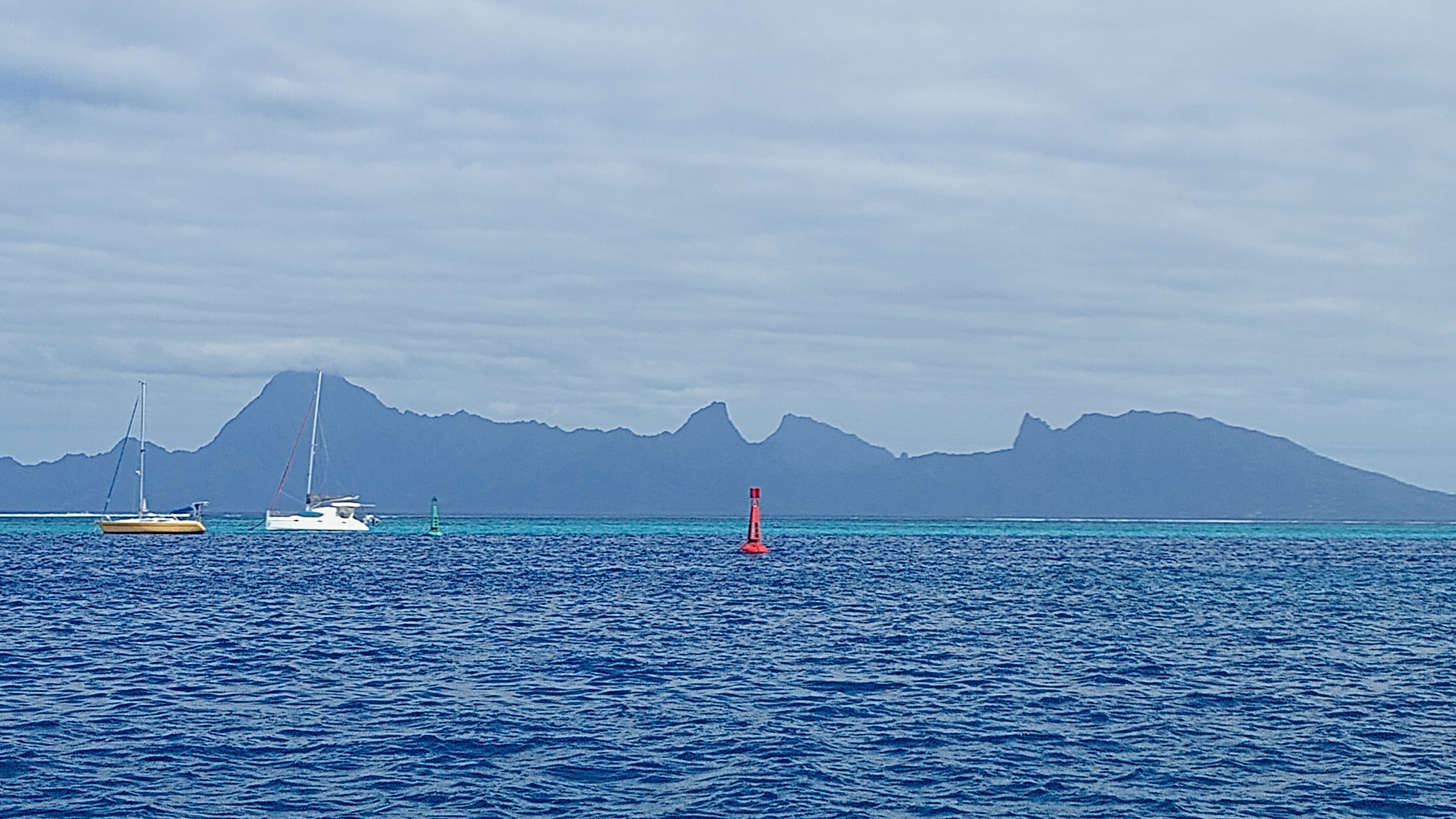
View from our Tahiti anchorage with Moorea in the distance

We settled in as best we could – we would actually end up moving to the other side of the derelict boat the next day because the wind has us pulling back quite hard towards another cruising boat and we knew we were making her nervous.   The dinghy ride into the Taina marina was thankfully fairly short and there we found a free dinghy dock, a place to dispose of garbage and recycling and close access to a couple of grocery stores.   After the limited access to grocery stores throughout all of French Polynesia, having a couple of large, very well stocked stores close by was a delight.   There was a small restaurant at the marina that had happy hour – half price pina coladas and half price select pizzas each day – yes please!!!!

We were a little way away from Papeete but Owen knew he wanted to head in there to see if our alternator, which had not been performing as expected could be fixed.   Given that the weather was calling for 30 knot winds, I opted to stay on board while Owen took a very wet dinghy ride to the marina and then grabbed a cab to Papeete.   He spent the afternoon walking around between numerous shops – dropping the alternator off at one spot and then spending most of the afternoon trying to track down a spare belt for our spare alternator.   I spent the afternoon nervously checking and rechecking our anchor line and anxiously watching as the derelict boat danced closer and closer to us – always seeming to be moving in a different direction from us.   Owen finally arrived back at the boat, drenched and exhausted – the alternator had been left to be serviced so we knew we would need to go back into Papeete to pick that up.

The next couple days saw us stranded on the boat in high winds, teeming rainstorms and bucking waves.   We booked doctors appointments for a couple days later and so headed back to Papeete on a thankfully sunnier day.   We caught the bus this time which, because the Olympics were on, with the surfing competition happening off the south end of the island, was free.   We got off just a block away from the doctor’s office thanks to some other cruisers who knew exactly where we were going and when to tell us to get off.   After quick check ups and prescription refills, we headed to do a bit more exploring.   Papeete itself is rather uninspiring – concrete block buildings, many of which were quite run down.  It looked somewhat like there had been a big building boom in the late 60’s or 70’s and then nothing since.    The saving grace however was a gorgeous, miles long, waterfront park with walking paths and spots to sit and rest.    They had a viewing area set up to watch the surf competition and many booths set up in support of Tahiti tourism and local initiatives.   We explored this area and then had a wonderful lunch – the best burgers we had had since leaving Mexico – the first burgers we had had that were not frozen patties done in a fry pan so we enjoyed every bite!!!    We finally headed to the alternator shop only to learn that our alternator had in fact “half failed” – it would only put out a maximum of 30 amps and they did not have the parts to be able to fix it.    We ended spending way too much to buy a new alternator – one which would put out less power than our current one.   We finally decided that we were ready to head back to our boat and discovered that as easy as it had been to get to Papeete by bus – it was not going to be so easy to get back.   We headed to a bus stop where we waited and waited, all the while the crowds were getting bigger.   When a bus finally arrived, it was immediately swarmed by the group waiting, and was full in seconds.   We didn’t know how long it would be before another bus was going to arrive and given it was now about 5pm, we figured it too would be swamped.   We finally gave up and opted to walk to a taxi stand and take a rather expensive ride back to the marina.   Thankfully we arrived in time to catch the end of happy hour so we were able to solace ourselves with pina coladas.

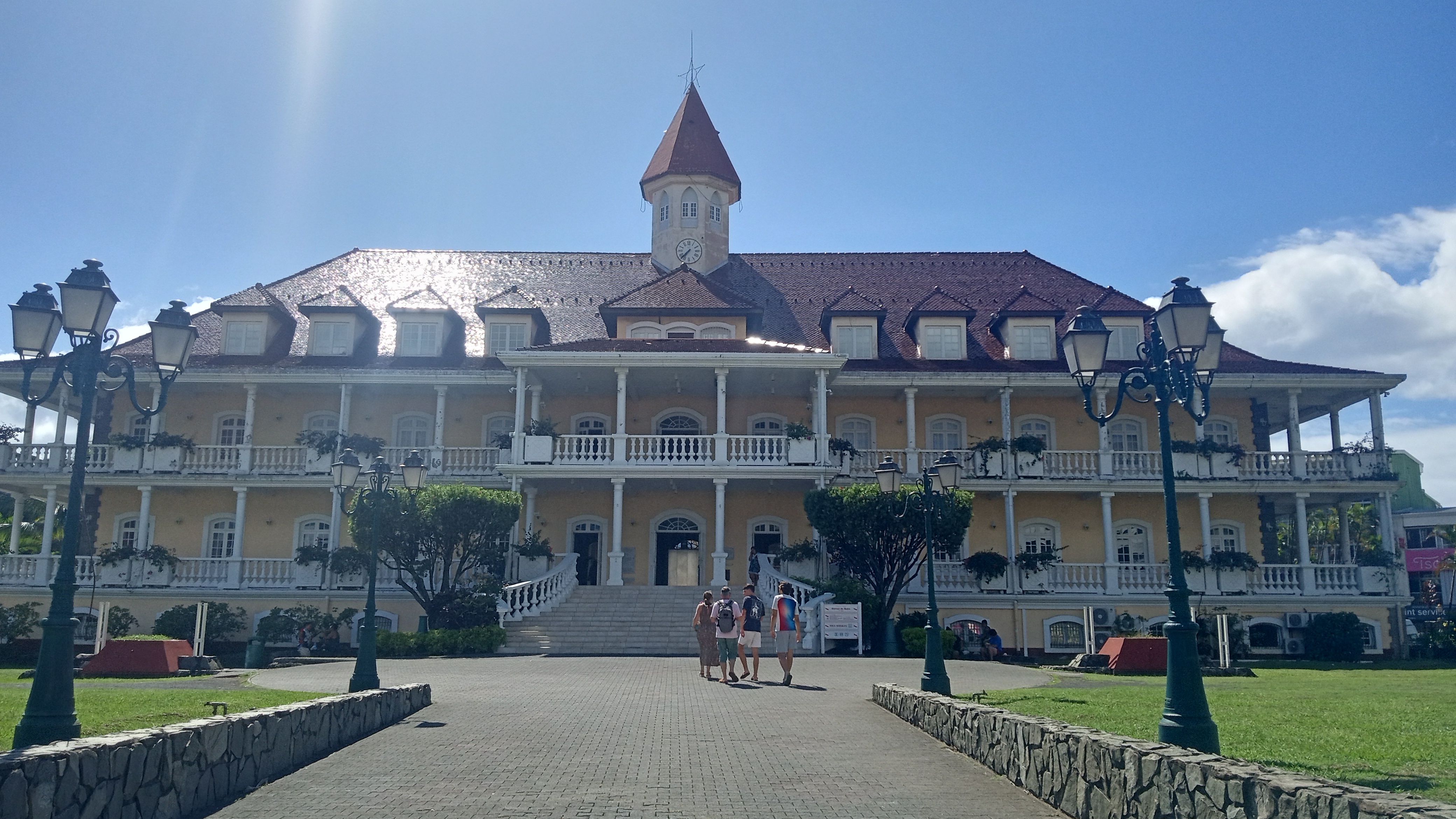
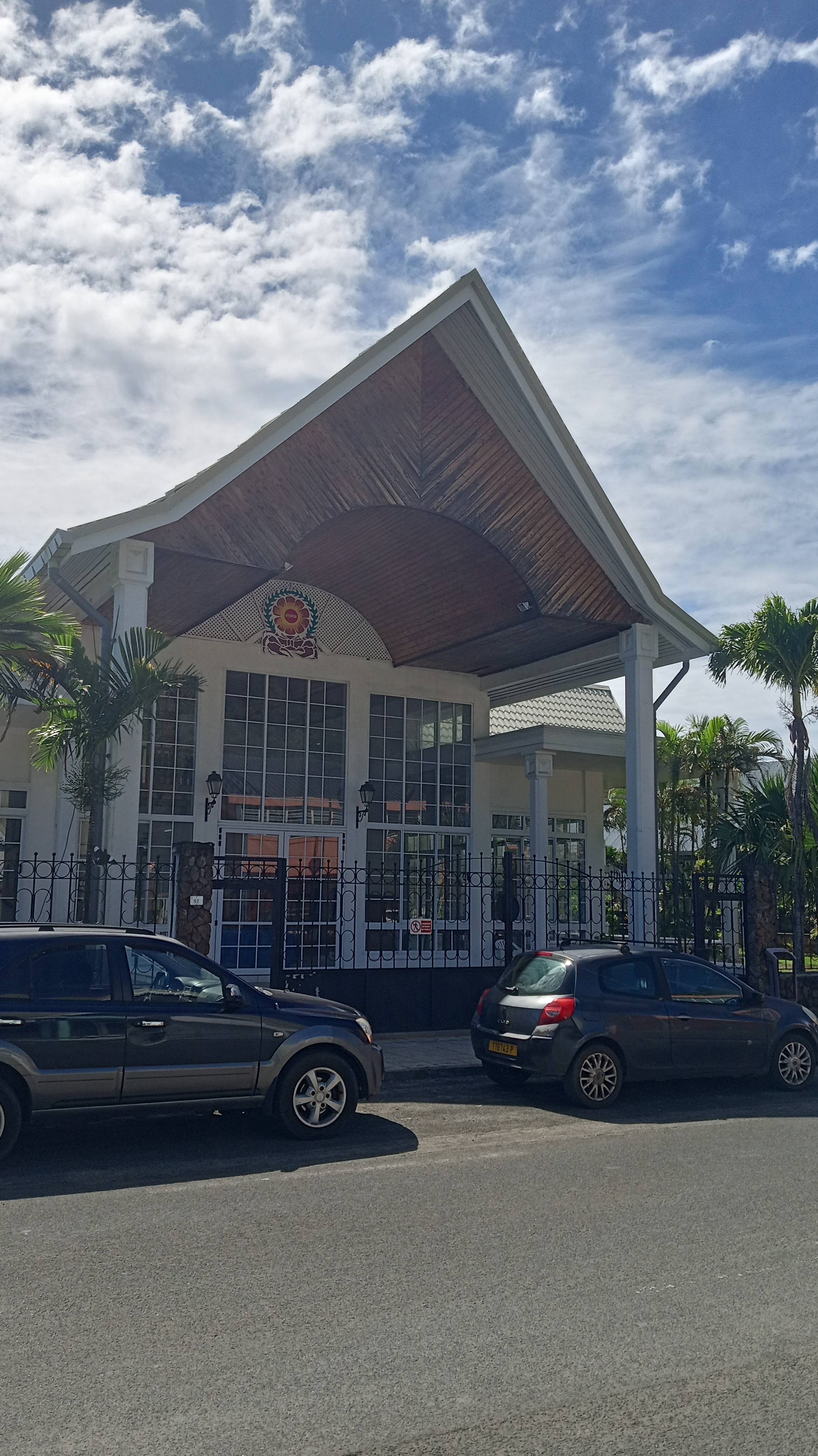
One of the nicer buildings in Papeete – the City Hall.

We spent the next day shopping at the Carrefour – a french grocery store on par with almost any store in North America.   We spent way too much money but were able to stock up on cereal, nuts, iced tea mix – so many of the items that we had not been able to find to date.   Sadly, our search for sour cream was again unrequited and the only cheese on offer was very expensive brie or Emmental – let me tell you, if I never have to have Emmental cheese again it will be too soon!!!   I had discovered another shop a bit further out that seemed to carry a large number of Kirkland products so we again grabbed the bus and headed to that store – once again we were able to find mixed nuts, good quality paper towel and – most importantly! – my coffee beans.    We were once again stymied by the busses though – busses were just driving right past the bus stop without stopping for us and eventually we just gave up and walked back the 2km to the marina with all our bags in tow.  

We spent another afternoon on the boat during which Owen intended to install the new alternator – unfortunately, he first dropped it and then did something that caused a hell of a zap and smoke – though I could have already told you it was not going to work, he finished installing the new alternator, fired it up and …. Nothing.   The brand new, very expensive alternator was at that point a very heavy paperweight!!   Owen swapped back to the backup alternator and left the new one to be a problem for another day.

After a couple more days in Tahiti, having hit nearly every grocery store possible, obtained our refills for our prescriptions (ouch – not as cheap as Mexico, that is for sure!), enjoyed a couple of happy hours, and inexpicably having gone to  McDonalds for lunch one day, it was time to move along.   Our next destination was a day sail away – the stunning island of Moorea – and I was soooo excited to get there!!!

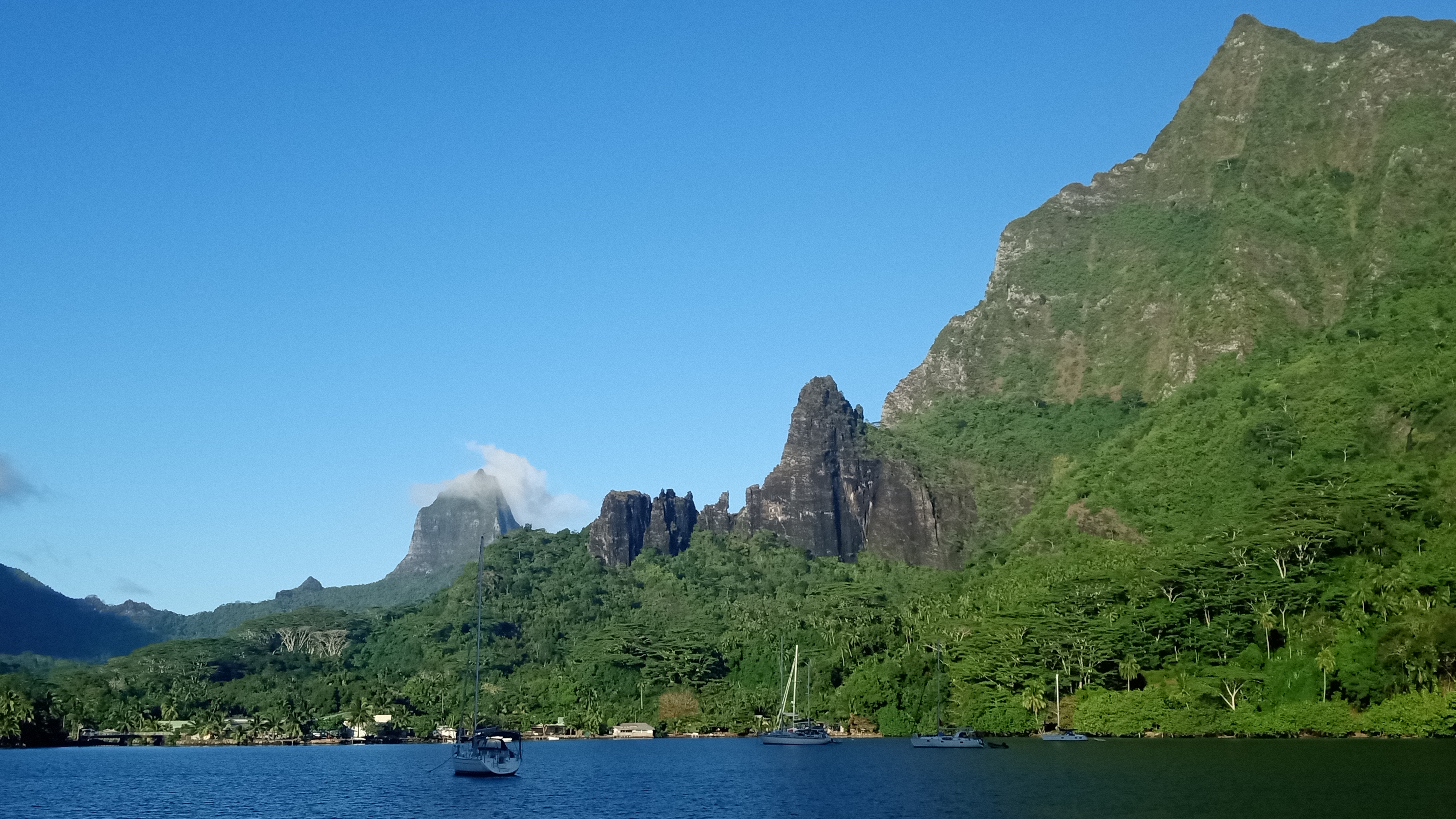
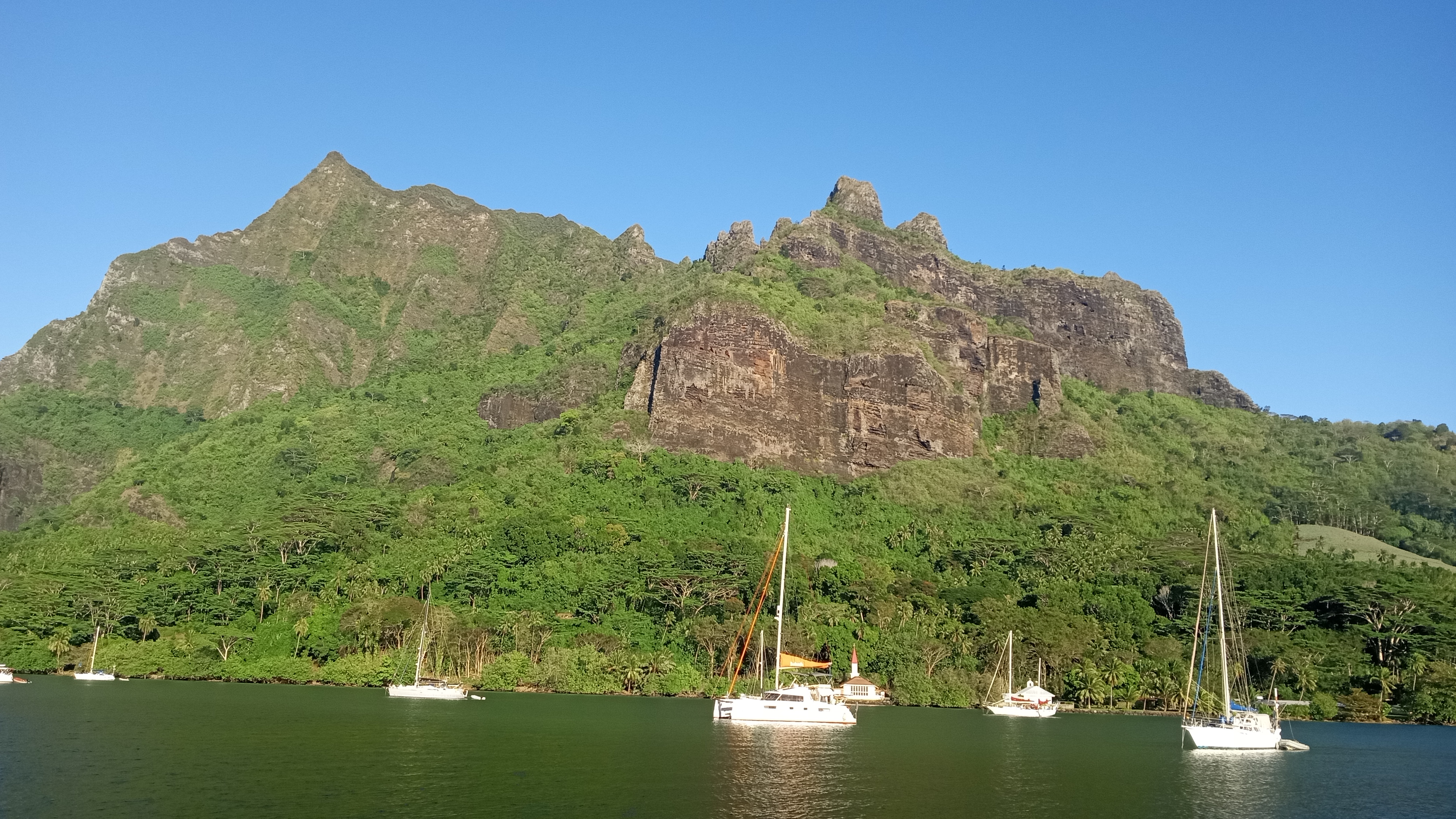
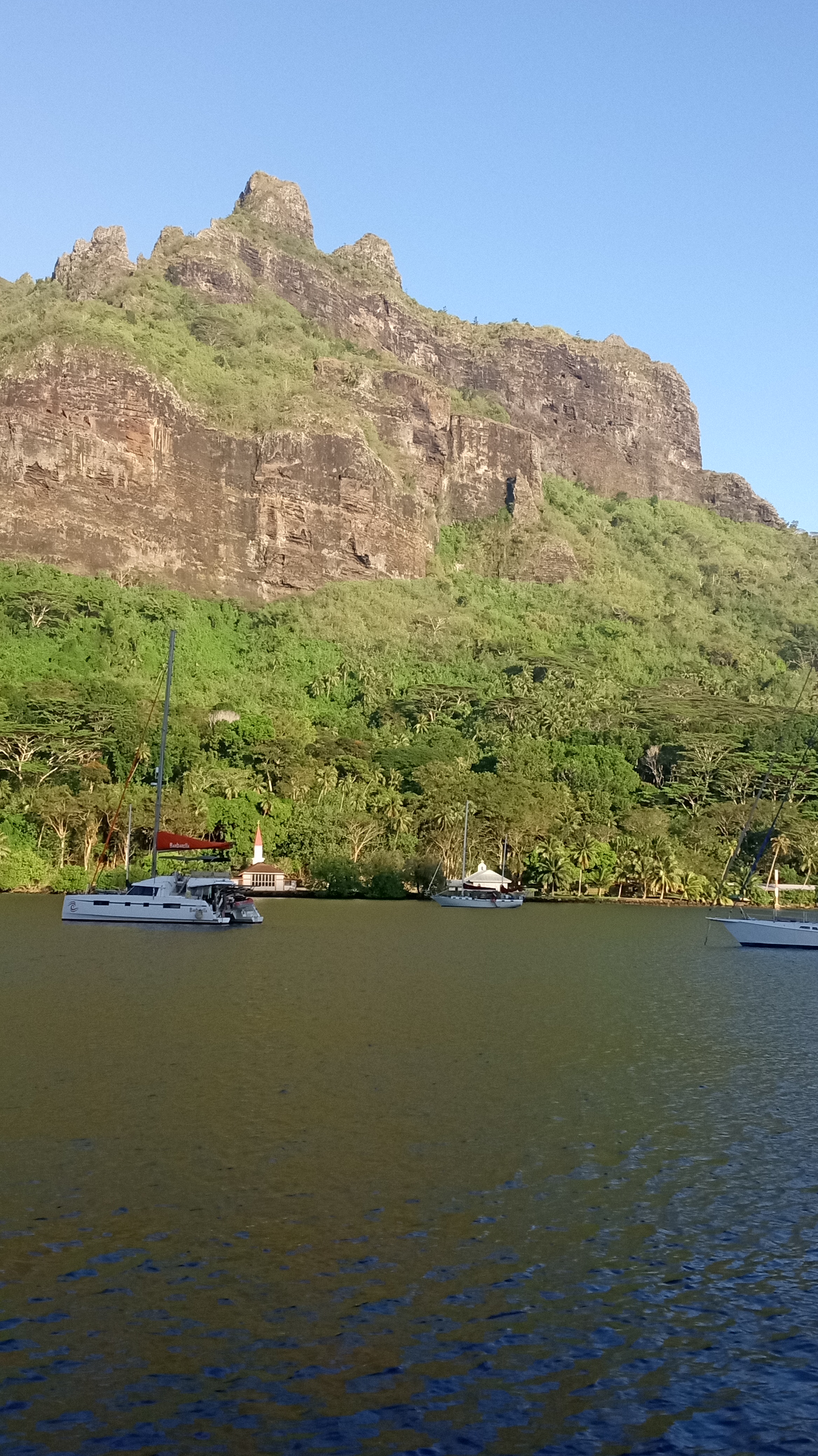
We headed out from our anchorage, thankfully through the west pass, which did not require us to make the return past the airport and motor sailed across the narrow expanse between Tahiti and Moorea – we headed in through the north pass and were soon anchor down in Cook’s Bay – a beautifully calm anchorage in the shadow of the towering mountains.   It was the rich lushness of the Marquesas with the calm waters of the atolls and we were immediately smitten!

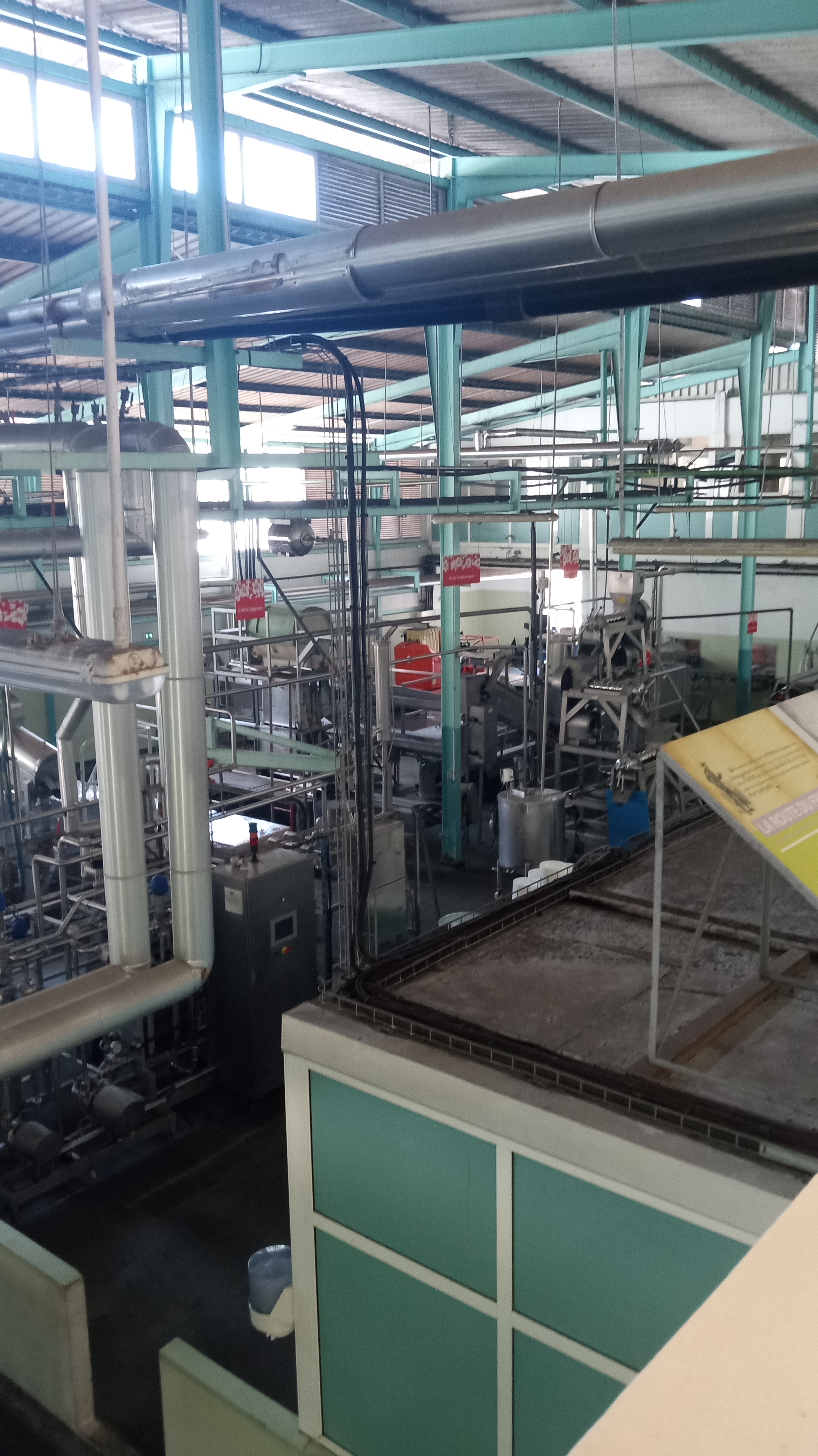
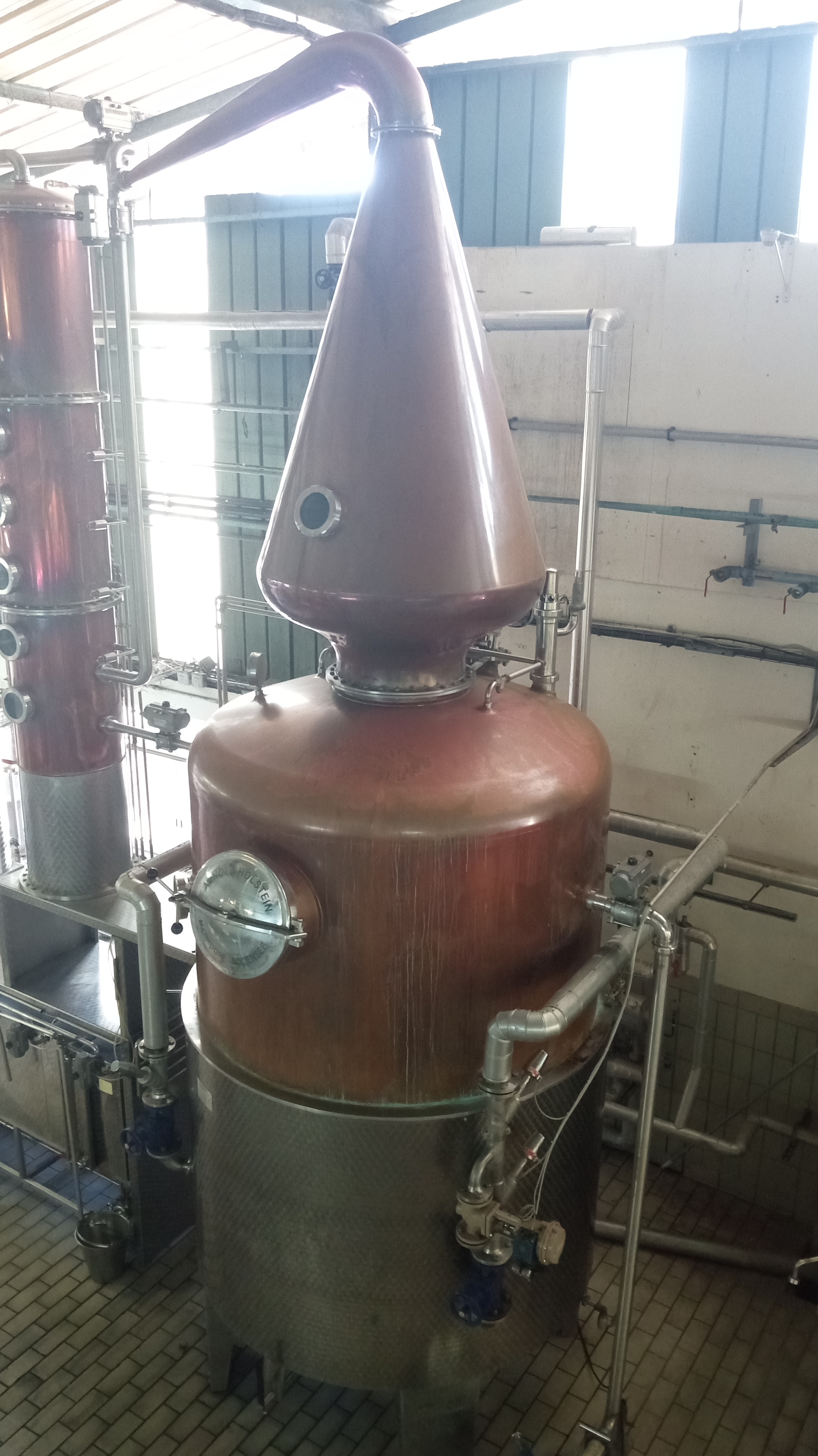
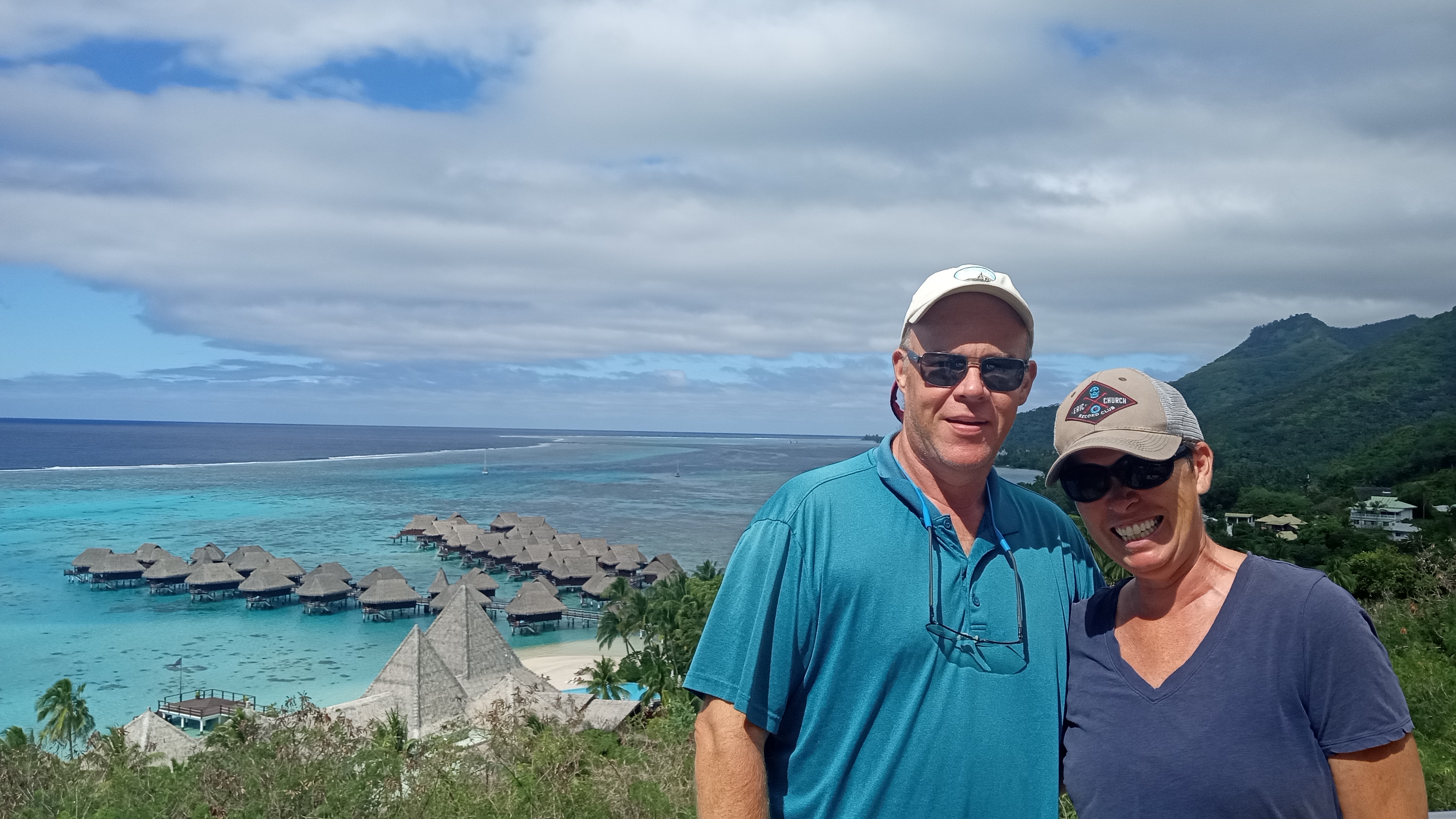
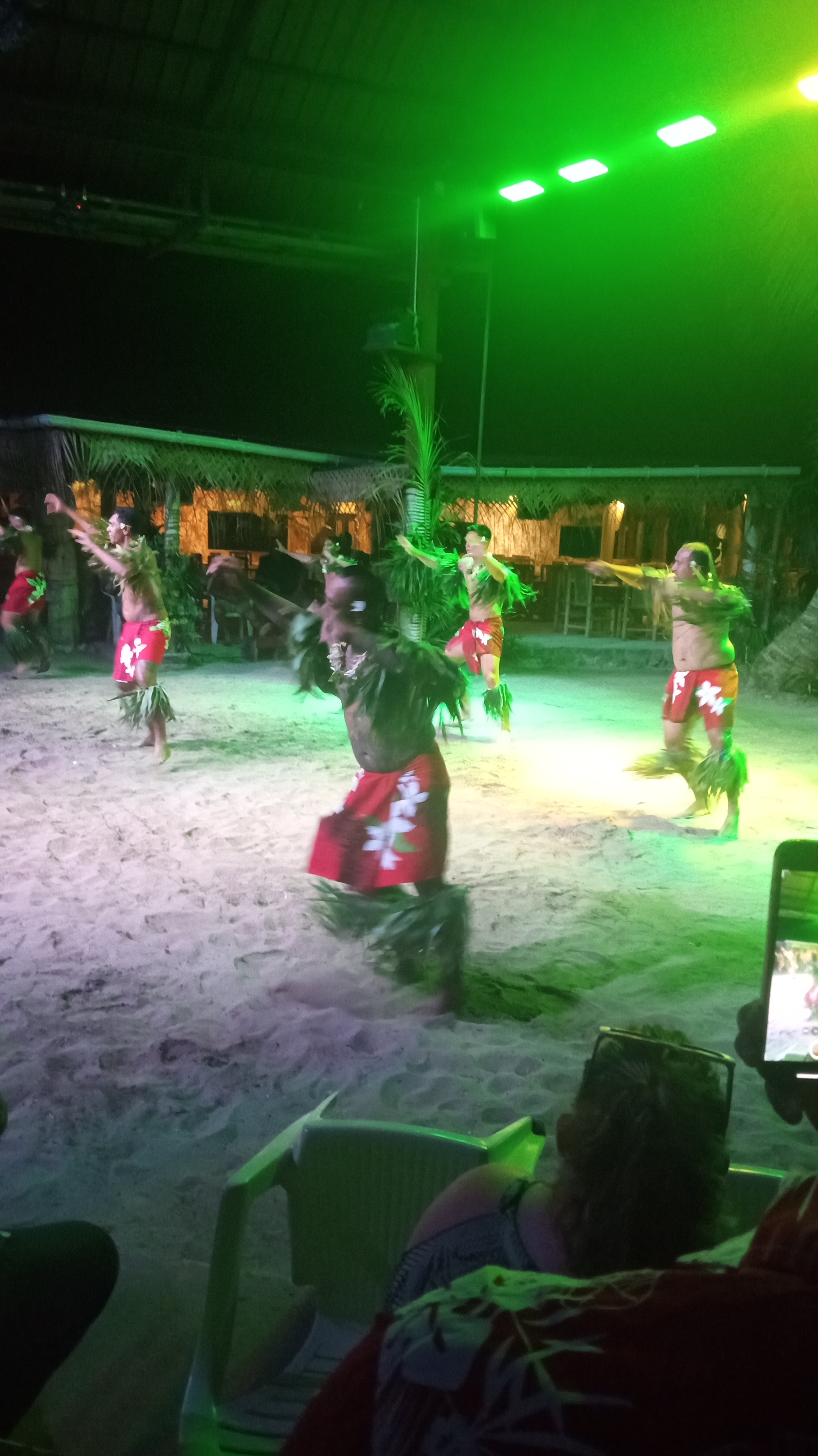
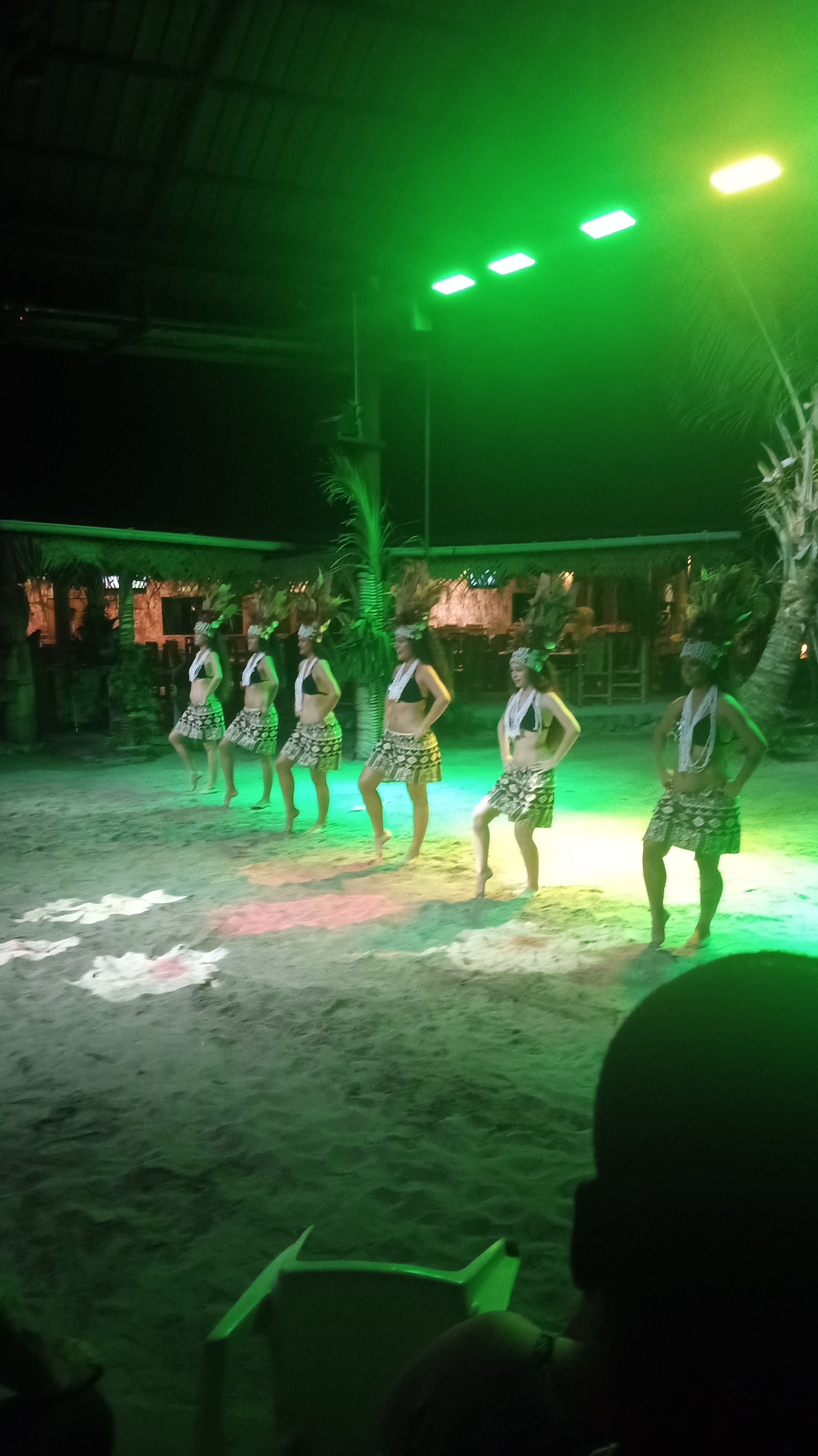
Our time in Moorea was spent exploring the Island.  We took our dinghy around to the north end of the bay one afternoon and walked to a juice/ rum factory.   They offered a self-guided tour of the facility and then a small tasting of one of their products.   We treated ourself to a caramel rum liqueur (kind of like Bailey’s).   Our friends on Exit had arrived in the bay and we decided to split a car rental.   We made a loop of the Island, stopping at viewpoints and beaches, stopped for lunch and then drove up a terrifying road that wound its way up to a mountain side lookout – from the top we were looking out through the misty prehistoric greenery to Cook’s Bay.  One of our stops was an eco-museum.   None of us even knew the museum existed but the building was so interesting we were compelled to stop to see what it was.   When we realized it was a museum we went in for a look around – we had actually arrived a few minutes after they normally let people in but they were kind enough to let us in, and we were given a personal tour by a woman who was the granddaughter of one of the last Island chiefs.  It was such an informative afternoon – learning not only about the museum and their efforts to protect the coral environment, but also learning so many cultural tidbits about our guide’s family and life.   We finished our day with dinner out near a small marina and then a trip to the Polynesian Village for their nightly show – it was a spectacular night of dancing, fire dancing and beautiful music.    It was a spectacular day!   We did a couple of other trips out around the bay, going twice to a bagel shop – real New York style bagels that were spectacular, a pizza place, creperie and a barbq place.   There was certainly no shortage of wonderful eateries.   The people here were spectacularly friendly and, so long as you were careful to mind the marked set off from shore for anchoring, we didn’t have anyone trying to chase us out of the bay.    Our only challenge here was garbage – there was not a single garbage can on the streets or near the dinghy dock.   Some people had been putting garbage into the dumpsters behind the grocery store so they had responded by locking the bin.   Apparently, you could go to the town office and pay to dispose of garbage – this did not do us any good when we were trying to get rid of garbage on a Saturday (when the office was closed) before heading out the next morning on our next passage.   This again was where the people were so kind – we went to the gas station to ask if they had a dumpster we could put the garbage in (we were happy to pay if necessary) – the clerk offered to take our stinky bag of garbage home with her to dispose of it at her house!!   We just couldn’t ask her to do so but finally agreed to paying a fee to put it into the gas station’s dumpster.   While we understood that it was costly to dispose of garbage, it seems silly to not give people somewhere to put their garbage – even someone local who has grabbed a drink or bag of chips – there are simply no garbage cans anywhere.   The result of not having any bins anywhere in town was that there was a ton of garbage on the streets, in ditches and very notably in the water. 


Eco Museum

Though we were so sad to leave, the reality was that our 90 days was nearly expired and we still wanted to be able to explore at least one more Island.   We headed out from Moorea, literally gloomily waving goodbye to paradise, making an overnight passage to Raiatea.    It was a pretty rough passage with strong rain and high winds but the sun was shining when we came through the pass in Raiatea early the next afternoon.   We headed around to the west side of the Island, near the boatyard.   The anchoring was again difficult – either nestling in near a reef (no thank you), anchoring near a small Motu where you were limited to a 3 night stay, or dropping in 80 feet near the boat yard.   There was a lot of small boat traffic, roaring by all day, so there were pretty constant wakes.    We went ashore on arriving and had a taxi called to take us into town – it was a long walk otherwise – or a 2 mile dinghy ride.   We went first to the Gendarmerie to begin the process of checking out from French Polynesia and then explored the small town a little bit.   Though it is small, they do receive cruise ships quite often so there was a surprising number of small restaurants and stores.    This is also a big base for charter catamarans so there were also 2 good grocery stores.   We headed back to the boat and started to look at the weather for our departure.   A couple of days later, we again needed to head into town to pick up our clearance paperwork.   This time we took our dinghy in – and got monsooned on about half way around!   We arrived in town dripping wet and went to get our clearance paper work.  We also picked up some fuel and groceries before making the long trip back to the boat.    Again, we started to check out the weather situation – it was not good.   There was a system roaring in and it was certainly not the time to be leaving.   The problem was that our visa was expiring and our clearance had been done – we were supposed to leave French Polynesia on August 18.   August 18 came and went with us trapped on the boat in 30 knot winds and big seas – even inside the reef!   Thankfully we didn’t see any sign of officials chasing people out of the anchorage we were in.  Our friends were on a neighboring island and had been moved along from their anchorage at least twice before they just decided to pick up a mooring ball.   I would have been so nervous being overdue on our visa if there had been officials rousting people in the anchorages there!  After a week of sitting on the boat we started to have hopes for a new weather window in a few days.   We again headed around from the anchorage to town in our dinghy to get fuel.   We decided to have a quick lunch first and then pick up our fuel – unfortunately we didn’t realize that the harbour side gas station closed at noon on Saturday and would not open again until Monday – we were hoping to be able to leave on Monday so this was a problem.  One of the locals told us that if we went around north of the harbour, we could walk to another fuel station – the reality was that meant we were tied to a concrete wall – with the waves crashing us against the wall and had to walk a couple of blocks through a field and around a fence to get to the station.   I sat in the dinghy trying to keep us from ending up on the wall, and Owen made two trips to the gas station to get everything topped up.  
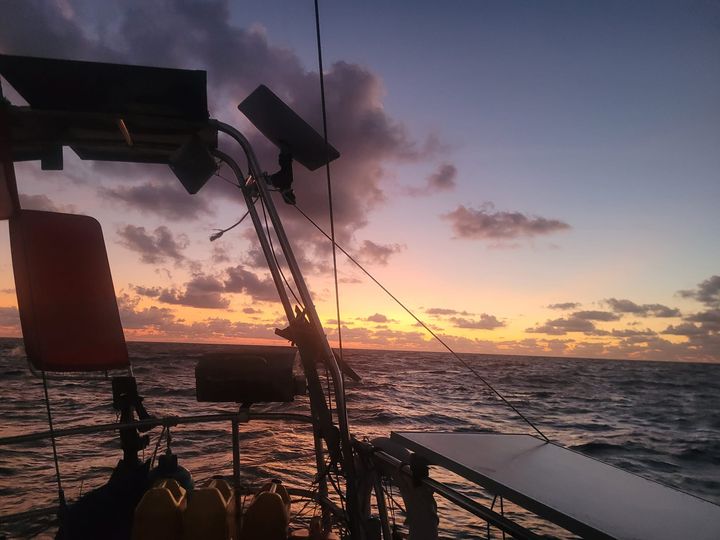
Rainy passage to Raiatea

Our Monday departure was again not possible – the miserable weather just continued to pin us in the anchorage.  Tuesday we again opted to head around for one more dinghy run for fuel and lunch – this time the gas station thankfully was still open when we went to fill up.    Finally, on Wednesday, August 28 – 10 days after our Visa had expired, we had what we hoped would be a good weather window.   Our plan was to head north west to Samoa – hoping to keep the next system to the south of us.   We went through the west pass mid-afternoon – sadly sailing past Bora Bora.   Owen had really wanted to go to Bora Bora but there is almost no anchoring allowed in Bora Bora (the one place you can anchor is very deep and you can only stay 2 nights) and the cost to stay there is insane – a mooring ball is about $75 Canadian and then they charge another $20 for the privilege of using the dinghy dock!!   This was definitely somewhere that boaters are clearly not wanted and we just weren’t willing to spend that kind of money just to feel shunned!  

And so it was that we concluded our time in French Polynesia – headed out for a 10 – 12 day passage to Samoa – or so we thought!!!
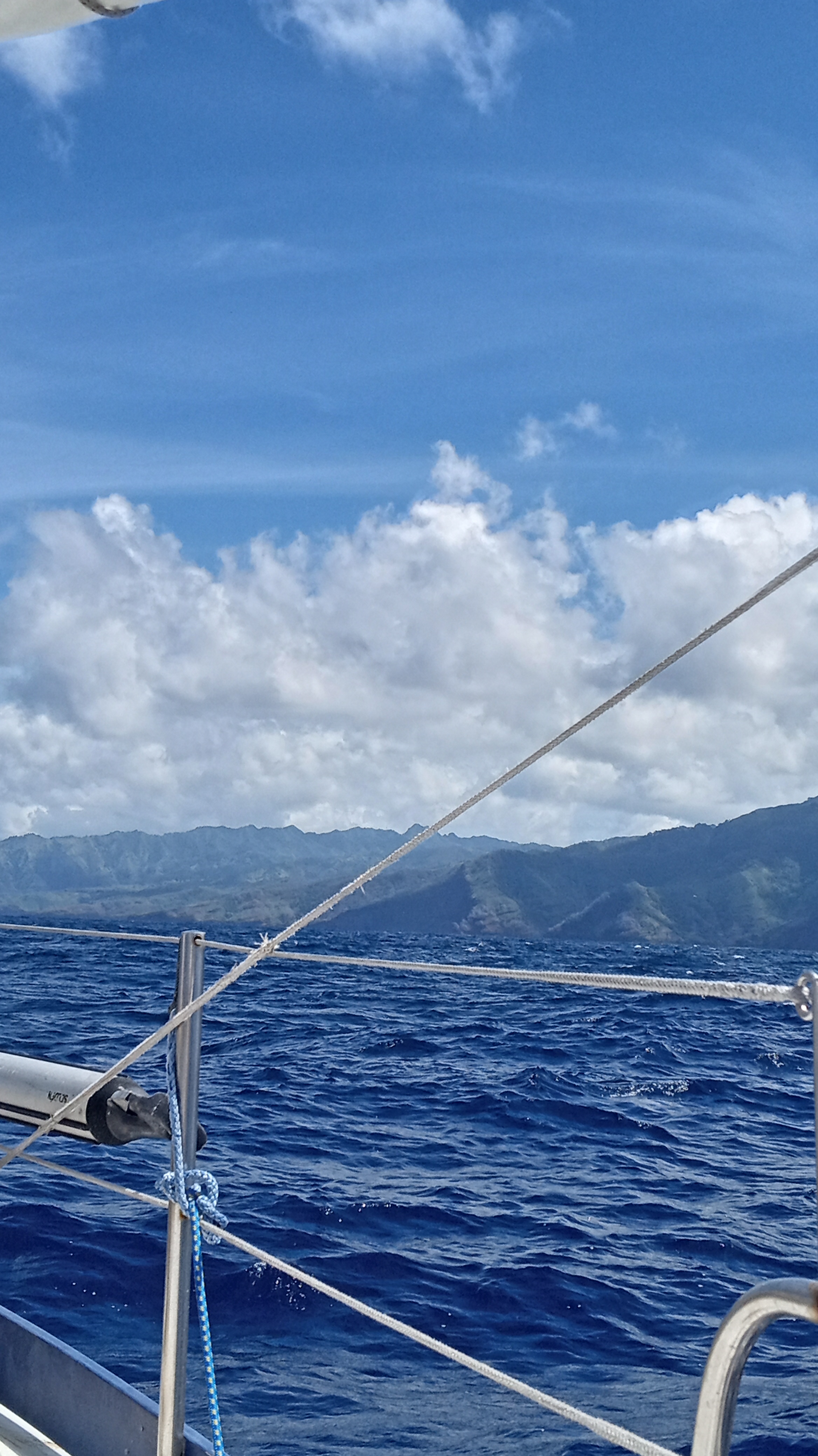
Exploring Fakarava

After spending 5 weeks in the Marquesas, it was becoming evident that we could not linger too long in the Tuomotos – we only had 90 days in French Polynesia and had big jumps to make between the Marquesas, the Tuomotos and the Society Islands.    We debated whether to try to see more than one of the atolls but realized that we just didn’t have the time – every time you enter an atoll you run the risk of getting essentially stuck there – if the weather turns it may make the pass unpassable and you will be sitting there until the weather improves.  We knew of many boats that found themselves stuck in one atoll or another for a week or more, preventing them from moving onto their next destination. This seemed especially taxing when in an atoll that did not have a settlement – no access to fuel or supplies and no ability to move on would be far too stressful!  Taking that into account, we opted for Fakarava – we knew it had a small village to explore, there is a pass at both the south and north ends, the northern one being quite wide and deep and passable in most conditions and it was supposed to be beautiful.  

We had a five day passage to Fakarava and landed at the northern end of the atoll, near the village of Rotoava.   We were so happy to see Viva anchored nearby – we had met Pierre and Marie in the boatyard and had been chasing behind them all through French Polynesia.   We reached out to them immediately and made plans to go to their boat for drinks and pizza that night.    We had a fabulous night on board Viva, visiting with Pierre and Marie as well as Kevin and Stacey from SV Flying Free.   The pizza was a treat and the company was fabulous!!

The next day we headed into shore to explore.   Rotoava has a great little enclosed “harbour” for the dinghy dock which was such a treat after some of the sketchy dinghy docks we had encountered in the Marquesas!!   We set out to wander down the atoll, through the tiny village – there were a few restaurants, a gas station with a fairly well stocked grocery store, the vegetable market (which was really only a vegetable market for about 2 hours after the supply ship came in!), another little grocery store, pizza shop and a few little clothing stores and of course pearl shops.   As we wandered down the road, we had to keep stopping just to stare out at the water – it was so incredibly clear and calm!!   We found nurse sharks swimming in close to shore at one stop and little fishies swimming in amongst the coral at a couple of others.   We wandered down until we came to a small resort, a gorgeous complex that included a little restaurant that had tables in the shallow water and milkshakes on the menu – what a treat those were!!!!    We tried to head back in for dinner that night only to find that the only restaurant that was open required reservations – so back to the boat it was!

The next day we spent a bit more time exploring and then headed to one of the restaurants for dinner – while we were waiting for them to open, the Flying Free crew arrived so we ended up having a lovely dinner visiting with them.  

We had a bit of a surprise the next night when, out of nowhere, the wind shifted hard to the south – within hours the fetch had built and we were hobby horsing on our anchor in 25 knots of wind – it was a pretty uncomfortable night until the winds switched around a bit to the east, reducing the size of the waves.   We had not necessarily intended to head to the south of the atoll as we for some reason had figured it to be a 60 mile run – that makes for a pretty long travel day for us and we really only intended to spend 4 or 5 days in Fakarava.   As it turned out, it is about a 30 mile run – taking that, and the fact that the winds were again to switch to the south, with 30 knot gusts expected, we decided to go check it out!!!   We motored out mid-morning, following the well-marked path through the bommies (they were huge!) – about half way down the wind started to build and the sea state was definitely starting to be “not fun”!   We had thought we would head directly to the South Pass anchorage but when we arrived at Harifa, nestled in the South East corner, we decided to drop anchor there.    Being so much closer to the south shore, the waves were minimal though the wind did blow pretty good all the rest of that day and the next.  

We finally headed over to the south pass the next day – the anchorage is a bit of a nightmare with giant coral bommies everywhere!!   We milled around trying to find a clear patch of sand to drop the anchor, that was not too close to other boats.   We finally settled on a spot and Owen deployed the anchor, floating our chain with fenders every 50 feet or so, as we had been doing in other anchorages in the atoll.   We let the boat back down and realized all to quickly that we were closer to the boat behind us than we wanted to be.   We decided to reset and started to bring up the anchor, only to discover that we had somehow already wrapped ourselves around a bommie!!   We tried to drive around to clear it but I think we guessed the wrong direction and wrapped it even worse!!   Owen finally had to get into the water with a mask and snorkel to see where the chain was wrapped – as we would unwrap from one bommie, the slack chain was wrapping on another – we tried for nearly an hour to unwrap us with Owen in the water and finally ended up with him at the helm and me on the bow shouting directions for where to turn while keeping up enough speed that wouldn’t let the chain go too slack – nearly two hours later we were off – finally!!   We moved a bit further east and set in a good patch of sand – but when we backed down we were too close to the reef and so we again pulled up anchor and tried again – finally, nearly 3 hours after starting the process, we were anchored (though it felt like we were so far east we may as well have stayed at Harifa!!).

After all of that, we decided we needed a dinghy toodle and as Kris and Steve from Exit had also arrived that day, we asked them to come along.   We headed into the dive shop – one of the only businesses on the south end and had beers at their small bar.   Kris and Steve had already made arrangements to go diving the next day.    The south pass of Fakarava is famous for its “wall of sharks” drift dive and they were excited to experience that.   Owen was really wanting to do a drift snorkel through the pass and wondered if he could tag along with their dive boat – Kris sent a message to the divemaster inquiring and he was told to come along.

The next morning, I dropped Owen off with Kris and Steve and they headed in early for their dive/ snorkel.   As it turned out, Owen was not permitted to go with the dive group – the snorkel was set for after the dive finished.  He hung out, doing some snorkeling around the dive shop and then all three of them joined a small group for a wonderful snorkel, seeing all sorts of fish and sharks.   I, being the chicken that I can sometimes be and having very limited experience snorkeling (like only 3 times previously), decided that the idea of a drift snorkel through a pass populated by sharks was not my idea of fun.

The weather was set to change to a more northerly direction and the supply ship was due into Rotoava so we decided to leave the next morning and head back to the north end.   We were up at the crack of dawn, planning to make it to Rotoava around the time the stores reopened for the afternoon, hopefully freshly stocked with veggies.   We started to pull up the anchor and, of course, found ourselves wrapped on a bommie!   Once again, Owen was in the water directing me as I drove in circles trying to free us – all the while, Steve was in the water giving Kris directions to get them unwrapped from their bommie!!!   Another hour of trying had us finally free and headed north.   We didn’t quite make it back in the time we had hoped but we were able to score a few freshies at the store.    We ended up grabbing pizzas for dinner that night and dining aboard Exit for another great night of visiting.

The north winds never did really arrive but they were once again set to blow from the South so it was that we once again made our way to Harifa – us and most of the boats from the North end!!!    By mid-afternoon the next day, the anchorage was packed.   The winds did in fact blow quite hard from the south for several days – we spent a couple of days just hanging out on board and then, when the winds finally started to ease a little, we were able to get out and explore a bit more.   We went into the beach one night for sundowners with Kris, Steve and Pierre and managed to get a snorkel in the next day.     We snorkeled around some small bommies in the corner of the anchorage and were pleasantly surprised to see quite a few fish of all different types and sizes.

Though we had only intended to be in Fakarava for a few days, we were nearing the two week mark there – honestly we could have stayed indefinitely – it is so beautiful there!   Sadly, we knew we had to get moving along – a window weather was opening and we needed to head west to the Society Islands.   We did one more run up the atoll to Rotoava to restock diesel and grab a few more groceries (but not before getting wrapped on one more bommie – quite literally the only bommie in that part of the anchorage!) and then finally headed out for Tahiti.

We were so sad to be leaving Fakarava behind and truly wish that we had been able to explore some more of the Tuomotos but time was not on our side!

The Majestic Marquesan Islands

I have to say our time in the Marquesas came with some mixed feelings.   The islands are simply stunningly, prehistorically, lushly beautiful.   The anchorages – what to say about the anchorages – they suck!!   Having heard that the anchorages were less than ideal, our initial intent had been to move quickly through the Marquesas and onto the Tuamotos where we hoped to spend a fair bit of time before moving onto the Society Islands and then checking out of French Polynesia before our 90 day visa expired.   The reality was that, due to charging issues and weather, we spent a full 5 weeks in the Marquesas.   Normally I would do a bit of a day by day, but as we spent a lot of days doing nothing other than hiding below as rain squalls went through, or holding on for dear life in rolly anchorages, I figured I would instead summarize what we loved, and what we did not so much love, in the Marquesas.

Our Anchorages:

During our time in the Marquesas we visited three Islands – Hiva Oa, where we checked into French Polynesia – Tahuata, an island immediately to the south of Hiva Oa – and Fatu Hiva, perhaps the most famous of the Marquesan Islands.

We spent much more time at Hiva Oa then we would have liked – popping in and out of Atuona Harbour three different times.   Our first time in Atuona, when we checked into the country, we were anchored on the outside and it was terrible.   The roll of the boat was violent – rail to rail with some hobby horsing added in – and it rained for 2 of the 4 days that we were there, making in necessary to keep hatches closed and causing somewhat of a sauna to build inside.   The town of Atuona is a long 2 mile walk with a big hill in the middle so we were never really tempted to just pop in there – we went when we needed groceries and not otherwise.   Luckily, there was a store at the gas station at the harbour that had a surprising selection of items and we were usually able to grab a fresh baguette and whatever other small items we might need. 

Our second trip to Atuona we were able to sneak a bit further into the harbour, though it was still quite rolly it at least made for a shorter, drier trip in the dinghy.  On this trip, we tried to book a tour of the island, arranging it for the day before we intended to head out again.  Unfortunately, the guide was sick the day we wanted to go and we weren’t able to reschedule with him because we were heading out on a good weather window.  Instead, we decided to rent a car and tour the Island ourselves.   We did make it to the sites that we would have seen on a tour and were able to google for information on some of them.   Owen loved the windy drive (me not so much!) and it was stunning to see the lush diversity of greenery on the island – from palm trees to banyan trees and everything in between.    We managed to make it from one end of the island to the other before returning to the boat having seen an ancient village site (where human sacrifices were performed) and a number of tikis.  

Our third visit was to pick up the batteries that we had finally decided to order after much testing, trying to ensure that it was in fact the batteries causing our charging issues, rather than some other component in the charging system.   After much back and forth, and a missed opportunity for a supply ship, we had finally ordered the batteries and they were to arrive in Atuona on the supply ship, to be received on our behalf by the chandlery.   We were anticipating that the supply ship would arrive on a Friday so the Thursday before we headed back to Atuona –fighting a strong wind through the channel – it made for a challenging and slow trip back and we were surprised to find the supply ship already at the dock when we got in.   Our next challenge was to anchor in the very crowded bay without being in the path of the supply ship’s departure.    We knew we needed to be anchored inside as we would be loading batteries in and out of the boat and couldn’t fathom doing that in the relentless roll outside the breakwater but the bay was quite crowded and there was a good surge running even inside the bay.   We finally anchored knowing it might be necessary to pull up anchor while the ship left.   We spent the afternoon being entertained by the comings and goings from the ship and finally, at about 8pm, the ship’s barge came over to ask us and two other boats to back further into the bay.   Rather than picking up anchor, we all drove back on our anchors, trying to hold station just far enough inside that we would not be in the way.    The ship finally departed, with its bow coming shockingly close as it crabbed away from the dock and pivoted to exit the harbour, and we were able to settle back to our original positions.   The next day was a challenge for our backs!!   We made two trips to the marine store that had received our batteries for us, using our handy dock cart to haul them the thankfully short distance to the dinghy dock.   We then loaded all four batteries into the dinghy and headed out to the boat.   We got the batteries from the dinghy to the deck and the deck to below decks where we swapped out the old batteries for new and then repeated the process in reverse to take the old batteries for disposal!!!   We were already exhausted by this time and then we had to get fuel.   Three trips later we had filled our tanks and had full jerry cans as back up.   We were able to try out the food truck that sets up at the Harbour on weekends on both our second and third trips to Atuona and enjoyed great meals both times.   We had no idea how big the meals would be the first time we were in, but we were certainly smart enough to bring a container with us the second time, taking enough food for an entire meal back to the boat!    It was a reality of the Island though that there was not much opportunity for dinners out and the places that we might be able to go were a two mile walk away so I just did a lot of cooking – there and everywhere else in the Marquesas really.   My mom used to have a magnet on her fridge that said her favorite thing to make for dinner is reservations and I am quickly realizing that I am so my Mother’s daughter in that regard!!   I don’t hate cooking, but when I don’t have any other option, it does become a huge chore – especially when trying to keep the boat stocked with anything fresh is such a challenge.  Our overall experience with Atuona was sadly less than positive.   I think that Hiva Oa would be a wonderful Island to do a land visit to – it is so stunningly beautiful – but anchoring there was just so uncomfortable, and without a car you are pretty much confined to a small harbour area. 

We certainly had some better experiences on Tahuata.   Again, we visited this Island three or four different times, using it as an escape from Hiva Oa.   The anchorages on Tahuata are on the west side of the island, making them slightly less susceptible to a big swell, but 2 of the three anchorages that we stayed at were still pretty rolly.   Hapatomi Bay was the bay that we had first escaped to, with calm water and very little roll.   During the day it was a wonderful spot to swim and just hang out in the cockpit enjoying the view.   At dusk however, the little no-see-ums would descend on the boat in hoards.   We would need to turn off all of the lights for hours around sunset, hoping to limit the number of them in the boat – this made cooking dinner a challenge as the sun goes down about 5:30!   We came into this bay a couple of times on our trip – the first time for a few days – the second for over a week.   We had actually intended to leave Hiva Oa and head directly to the Tuamotos after our last visit to Atuona.  Unfortunately, a weather system was moving into the atolls that would have made it nearly impossible to safely get into the passes through the coral reefs.   Erring on the side of caution, we decided to delay until the system had passed by – we didn’t count on it heading directly north and right at our position in the Marquesas, meaning that we were actually 13 extra days at Tahuata before we could head south. 

The other anchorages that we stayed at on this Island were Vaitahu Bay and Baia Hanamoena.   Vaitahu bay had a small village that included a grocery store and a couple of food “shacks”.   The disadvantage to this bay is that it was in the mouth of a valley, and the wind would rip through the valley, accelerating its way through the anchorage – a 15 knot wind anywhere else would be blowing 25 in the anchorage.   There was also a fair swell into the anchorage and the dinghy dock was completely exposed – it took some timing to jump off onto the dock as the boat rose up into the swell – and even more to get back into the dinghy!!   We actually had to use a stern anchor on this dinghy dock, just to keep the dinghy from crashing into the dock with each swell.   The town was lovely though and the store fairly well stocked.   We did have lunch at one of the shacks on our first visit and while it was not anything to rave, I didn’t have to cook it so that makes it fantastic!!  On our second visit to the bay, we were lucky enough to find a local selling both beautiful carving necklaces (I got an adorable sea turtle necklace) and a bag full of delicious mangos.   We also met up with a cruiser who introduced us to a local who had a beautiful garden and was able to sell us a huge bag of pamplemousse, starfruit and another fruit that I still haven’t entirely identified.   It was the first time we had been able to buy fruit and I was so excited!!    It was also a great opportunity to realize how extensive the little town actually was, rising up the hill with the properties hiding amongst the lush foliage. 

Baia Hanamoena was so beautiful – one of the only bays in the Marquesas with sandy beaches.   The bay was home to Manta Rays who would come out to feed in the evening when the jelly fish were present in the bay – it was amazing to watch these creatures just casually drifting around the bay.   There was again a pretty big swell into this bay so getting on that georgous sand beach was a bit of a challenge – we actually anchored off the beach and then swam in, rather than having the dinghy dumped onto the beach by the swell, where we would have to battle our way back out.   We did only spend a few days in this bay – even though it was so beautiful, it was really the most rolly of the anchorages on this island and there were rocks on the bottom making for nerve-wracking griding noises all night.   

We made our visit to Fatu Hiva after our first couple of weeks in the Marquesas, sailing out of Atuona harbour at about 3:30 one morning and travelling through the night and arriving mid-day at Baie Hanavave – otherwise known as the Bay of Virgins or the Bay of Penises.  If you google Fatu Hiva (or the Marquesas for that matter), this is the image that you are likely to see.   The bay is amazing with tall, spiring rock formations, mist settling on the hills and lush greenery taking your breath away.   It is also a terribly deep bay with few good anchor spots.   Our first night, we anchored right at the front of the bay in fairly shallow water and at the mouth of the river.    When it monsooned that night, we dragged in the boulders that were being coated in mud that was being washed into the bay.   We reset in much deeper water the next day, after 3 or 4 attempts at setting and settled in for a couple of rainy days.   When the weather finally broke, we went ashore to walk around the small village and were invited to go to a local’s house for a dinner that she cooks for cruisers.   We joined a Danish family for dinner – sadly a French boat had committed to coming as well and not one of the five people actually showed up – we felt so badly for the woman who had cooked a feast for a table of 12, only to have nearly half of her guests be no shows.    We enjoyed our visit with the other cruising family but sadly didn’t really have much interaction with the family hosting us – it felt like a lost opportunity for a cultural experience.   

The next day we went the short distance down to Bahie D’Omoa.    This is a very exposed, rolly anchorage – you could not anchor too close to shore as the surge was crashing into the shore.   We got ourselves settled and took the dinghy into the thankfully protected dinghy dock.   I think this was our favorite town in the Marquesas – the locals were all so friendly and seemed truly happy to welcome you to their beautiful village.   To that point, we had found that the locals were polite but not overly friendly so it was a breath of fresh air to see so many beautiful, welcoming smiles.   There were a number of tikis spread throughout the town and a good eagle eye view of the anchorage.  We were able to stock up on a few items – even eggs – and then got the boat tucked away for the trip back north.   This time we left mid-afternoon, arriving back at Tahuata early the next day.

Charging Problems:

Unfortunately, our time in the Marquesas was plagued by relentless charging issues.  Owen had spent hours cleaning connections, checking for voltage drop, rerouting wires – still we were getting a very low rate of charge and the batteries didn’t seem to be holding the charge.   We did finally break down and order batteries (at a not insignificant cost!)  –  it does not appear to have fixed our problem.   We are realizing that part of the issues we are having stem from the incredibly short winter days, keeping our solar input low.  In addition, while I love my little 12 volt freezer, and it would be very difficult to manage without it, it is drawing way more power than advertised.   Add to that the power draw of starlink and everything else running on the boat and we probably actually need more battery storage.   We are finding though that the alternator is not putting out a good charge so that will be the next thing to get tested.

Shopping challenges:

Grocery shopping is another of the challenges in the Marquesas.   Fresh food is nearly non-existent.  If you make it into a store on supply ship day, you may find a slightly better selection – potatoes, carrots, apples – but even then, there is not much to choose from.  I actually found a clamshell package of spring mix lettuce one day and was beyond excited – it was probably over $10 for that little package of lettuce but we sure did enjoy our salads!!   The meat selection is limited to frozen items – I once managed to find a bag of frozen chicken breasts but otherwise chicken, beef and pork seemed most commonly sold in packages of diced chunks of meat – it was a bit off-putting.  I did splurge on a roast one day and we enjoyed a delicious traditional roast dinner, right down to the Yorkshires.  Most of the stores we were at had a good selection of canned goods, flour, spices, etc.  – even the gas station.   You could buy baguettes nearly anywhere – but eggs were gold – I managed to get them at the gas station once by asking for them (she had them hidden in the back) and found them on the shelf at Fatu Hiva.     Luckily, on our last grocery run at Atuona, the ship had just been in and there was actually a box full of egg cartons.   It is so funny that in a place where there are chickens running everywhere, it is nearly impossible to get eggs!    Cream cheese, cheddar cheese and sour cream do not seem to exist here – you can usually find brie and emental but it is quite pricy.  I can occasionally find a package of yogourt – at a premium and only if the supply ship has just been in.    I found a loaf of actual fresh sandwich bread once – I don’t know what I paid for it and probably don’t want to!!   I do know that you could buy a loaf of frozen bread for about $12 if you were lucky enough to find it in a freezer.   I have resorted to baking bread and buns about every second day just to ensure that we can have sandwiches and toast – that has been an interesting challenge as I am just not a natural baker – I am starting to get pretty good at it though!

We were pleasantly surprised by the cost of diesel here – less than $2 per litre, which I believe may be less expensive than at home right now.   We are assuming it must be subsidized – we expected to be paying a premium as it needs to be shipped to the Islands. 

Other cruisers:

Unlike Mexico, where a good majority of the cruisers were either from the US or Canada, we are very much the minority here.   We have not seen another Canadian boat since we left Clarion Island and have seen very few American boats.    Most of the boats that had crossed from Mexico around the same time as us had already begun to move south and west by the time we arrived.   The anchorages are largely populated by French, German, Dutch and Swiss boats.   It has been a rather shocking thing to realize that many of these cruisers do not think twice about hanging out on the back of their boat buck-naked – I have seen more hairy French and German asses than I ever wanted to!!  We have met a few cruisers who were able to chat with us in English but not as many as we hoped – it has honestly felt pretty lonely in the Marquesas and we are hoping we may be able to start crossing paths with some of the boats that we know once we manage to get ourselves a bit further west.

After five weeks in the Marquesas, when the weather was finally clear to depart, we realized our time in French Polynesia was starting to wind down, and further realized, that we would need to limit our time in the Tuomotos to one atoll and so we chose Fakarava.

Our first day out was pretty wild, but fast – we made over 120 miles in our first 24 hours and kept that pace for the next 24 hours.   Day three was still over a 100 miles and it was only on day 4 that the wind started to ease and we find ourselves slowing a bit – even so, we were able to make the 534 mile trip in nearly exactly 5 days – arriving in Rotoava on Fakarava mid day.  

Overall, our time in the Marquesas was not ideal – we spent a lot of time in less than perfect anchorages.    The islands however are simply stunning and sitting in the cockpit, trying to decipher how many shades of green there are in a square meter of shoreline could literally occupy hours of your day.   I think if we had been less stuck there – if we had sorted out our charging issues earlier, if we had not been stuck there by weather, we might have found the uncomfortable anchorages less challenging.   We are so happy to be able to say that we spent time in these magical islands, but I can’t claim any desire to return to their anchorages!  We do know we are lucky to have made it to a part of the world that few people have the opportunity to explore – there are flights in and the supply / cruise ship does call in for brief stops but we don’t believe that tourism outside of cruisers is very extensive in the Marquesas – it is just too remote. 

A Pacific Crossing

As we headed out from Clarion Island, intent on heading to the magic 10N-120W position, we were joined by one of the boats that had been anchored with us.   We hoped to be able to sail in proximity to them for a few days but almost immediately those plans changed – we received a message from our router instructing that, rather than angling down to 10-120, we should sail due west to 120 and then sail South to 10N.   Dakota, meanwhile, headed off on an angle (and arrived in the Marquesas 3 or 4 days ahead of us.)

Unfortunately trying to sail due west put us in very confused seas – we were sailing nearly dead downwind – not a fast point of sail for us and being tossed around relentlessly.   We were taking waves from at least three directions with many of those breaking into the cockpit –  and one of those going straight down the hatch, setting off the propane sensor alarm as it got doused in sea water.   Everything was wet!   I was very seriously wondering why we wanted to do this on more than a few occasions.   We plodded our way slowly out to 120 W and finally were able to turn south – and again, the conditions were terrible.   Almost immediately we were struggling through giant beam seas – rolling rail to rail and being tossed around with every roll. The going was not what one might call good!
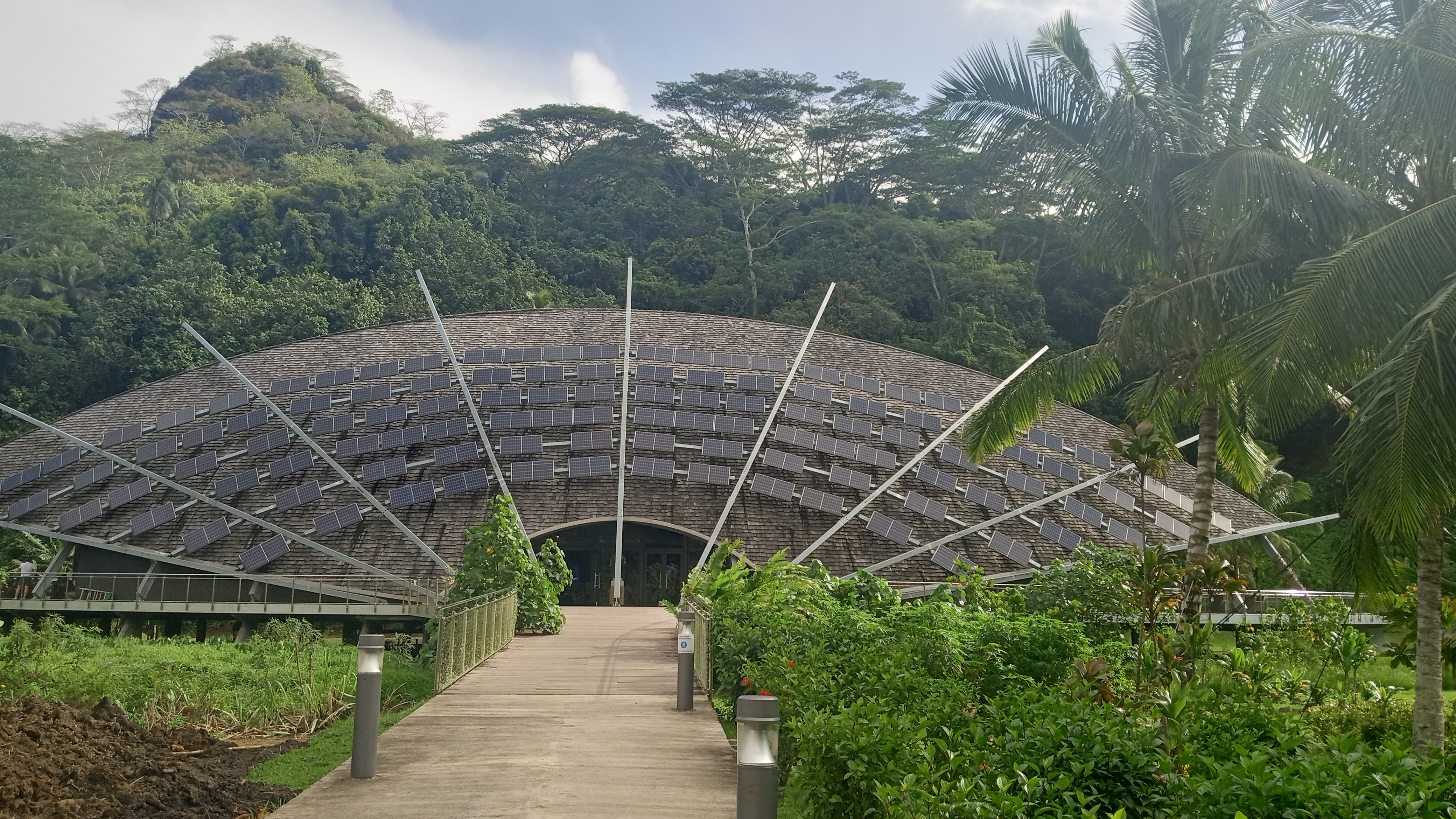
And so we continued south, slowly and somewhat violently.  We had warned our router that we were not a fast boat – I don’t think he understood how not fast we were until he was watching our very slow progress.   There were days that we were barely making 60 miles a day – given the 3000 miles that we had to cover, this felt a little painfully slow! 

Sunsets are lovely

And then came the morning when I was just getting to bed for my final sleep shift and Owen called for me to get on deck “NOW!”.   I rushed up on deck only to find our Hydrovane waving around wildly on the back of the boat.   For those who do not know, our Hydrovane is a self-steering vane that attaches to the stern of our boat by two brackets – it has a vane that catches the wind to determine which direction to go, and its own rudder that steers the boat based on feedback from the vane.   It is our invaluable third crew member – steering the boat while we daydream, or get lunch, or go to the washroom or read – as long as we are keeping an eye out for other boats or obstacles, we don’t need to drive – our Hydrovane does it for us.   Now, our hydrovane was apparently as frustrated with the conditions as were and was trying to jump ship!!!   The nuts for the bottom bracket had backed out allowing the entire bracket to pull away from the boat.   The top bracket has a tube of stainless steel inserted into it that acts as a “stand off”, keeping the hydrovane straight even though our stern is not.   The entire unit was basically twisting around on this tube.   This was an “us” issue, not a hydrovane issue – Owen used lock washers and apparently they just backed themselves off the bolts. After about three hours, we managed to wrangle the unit into a steady upright position by tying spinnaker sheets around the head unit and taking those back to winches.   Owen was able to push the bolts back into their holes using a dinghy paddle and then he had to climb under our bed to get new nuts on them.   Unfortunately, in all of the chaos we lost a shaper block – a piece of starboard that had been used to stand the bracket off the stern.   Once he got the bolts back in, we needed to drop the rudder and get it on board which we finally did.   After three hours we had saved the unit, but we were going to be hand steering until we could fashion a new shaper block and until we had conditions that would allow us to get it and the rudder reinstalled.  

At this time, we were approaching the dreaded ITCZ – the intertropical convergence zone – the point north of the equator where the northern and southern weather systems clash, leading to wild, squally weather.   I had already been dreading this area, but now, knowing we would be hand steering through it, I was terrified.   I actually insisted at that point that we should turn the boat north and plot a course back to Canada – that is how much I did not want to hand steer through the ITCZ!!!  

For the next several days we hand steered in three hour shifts at night and two hour shifts during the day – by the end of day one my shoulder was aching from driving from the side.   The conditions had not mellowed and keeping the boat heading in some sort of steady position in those conditions was a workout!!  And then they started – the squalls.   The first one hit me on a night shift – the wind suddenly picked up for a few minutes and then it rained – and rained – and rained!!   For about half an hour it absolutely poured – and then, as fast as it started, the rain stopped – as did the wind.   I bobbed around for about fifteen minutes until slowly the wind returned to the speed it had been before the squall and we were off again.   Owen had a similar squall on his next shift and we were very smugly thinking we had these things figured out.   Little did we know.   A couple of days into the ITCZ, when we were fully exhausted from hand steering, we hit our biggest squall.  Owen was just handing the boat over to me for my shift when the wind increased from the steady 12-15 it had been all night to 28 knots – all within about 4 minutes.   Within minutes we were being rounded up constantly and I could no longer handle the wheel alone.  Owen came back on deck to help with the steering and it was about then the rain started.   Rain in volumes that made me wonder if you could drown while sitting in the cockpit, rain that was driving in so hard it literally stripped the paint from one side of our mast.   We turned on the radar and could see the system was huge.   We kept trying to drive around the bottom of it – hoping it would continue on above us but it just kept forming and reforming around us.   For over two hours we struggled through giant seas, driving rain and 28 – 34 knot winds.   We were both exhausted and not a little terrified.    When it was finally over, and the sky started to clear, I still had to hand steer for another three hours – I was just about losing my mind at this point!!!

We were making very big plans for once we got out of the ITCZ – where once the doldrums were a dreaded turn of phrase, we were hoping for some flat calm conditions.   Our plan was that once we did get into those flat calm conditions, we would inflate my paddle board and then we could use that to easier access the lower bracket and to reinstall the rudder.   The squalls continued, but the doldrums did not arrive.   Finally, our router advised that we had cleared the worst of the weather and were unlikely to see any further big squalls.     The seas were still huge but the wind had died down substantially.   We had been hand steering for about 4 and a half days at this point and the novelty had quickly worn off!!!  Owen decided we had to figure out a way to get everything reinstalled while the winds were at least calm.   Launching the paddle board was not an option – the seas were too big.   Instead, Owen put on his tether and leaned way out over the back of the boat, with me holding onto his legs.   Luckily, we had some wood on board that he was able to fashion into a shaper block and with some monumental gymnastics on his part, he was able to get one bolt out, move the shaper block in, push the bolt back in, go below to put a nut on it and then repeat with the second side.   We then attached a wrench to a stick so I could lean out over the back and hold the bolts firm while he tightened the nuts from below.  A couple of hours later we finally had the bracket soundly reinstalled.   Now it was time for the rudder.    The rudder needs to be pushed into the water and then lifted up onto the shaft where it is secured by a pin.   That pin is then secured by an additional cotter-pin to be sure it does not slide out.    We finally decided the best course of action to achieve this was to hang our boarding ladder off the back rail – this put the ladder further out of the water than it usually is but gave Owen access down the stern.   He put his climbing harness on and we attached him to the outboard lifting pulley.   He climbed down to the bottom rung, kneeled on it and managed to reach down to get the rudder pushed onto the shaft – easy peasy!!   Now of course he needed to get the pin in – he tried to do it one-handed but realized he would need both hands – as soon as he let go of the ladder he Peter Panned out the side of the boat – hanging from his harness.   He got back onto the ladder and climbed up for a rethink.    I sat on the back holding onto the rope that was attached to the rudder, being sure it did not slip back off the shaft.    We finally decided to add a second line that I would pull around to mid-ships to keep him from flying off to the side of the boat.    He headed back down and after a few dunks in the 30 degree ocean water he finally had the pin and the cotter pin in place.    We attached the vane, set the course and just like that we were no longer hand steering!!   It was such a relief to be able to sit back and let it do its job!!    We were of course on high alert for the next several days – double and triple checking all the bolts were secure multiple times a day!!!

Just the next night, as I was happily playing solitaire on my phone instead of hand-steering through my first night shift I suddenly got whacked in the face – hard and out of nowhere!!   I had no idea what had happened until I felt and heard the fish flopping around in my lap.   I screamed – loudly – and flew to the opposite corner of the cockpit.   When Owen rushed on deck – probably figuring our mast was coming down or the hydrovane was coming off again, he found me crouched in the corner, clutching my face and saying repeatedly “flying fish in the face, flying fish in the face”!   Sure enough, when Owen got out a flashlight and panned it around, there was a flying fish still flopping around where I had been sitting moments ago.  Owen dispatched it back to the sea and, after a good laugh at my expense, went back to sleep.  I went below the scrape the skin right off of my face!!! 

This is not the culprit that smacked me in the face – this one somehow managed to wedge itself right into our Hydrovane – ignore the tape on the vane!

One of the other problems that had been plaguing us since the ITCZ had been a plugged holding tank vent.  Because the vent was plugged, every time we flushed the head, the gases would vent into our cabin through a not quite sealed inspection vent – the boat stank and I spent an inordinate amount of time gagging over the smell.    Very often, when it is plugged it means that water has gotten in the vent – it is near the waterline at the stern so it is not unlikely for it to happen.    The solution is to put the vacuum cleaner into “blow” mode and to put it in the pump out fitting on deck – this pushes the water out and everything is back to normal.   If it is “something else” plugging the vent however, the air from the vacuum will create a back-pressure situation.   We figured it was just water – we had, after all, just come out of some gnarly seas.   So, I went out to the stern of the boat so that I could watch to be sure the water was clearing and Owen put the vacuum into the fitting.   No water came out – we should have stopped there.    But no, of course we did not.   Instead, Owen turned the vacuum back on and sure enough the pressure built up until a geyser of pooh-water came fountaining out of the fitting – Owen jumped back out of the way but the wind kindly took the entire geyser and sent it flying to the back of the boat – covering the deck, some cushions and me.   And then, just for good measure, it happened a second time.   I couldn’t safely maneuver back to the cockpit as the deck was covered in gross slime and I couldn’t just jump over board as we were underway in pretty big seas, so I had to stand there while Owen bucket washed between him and me, finally allowing me to dive into the shower, with my clothes still on! 

Were we having fun at this point?   I think I was actually questioning all of my life decisions that led to us being out in the middle of the Pacific Ocean – we were certainly not having the downwind sleigh ride that everyone had promised us.   More often than not the wind was forward of our beam and we were hard on our ear.   Trying to do anything down below was difficult and we had a few cheese and cracker or granola bars meals.   We did manage a few really good meals – I finally got smart enough to get whatever I could get prepped during the early afternoon when the winds were inevitably a little calmer, so that I didn’t have to be below for longer than necessary when the winds picked up (always just as I was starting to cook dinner!). We did of course have some amazing sunsets and sunrises and the stars at night were amazing.  It was such a surreal experience to realize that I was using the Southern Cross to drive by.    We saw quite a few dolphins, a tuna jumping out of the water (chasing something? Being chased?) and the flying fish were everywhere.   We didn’t see any whales after we left Mexico (though after our friends collided with a mama whale and her calf (thankfully not causing major damage to either the boat or the whales!), I stopped hoping to see them!).  I had hoped to encounter some sea turtles but sadly didn’t see any of them either.   

On May 10 we finally crossed the equator – we did our little ceremony, asking Neptune for permission to cross and offering him some rum.  We are pollywogs no more – we can now call ourselves Shellbacks! The conditions the day before had been sufficiently calm that I was able to bake some cupcakes so we celebrated our success with chocolate cupcakes and then started to count down to our arrival in the Marquesas. We had a few nice, settled days of almost downwind sailing and then again were sailing hard on the wind.   We were thankfully making pretty good mileage, averaging a little over a 100 miles a day at this point. 

Finally across the equators – we are Shellbacks!

About 400 miles from the Marquesas – the sunsets were stunning!

On May 19, 35 days and 1 hour after leaving La Cruz, we finally dropped our anchor at Atuona on the Island of Hiva Oa.   We had made it and wow was it a place to be.   It was so lush and smelled so good!  Unfortunately, it was also a very rolly anchorage – the inner harbour was full so we bobbed and rolled around outside.    We arrived on the Sunday of a long weekend and we were unable to check in until Tuesday.   I am not sure I was entirely upset about that – it gave us the time to get some rest and get some stuff cleaned up before we tackled reinflating the dinghy on the rolly deck.  We were able to enjoy pizza on the boat and (try to) sleep for 7 uninterrupted hours – in our own bed!   On the Tuesday we were up early and walked the nearly two miles into town – with a steep hill thrown in for good measure.   After having not walked on land for 37 days, I am sure we looked drunk, staggering a little as the ground failed to come up to meet us as we walked!!   The check in procedure was short and sweet and soon we were exploring the little town – we found the “bakery” – which was actually a counter at a small grocery store – but it had cold drinks and pain du chocolate so we were happy!  By the time we got back to the boat we had covered nearly 10km on feet that had not been on ground in over a month – we were exhausted!

The Atuona anchorage is not very comfortable – but it sure is pretty!

We had realized part way across that our batteries would need to be replaced and we tried to find somewhere to do that in Atoana but they will have to be ordered from Tahiti and shipped in and that is a work in progress.   Finally, after four rolly nights in the anchorage where I had barely been able to get any sleep for fear of falling out of bed, we got one load of fuel, a few groceries and decamped to Tahuata, the island immediately to the south of Hiva Oa.   What a difference!  We dropped anchor in crystal clear water and gently bobbed around in this gorgeous anchorage.   I spent the first day doing bucket loads of laundry and popping in and out of the warm, clear, calm water.   I spent more time in the water on this first day than I had in the entire last season in Mexico.    This – this is why we crossed an ocean!!! 

And so, as I hoped, I can tell you we did it.   We made it from Mexico to the Marquesas, with some drama and less than ideal sailing conditions – but we made it.   We are here and now we can start to explore!!

Adios Mexico – We Will Miss You!

As time passed and we realized how late in the season it was getting, we started to get a bit antsy.   In reality, the weather windows were opening late this year and we just had not been ready for the first one (and as it turned out, that first one was a bit of a bust with a fair bit of light air).   The second window was opening and we were eyeballing it to decide if we were ready – we were not, but it was a good push to get ready for the next one!!

We finally headed out for the big provisioning trips.   We decided to start with Costco, not something we were really excited about!   We were able to make the day much better when we started with lunch with my Aunt and her partner, who had been staying in Puerto Vallarta for a few months.   After that wonderful lunch and visit, we headed off to Costco – Owen was adamant that we would not exceed one cart – he forgets how good I am at Tetris!!!    We slowly made our way through the aisles, adding all the essentials to our cart – trying to reasonably decide how much we needed and what items would be hard to get as we moved along.   When we finally approached the till, our one cart was overflowing – by the time the Costco employee had gotten through with it, we had two carts  – apparently she did subscribe to my Tetris philosophy!!    We called an uber and after stuffing her trunk with bags and boxes, we were off to La Cruz – arriving back at the dock after dark and quickly realizing that we were not going to be able to get everything back to the boat in one load!!  Instead, we loaded everything down to the dinghy dock, loaded the dinghy with all the items that would be easy for Owen to toss up onto the deck himself, and he headed off to the boat.   I perched myself on the case of milk, and awaited his return.   Once we got back to the boat I realized that I now had to do something with 2 dinghy loads of items!   My first plan was to put all perishables in the fridge and leave everything for morning.   Unfortunately, I quickly realized that the giant bags of cheese were not going to fit in the fridge in their current state and had to spend an hour separating them and vacuum sealing portions.   The next day saw me portioning out bacon and canning hamburger.   Slowly, I managed to stash most everything that we had brought back with us into nooks and crannies all over the boat – the amount of packaging garbage that I got rid of is somewhat astonishing!!  

And so, feeling rather proud of myself for getting that load packed away, I decided that we had better head off on the next round.   We headed off to Soriana for what I thought wouldn’t be a terribly huge shop – I knew I wanted to stock up on a bunch of canned items but somehow ignored the size of the list still to be bought – we again left the store with two carts!!!   This one was a bit more compact and we were actually able to get everything back to the dinghy in one load – with several items on my lap!   And as it goes, I again had to figure out how to stash everything away.   I had a couple of collapsible crates already and bought a third, larger, one at Costco.  I also had a couple of soft sided baskets.   My plan was to load all of the “overstock” into these crates and baskets and to line them up along the back end of the v-berth.   The paper towels, toilet paper, etc. could be stacked further forward.   After another day of hard work I had everything packed away in a fairly organized fashion.    I then realized that I actually needed to get several items out of the abyss – the storage that is under the v-berth – and of course at that time, under all of my organized provisioning!!!  Ugggh. 

We had been pondering whether to go to a dock for a couple of days and finally decided that, with the relentless rolling in the anchorage, we would need to be at a dock in order to send Owen up the mast to do a rig check.   We finally headed into the marina on a Sunday morning and jumped right into the jobs that needed doing,   I spent the day scrubbing Solstice Tide from bow to stern, getting layers of salt and grime off of her.    Owen spent the day futzing with projects below deck.   Once the sun had started to set, I hauled Owen up the mast – he checked all the rigging fittings, changed out the lashings for the spreader boots and cleaned and greased the VHF antennae connection.  

In an example of our excellent planning, rather than spend the Monday getting more jobs done, we realized that we needed to head to Puerto Vallarta – we had to get pieces of acrylic plexiglass cut to replace our salon windows.   Owen had reached out to the only contact we had been able to obtain a couple of weeks previously, only to be told he was on holiday until this Monday.  And so, fairly early Monday morning we jumped on the bus headed to PV – we intended to get the windows and then stop in Nueva Vallarta on our way back to La Cruz in order to begin the check out process and then continue on with our job list.   Instead, as we were nearing PV, Owen got a message from the window guy to indicate that he would not be at his shop until 3pm!!   Well drat!   By this time, we were rolling into PV so we got off the bus, grabbed a coffee and decided to do the day in reverse.  Our first challenge was getting out PV – it only occurred to us at that point that we had only taken the bus to PV – never from it – we had no idea how to get on a bus going north- they just kept flying by us in the other lane.   Finally, too frustrated by the day already, I ordered an Uber.     When Owen had asked one of the local bus drivers about heading to Nueva he had said that we had to get to Walmart and get a bus from there – as the Uber headed around the corner from where we were picked up, we spotted the Walmart – and the bus exchange!  Oh well – we know for next time.  

We took the Uber to the Port Captain – thankful to have done so when we realized they actually closed at 2pm – we may not actually have made it if we had waited on the windows!   It was April 8 – the day of the eclipse and, though PV was only a partial eclipse, it was still causing some excitement.   We strolled up to the Port Captains’ office only to find a good chunk of their staff standing on the steps watching the eclipse through welding lenses.   Not wanting to rush them back in, we hung back to wait.   They quickly offered up one of the lenses so that we could also watch some of the eclipse – the eclipse was a bit anticlimactic, but the friendliness of the staff made our day!!   We did finally go in and start the process to check out of Mexico – the initial paperwork was done and we were given an appointment for Thursday morning to bring the boat down to the marina and to finish the immigration side of the check out.

The palm fronds made cool half moon shapes in the light from the eclipse.

Finished there, we grabbed a bus back to Puerto Vallarta.   We were still early and conveniently the window place was near to the malacon so we did the requisite tourist thing, walking the length of the malacon and then enjoying pina coladas at a wonderful Mexican restaurant overlooking the ocean.   We made it to the window place a few minutes before him and about an hour and a half later were on bus headed to the Walmart.   We ran in to Walmart to grab a few things and then headed back to PV.

Tuesday was spent doing more jobs and Owen decided to add another night at the dock so that we could finish a few more projects.  We went for dinner Tuesday night at a local “club” with our friends on Cosmic Debris.   We had really only planned on dinner but the band was wonderful and we ended up staying until the band shut down!!   Wednesday night we had a visit from Tera and Gentry on Freia.   We were sitting in the cockpit when Tera decided to get off on the dock for a smoke – in the dark – I hadn’t even thought of our black folding dock cart that Owen had not yet put away – Tera took a step back, fell over the cart and soon both of them were in the water!!!!    We fished her out and tried to fish around for the cart with no luck at that point.   The next morning Owen grabbed our dinghy grapple anchor and tried to fish around for the cart – I did not have much hope and busied myself disconnecting power, putting away hoses and generally getting ourselves ready to leave the dock.  Suddenly Owen was calling for me and I looked over to see him bringing up the cart, with the anchor wrapped around one of the wheels – what a miracle!!!!   I hosed the cart off, evicting a few small crabs that had already moved in, and we were soon underway and headed for Nueva Vallarta to do our final check out.   The check out was quick and we were soon on our way back to La Cruz to wait for the weather window.   

One of the items that was still to be done was lee cloths – we had made it all the way from Canada without them – and only fell out of the salon beds a couple of times, but we figured we should probably have lee cloths for this long voyage.   We picked up some meshy cotton and I set to work forming panels to make the lee cloths.   I had decided that I needed them to be attached in a manner that would be easy for me to undo while all tucked in behind them – the idea of having them lace up to the ceiling or something like that would not work for me – being crazy claustrophobic, the idea of being “trapped” did not work for me.    I made them so that they would clip at each end, making it easy to get out.   I put grommets along the bottom to allow it to be laced down and the end result is actually pretty effective!  We also needed to install those windows that we had bought – Owen got to work pulling out the old windows and fixing the rust that had formed.   I applied a first coat of epoxy primer that day, putting on a second the next morning.   The windows were finally reinstalled Saturday.  We also did one final Walmart trip on Saturday, stocking up on some fresh items and grabbing even more toilet paper (you really cannot have too much!)

ignore the mess – windows were in progress too!

We had decided that we wanted to get away Sunday morning – as would be expected from us, on Sunday morning we could not have been less ready to head out!!!   We frantically worked at getting more jobs done, stowing everything that we could and trying to clean up the mess caused by the frantic last days of work.   We watched as several boats pulled up anchor and headed out.  We headed into the marina to get fuel and to get rid of final bags of garbage.   We headed back to the anchorage, lifted our dinghy up and deflated and stowed it.   Finally, about 5:30, we realized that we had to leave then or we were not going to be able to leave!    We put up the mainsail, and slowly motor sailed past Freia, Cosmic Debris and Spy – shouting quick goodbyes to friends that were going to be so missed!!   Tera took some great pictures as we headed out, marking our departure from cruising Mexico.    We slowly, slowly sailed out of Banderas Bay, headed first for the Revillagigedo Islands, an island chain starting about 300 miles west of the tip of Cabo and spreading out over about 200 miles.

We had a slow first few days of sailing – we were sailing into headwinds, waves and current and it felt like we were pulling a trailer behind us.     Those days were challenging in every regard – our tummies were doing backflips, the motion was relentless – my bruises have bruises, and on the first full day out I decided to take advantage of the light winds and a period of relatively calm conditions and prepare the fixings for a frittata – I was frying up the bacon and the grease in the pan just exploded – my hand was deep fried, there was bacon grease all over the stove top, down the front of the cupboard, on the floor and even down the hall to our berth – it was not a promising start!!!   

One of our first mornings I came on deck and was informed we had some stowaways – an entire flock of brown footed boobies had taken up residence on our bow pulpit – at one point there were 10 of them – we let them hitch a ride for about 24 hours and then – seeing the state of poop on our deck, we decided they should go!!   We now find ourselves having to scare them off as they look to come in for a landing – a few of them snuck onto the rear solar panel our last night – and were not so easy to scare off – the mess is just not worth the entertainment!

We finally started to get into a bit more steady pressure and were happily settling into a routine and enjoying the higher speeds when our weather router sent a message that the wind was going to die out completely in a few days and he strongly recommended that we stop at the last of the islands, Clarion.   I was really quite upset by this idea – I absolutely did not want to get out of our routine – we were finally settled into our sleep schedules and the sailing was so good!!!    We also did not want to bob around in no wind, rolling in the swell if we could avoid it, so we grudgingly agreed we should stop.  

Of course, the boat had other ideas – that entire last day she screamed along (at a whole 5-6 knots, but for Solstice, that is screaming along!) and we knew we were going to get to the Island too early.   We were leery to slow down too early – but also didn’t want to arrive at Clarion before sun up.   Finally, at 9pm, we only had about 25 miles to go and we were doing 5.5 – 6 knots – we had to slow down!!    We furled most of the headsail and slacked the main – we were still going too fast but managed to slow down to about 3.5.   We finally ended up nearly heaving too – as the head and mainsails weren’t balanced we did not completely stop but were able to keep speeds under 2 knots – until about 3am, when the winds starting building and even in that configuration we were still doing 3 – 3.5 knots.   Our last three hours had us basically drifting around about 3 miles off shore until the sun came up and we were able to call for permission to anchor.

We slowly entered the bay, not trusting the charts as depths were not lining up and, even though we were in deeper water than we wanted to be, we dropped the hook just behind a huge surf break.   We were finally able to take a breath, and take a look around – what a stunning spot!!!   The water in a shade of blue that I cannot describe – it is absolutely heavenly.   There is a constant surf breaking on shore and once I got over the fear of being so close to the break, the sound is amazing.   The swells come in long and big, we can hardly feel them – until we get one where the surf drops out suddenly and it feels like our tummies are in an elevator – Owen watched one coming and decided to keep and eye on the depth sounder – we went up 7 feet as it passed under us!! 

Clarion Island is a Navy base, and we were visited shortly after we arrived by six of the guys posted here – if we didn’t know it was a Navy base, I would have thought they were local fishermen – they were all in board shorts and rash guards.  They came by to confirm we were welcome and then headed off.   Later that day, a few of them came back – this time they were in uniform and two members boarded our boat – one stood on the rail while the other sat on the edge of the cockpit and filled out some paperwork.   They were so nice and respectful of the boat.     The paperwork was done quickly and they were off again.    I had been a bit nervous about the stop here – worried that perhaps we would get some power tripping Navy guy who wanted to make our lives difficult, but everyone here is so spectacularly friendly it just added to the magic of the place!!

We spent Sunday and Monday getting some more jobs done – multiple loads of bucket laundry, filed our income taxes (nothing like leaving it to the last minute!), set up the preventer system that Owen has been planning.   We had a pizza night and I was able to dig some stuff out of the “overstock” to save myself from having to crawl around while the boat is moving.

Our plan now is to leave tomorrow mid-afternoon and start to slowly make our way to the magic 10 – 120 position, where we will finally be able to start dropping south.   The wind is to fill as the day goes on and into Wednesday so hopefully, we will back in good steady trades by end of day Wednesday!    We will likely start with a couple of buddy boats as they are also anchored here right now waiting for the same window – though who knows how long we will be able to keep up with them!!

It has been a hectic few weeks and we still likely have more than 3 weeks until we make it to the South Pacific but we are excited about seeing new places and experiencing new cultures.   My Aunt asked why we wanted to do this – we really couldn’t come up with any better answer than “to say we have”.   And so, I look forward to letting you know that we have!!!