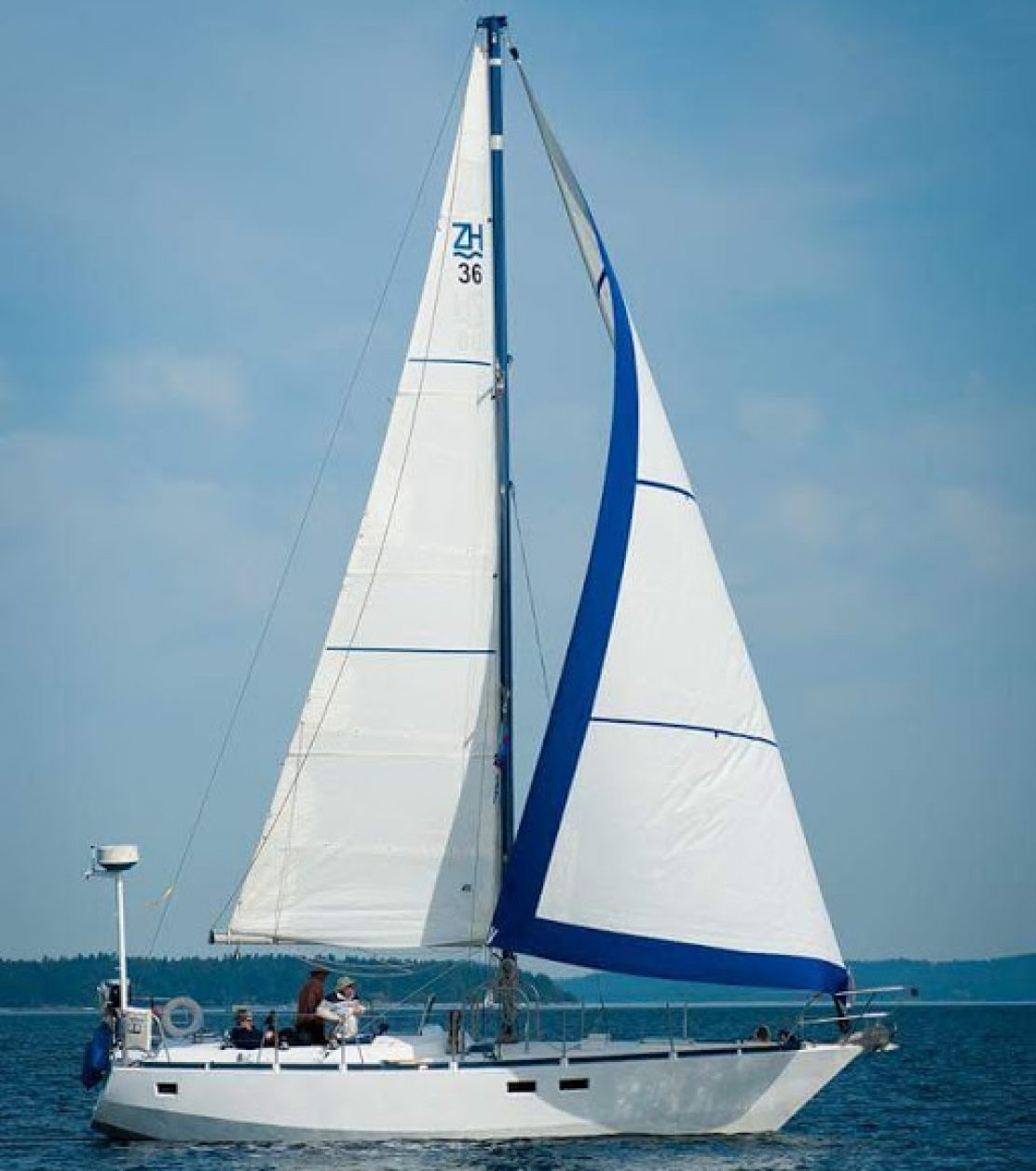

When we left Raiatea, our weather forecast called for a possible wind hole a few days out – we were prepared to drift our way through. We had set our sites for Samoa, knowing that it might be possible to stop at Suwarrow if the weather disintegrated. We were having a good trip, running downwind and making good time though conditions were a tad rolly. We woke up on day two and, after an hour or two were finally able to get Starlink to connect and give us a weather forecast. The news was not good – the wind hole that we had been anticipating seemed to have been filled in by a nasty system moving up from the South. We were likely heading into 40 knot winds and 8 meter seas – not something that we even wanted to consider!
In looking at the charts, we realized that we were almost due north of the last of the French Polynesian Islands, Maupihaa – a very small atoll in the middle of the Pacific. We altered course for the 70 mile trip down to Maupihaa. We were a bit nervous with this plan – if we didn’t make it to Maupihaa before the wind filled it would be nearly impossible to get in through the very narrow, shallow pass. In that case, we would be hundreds of miles from the nearest safe harbour and would likely just have to batten down and suffer through the system. As it was, we arrived mid-afternoon and in good weather – we lined up the pass on the chart and started to approach – it was so hard to see where we were to go in – it seemed that waves were crashing directly across the pass. We were slowly approaching where the pass should be when I noticed something in the water – at first, I thought it was a small fishing boat – then suddenly, it became apparent that it was a whale – just drifting around near the entrance. We had seen a humpy breaching just a few minutes earlier but this one, and as it turned out, a smaller one, were just swimming around, enjoying the choppy conditions. They both dove and we thought they were going to head right across the front of the pass – so we did a quick turn around and then slowed right down – waiting for them to surface to confirm that we weren’t going to run into them as we made our way to the pass. We waited a few minutes with no sign of them and finally had to just hope they weren’t lingering in our path. We were looking at each other saying that we didn’t even want to try entering this pass – but the alternative, riding out the storm outside, was even worse. We finally noted that we had to enter on a bit of an angle and, taking a deep breath, we picked up our skirts and headed in through the pass. The pass felt insanely narrow (I actually wondered how catamarans were actually making it in!) and so shallow! We finally made it through the pass, making a sharp turn just as we entered to avoid a bommie and them slowly followed the path through the bommies, that was thankfully well charted on Navionics, to make our way to the North anchorage. We knew we would likely want to be in the South anchorage to reduce fetch but there were several other boats in the north and daylight was slowly ebbing so we dropped the hook for the night. We had a brief visit from one of the other boats, confirming that everyone was going to be moving the next morning.
We spent the last of daylight sitting out in the cockpit in awe of the paradise that we had arrived at – green water, white sand and palm trees. There were a couple of houses on shore at the north end but it was too late in the day to go explore. We would learn from other cruisers that the residents of the north end were wonderfully welcoming and had hosted a pot luck on their beach, building a bonfire and providing Coconut crabs and rice as part of the feast.
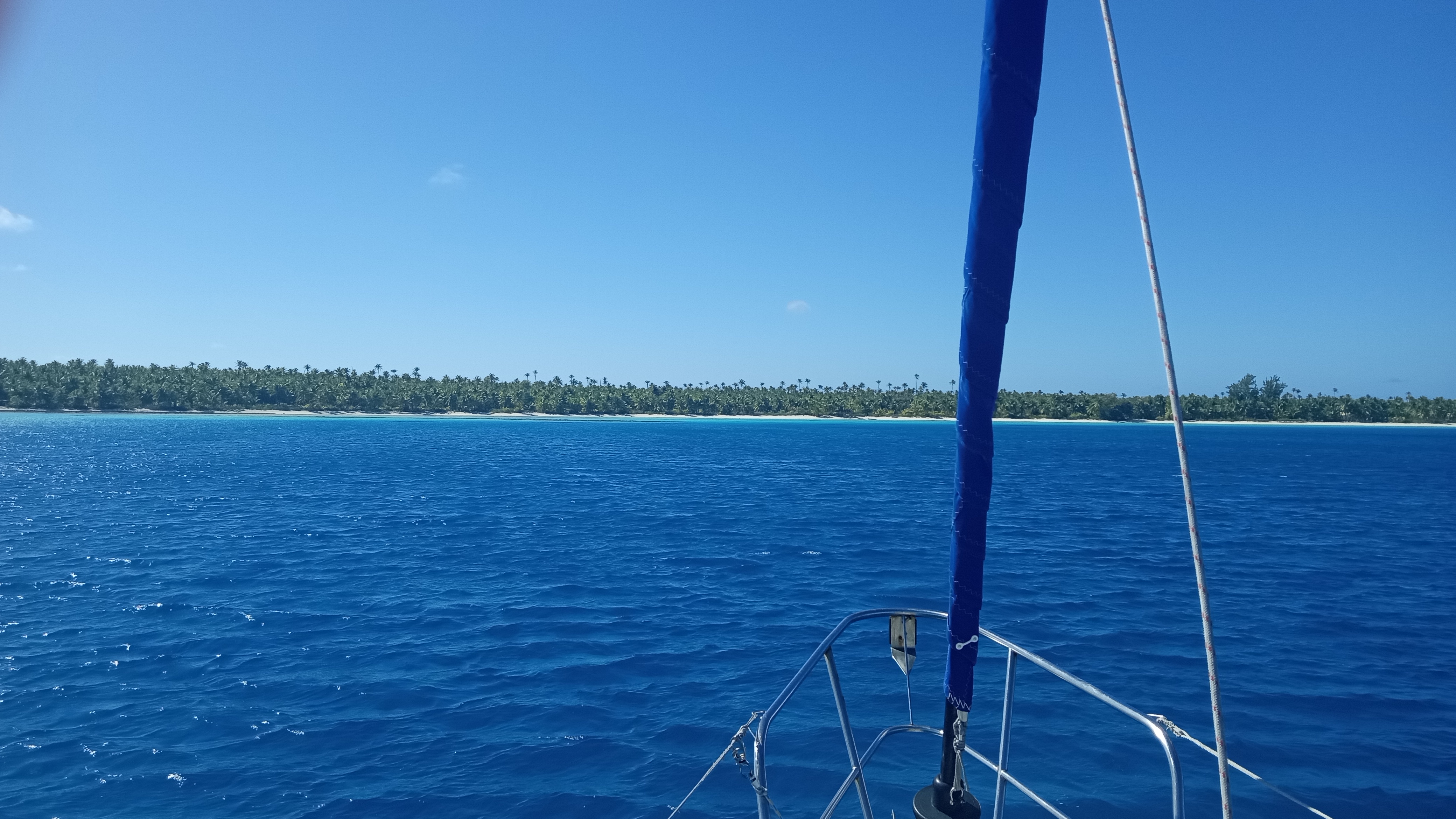
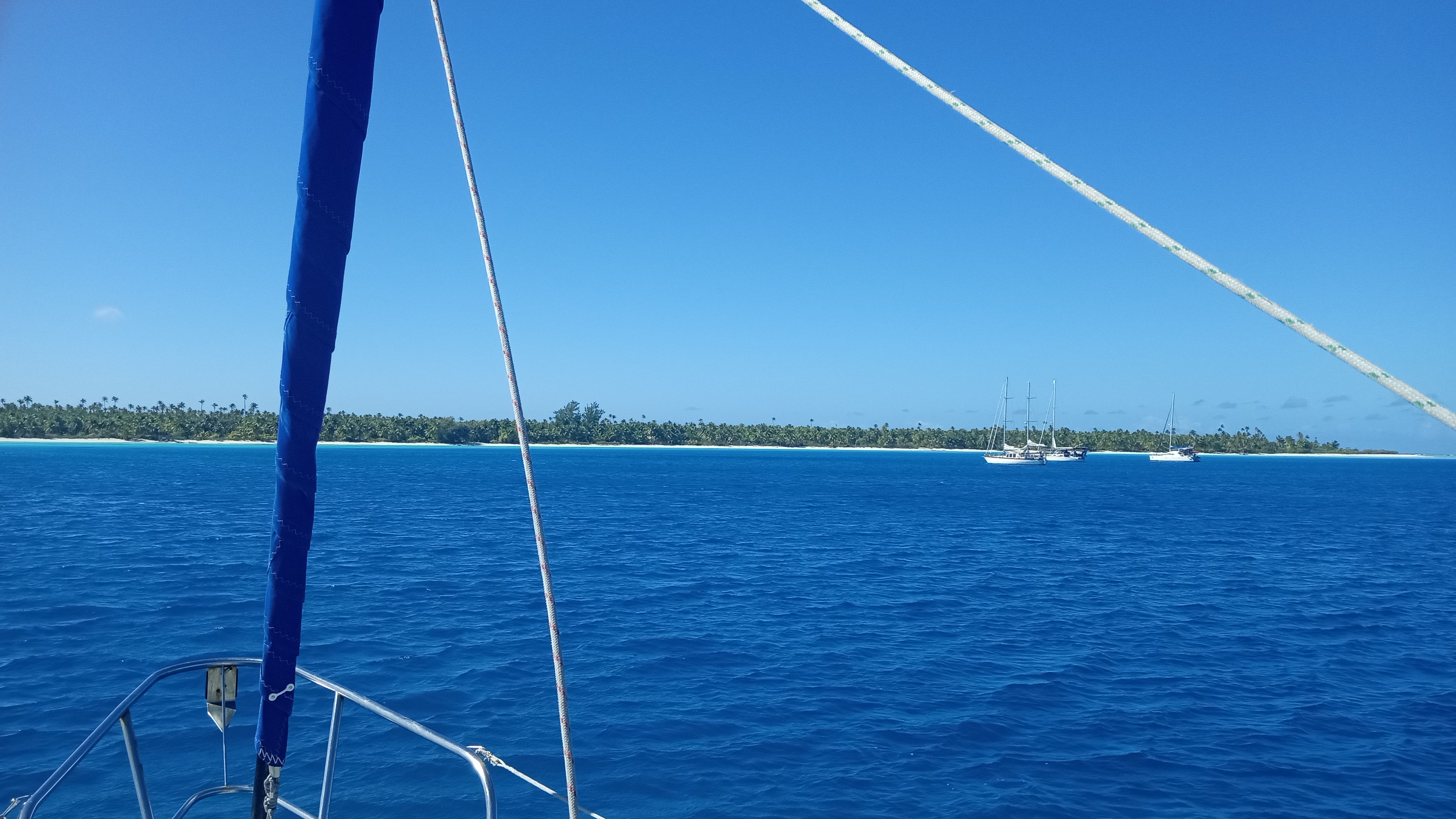
We were up early the next day, with the wind already howling up the reef. We pulled anchor and joined the other boats to move to the South anchorage. It was a long slog moving slowly against wind and waves but we finally joined the other boats and again sat back to admire the beauty that is Maupihaa. The atoll is populated by about 9 members of one family – many of whom have not been off the island in years. Almost as soon as we had dropped the hook, one of the other boats dinghied over to let us know that there would be a potluck on the beach the next night, near the home of one of the locals.
Of course, the anticipated weather system started to roll over and it was soon rainy and grey. We wondered if the potluck would still be a go but soon saw other boats headed into shore so we loaded up our offerings and headed in to join them. There were seven other boats in the anchorage and we soon dubbed ourselves the “Trapped in Paradise” group. When we got to the beach, we discovered that, because of the rain, Hina – one of the locals – had invited us into her home. Everyone poured into her house, bringing in benches from outside and being sure to not fall through the floor!!! It was in a bit of disrepair but with the warmth of the gathered group, it was a wonderful gathering place. We all shared in dinner and then the instruments came out – a full-fledged sing along followed.
The next day, a call went out on the Whatsapp group that a few of the boaters were going to go in and see what they could do about reinforcing some of the weak points in the floor – they were looking for long screws to assist in the mission. There was also a message that there would be another dinner on shore that night, to cook up the coconut crab that had been caught by a few of the cruisers under the direction of Hina the night we arrived. We unfortunately didn’t have the screws to help with the floor and decided to have a night on board instead of going in for crab. The next few days passed with us constantly checking weather and discussing the options with the other boats. On one of our last days, we headed in to go for a walk, landing at the same time as one of the other crews, so we all headed along the path towards the north end of the island. There were a few signs that there was probably more of a population on the island at some time – some abandoned buildings and vehicles. Apparently, there had previously been a pearl farm and a copra farm but we don’t know if either were operational any longer. We were nearing our turn around point when we met one of the other Island residents. Pierre had not been off the Island in nearly a decade. He was happy to walk along with us, showing us the traps he was setting for the coconut crabs. He also showed us a number of the local plants and explained their medicinal qualities – I guess when you are on a remote Island with no medical care you learn to make use of what is available to you. Pierre let us know that all of the information that he was passing onto us had been given to him by his grandmother. It was such a wonderful experience to chat with Pierre and learn from him!
The weather windows finally started to open up – a few of the bigger faster boats left first, followed by a couple of the monohulls and then finally, we made our way out, again weaving our way out of the pass. We were so delighted to realize that Maupihaa had in fact been our favorite stop in all of French Polynesia – we would have missed it if not for the change in forecast!
Our plan now was to following a nearly directly west path – leaving Atutaki and Nuie to the south and Suwarrow to the North. This would give us some plausible stop in points if the weather changed.
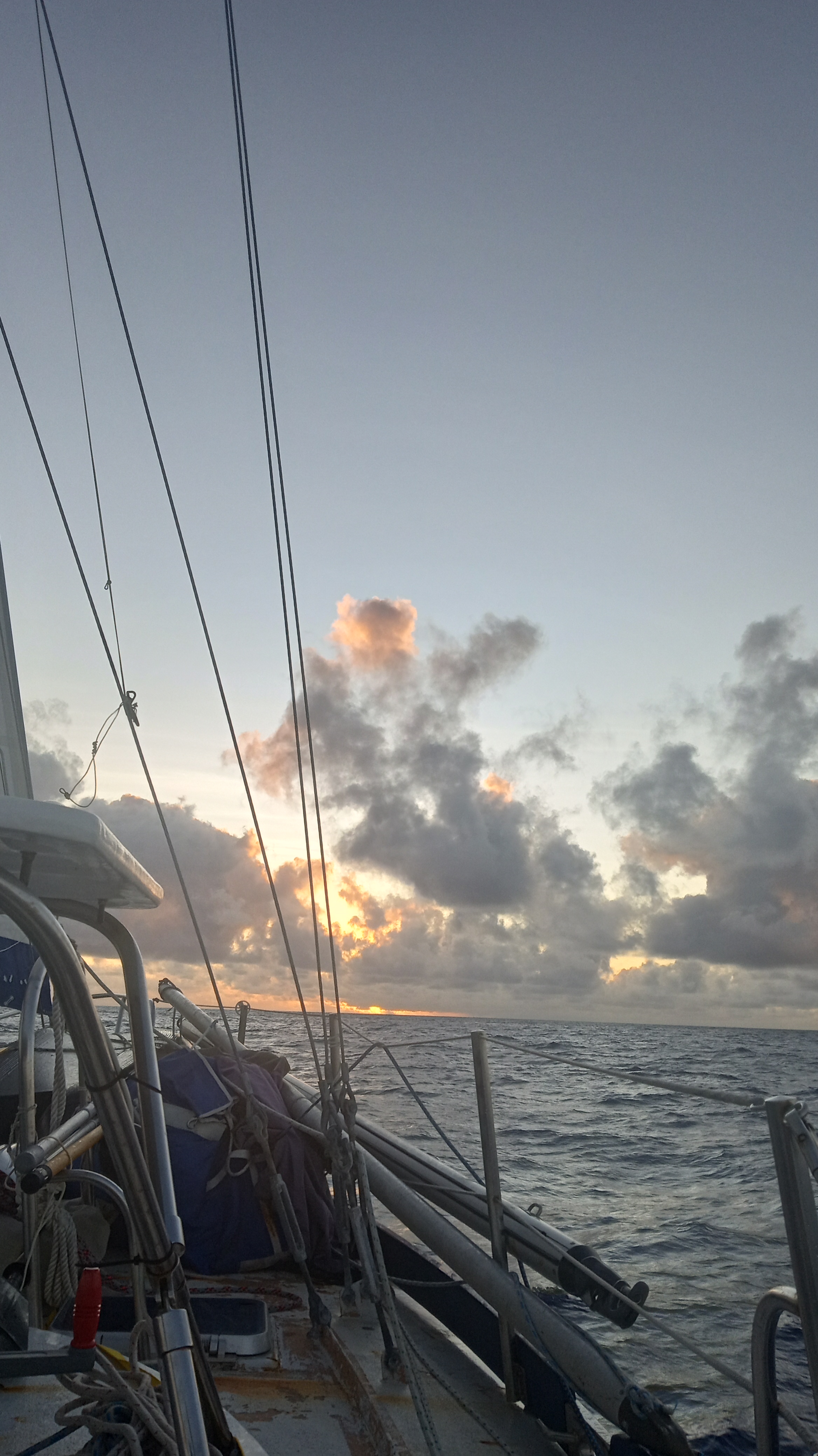
As it turned out we had a nearly idyllic passage from Maupihaa to Tonga. We were running nearly downwind, making over 100 miles a day. Our 10th day out was finally a bit slower, with the winds dying down and then our last day, the twelfth at sea we woke up to the wind having turned on our noses – it was a bit of an upwind slog the last 30 or 40 miles before we finally turned into the lee of the Vava’a group of Islands in Tonga.
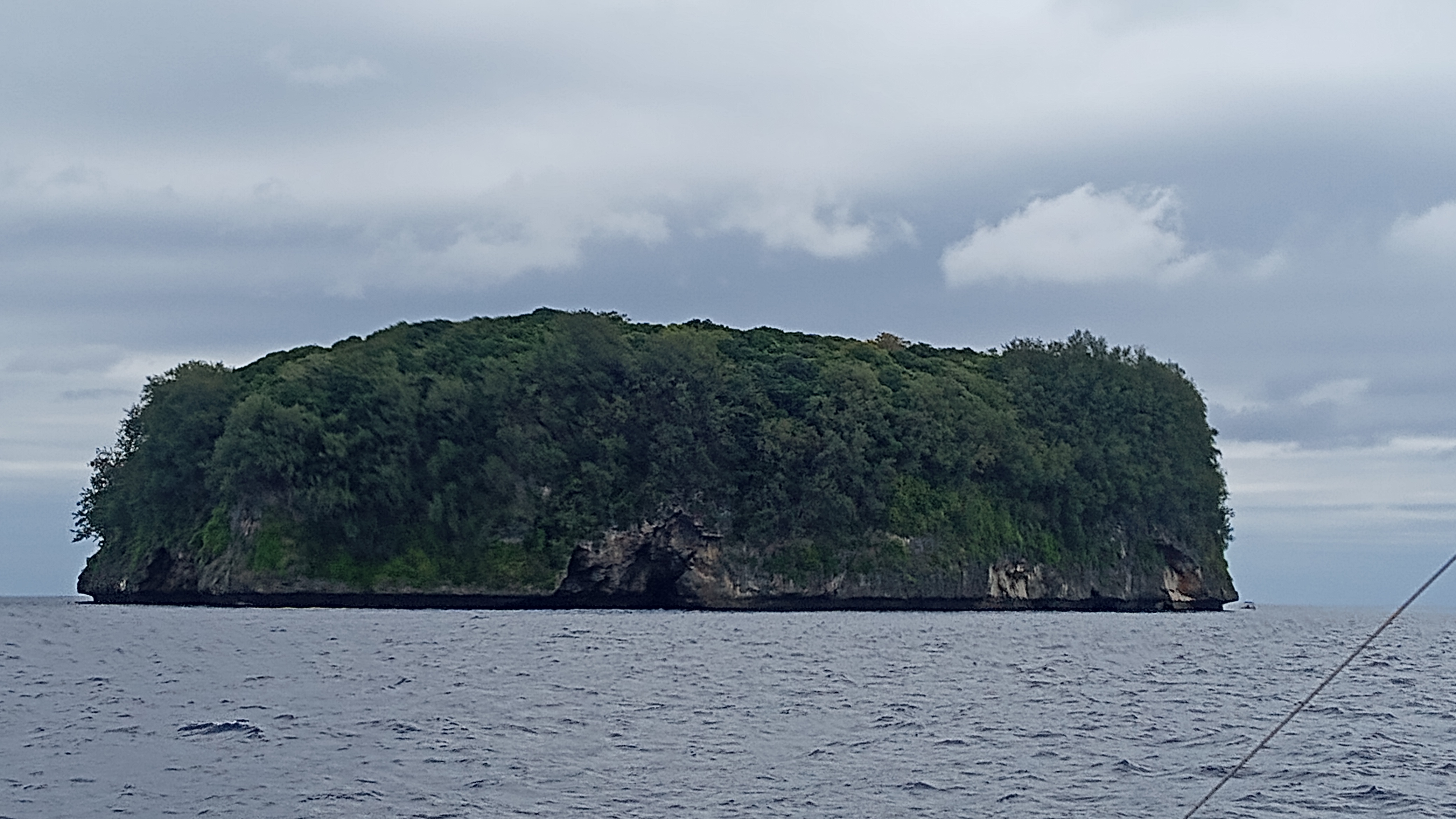
And so it was that we finally escaped the grip of French Polynesia and arrived at a new country – a month later than intended perhaps but we were so excited to explore this new land.
 tjsailing